-
E-mail
yinyangyang@yunjingtianhe.com
-
Phone
13276363313
-
Address
Building 1, Weifang High tech Zone Optoelectronic Industry Accelerator (Phase I), No. 155 Guangdian Circuit, Weifang High tech Zone, Shandong Province
Product Categories
Shandong Tianwei Environmental Technology Co., Ltd


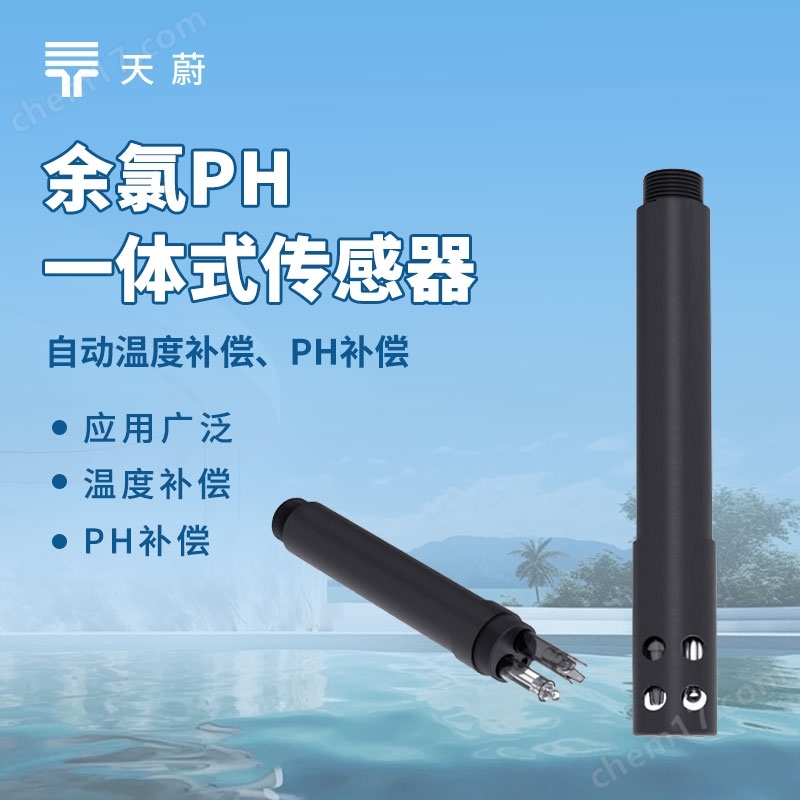

Online residual chlorine pH integrated sensor
NegotiableUpdate on 02/07
- Model
- Nature of the Manufacturer
- Producers
- Product Category
- Place of Origin
Overview
The online residual chlorine pH integrated sensor is specially designed for monitoring water treatment processes, integrating dual parameter detection functions of residual chlorine concentration and pH value. By using high-precision electrochemical and ion selective membrane technology, the residual chlorine content and acidity/alkalinity in water can be measured synchronously in real time, ensuring accurate and reliable data. The sensor has automatic temperature compensation and anti-interference design, suitable for various scenarios such as swimming pools, drinking water, industrial circulating water, etc. It supports standard signal output and remote transmission, helping users to timely grasp water quality changes, optimize disinfection processes, and ensure water safety and stable equipment operation.
Product Details
Online residual chlorine pH integrated sensorSpecially designed for monitoring water treatment processes, it integrates dual parameter detection functions for residual chlorine concentration and pH value. By using high-precision electrochemical and ion selective membrane technology, the residual chlorine content and acidity/alkalinity in water can be measured synchronously in real time, ensuring accurate and reliable data. The sensor has automatic temperature compensation and anti-interference design, suitable for various scenarios such as swimming pools, drinking water, industrial circulating water, etc. It supports standard signal output and remote transmission, helping users to timely grasp water quality changes, optimize disinfection processes, and ensure water safety and stable equipment operation.
1、 Application Environment Description
Online residual chlorine pH integrated sensorUsed for continuous monitoring of residual chlorine content in water solutions in drinking water treatment plants, canning plants, drinking water distribution networks, swimming pools, cooling circulating water, water quality treatment projects, and other occasions.
2、 Technical parameters
| pH sensor | ||
| Range and Resolution | 0~14(PH) | 0.01 |
| precision | ±0.1PH; ±0.3℃ | |
| Residual chlorine sensor | ||
| Range and Resolution | 0~5.00 mg/L | 0.01 |
| precision | ± 5% of the reading; ±0.3℃ | |
| communication method | RS485(MODBUS-RTU) | |
| Shell material | ABS | |
| temperature compensation | Automatic temperature compensation | |
| PH compensation | Automatic PH compensation | |
| cable length | Standard 5-meter configuration | |
| power supply voltage | 12-24VDC( 0.3W@12V ) | |
| waterproof rating | IP68 | |
| Installation method | Flow pool installation, 3/4NPT | |
3、 Electrical connection
1. Installation
Install the matching flow tank, with the sensor tightly attached to the flow tank. Ensure that the sensor measuring part is placed near the inlet of the flow tank, and avoid facing the outlet as much as possible to ensure a stable flow rate. It is recommended to control the flow rate at 30-60L/h to ensure the accuracy of the test.
2. Electrical connection
The cable is a 4-core twisted pair shielded wire, and the line sequence is defined as follows:
Red wire - power cord (12-24VDC) l
Black wire - Ground wire (GND)
Blue line -485A
Green line -485B
Note: The color of the cable may vary slightly depending on the production batch, and the specific color is subject to the cable silk screen printing.
Before powering on, carefully check the wiring sequence to avoid unnecessary losses caused by wiring errors.
4、 Maintenance and upkeep
1. PH electrode
When used for the first time or left unused for a long time, the sensitive bulb and reference liquid should be immersed in a 3.3mol/L KCI solution for more than 2 hours. Before use, rinse and dry with deionized water (or distilled water) to prevent impurities from entering the tested liquid.
The wiring terminal should be kept clean and dry, and the sensor should be cleaned when not in use. It should be inserted into a protective sleeve containing 3.3mol/L KCI solution or into a container containing 3.3mol/L KCI solution.
Check if the wiring terminals are dry. If there are stains, wipe them off and let them dry before continuing to use. Sensors should avoid prolonged immersion in deionized water, protein solutions, strong acid and alkali solutions, and acidic fluoride solutions, and prevent contact with organic silicone oils and fats. Sensors that have been used for a long time may have their glass film become semi transparent or have sediment attached. In this case, they can be washed and rinsed with water.
When the sensor has been used for a long time and measurement errors occur, it can be calibrated and corrected by cooperating with the instrument. If the above methods of maintenance and upkeep still cannot calibrate and measure the sensor, it indicates that the sensor has failed and should be replaced.
2. Residual chlorine electrode
New electrodes and electrodes that have been placed for a long time need to be activated before use. The sensor should be left to stand in tap water for 24 hours. If the returned value is inaccurate, the following operations need to be performed:
Perform zero and slope calibration on the sensor
Return to factory inspection
Similar Product Recommend


