-
E-mail
15900517856@163.com
-
Phone
15900517856
-
Address
No. 168 Dongshe Road, Songjiang District, Shanghai
Product Categories
Shanghai Pinkui Electromechanical Technology Co., Ltd

Multi position rotating friction testing machine
NegotiableUpdate on 01/08
- Model
- Nature of the Manufacturer
- Producers
- Product Category
- Place of Origin
Overview
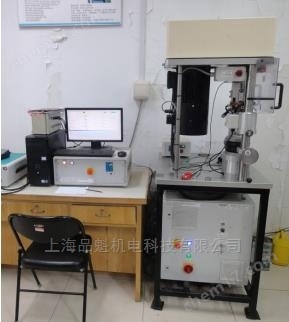
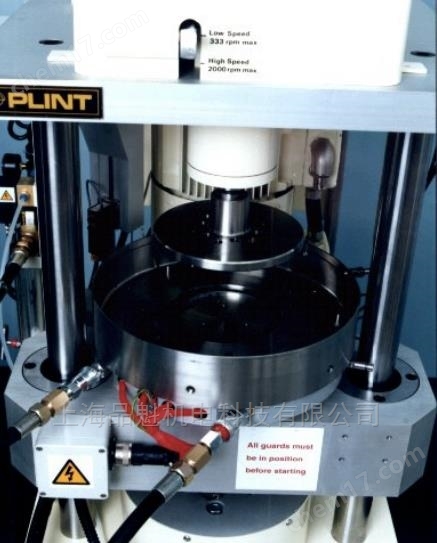
The multi station rotating friction testing machine is a professional testing equipment that combines the dual characteristics of "multi station parallel testing" and "rotating friction simulation". It is widely used in fields such as mechanical manufacturing, automotive parts, new material research and development, and electronic components. Its core value lies in the ability to simultaneously conduct wear resistance testing on multiple sets of samples under rotational friction conditions, greatly improving testing efficiency. At the same time, it accurately simulates the actual working state of rotating components such as bearings, gears, and seals, providing comprehensive data support for product quality verification and material screening. It is a key equipment in industrial production and scientific research experiments.
Product Details
The multi station rotating friction testing machine is a professional testing equipment that combines the dual characteristics of "multi station parallel testing" and "rotating friction simulation". It is widely used in fields such as mechanical manufacturing, automotive parts, new material research and development, and electronic components. Its core value lies in the ability to simultaneously conduct wear resistance testing on multiple sets of samples under rotational friction conditions, greatly improving testing efficiency. At the same time, it accurately simulates the actual working state of rotating components such as bearings, gears, and seals, providing comprehensive data support for product quality verification and material screening. It is a key equipment in industrial production and scientific research experiments.
From the perspective of device construction, the core consists ofMultiple independent rotation testing units、Synchronous transmission system、Precision load control module、Environment simulation componentandCentralized data collection systemComposition. The conventional configuration of the testing unit is 4-8 workstations (which can be expanded to 12 workstations as needed), and each unit is equipped with replaceable friction pair fixtures (such as pin disks, ball disks, block rings), compatible with various material samples such as metal, ceramic, plastic, coating, etc; The synchronous transmission system adopts servo motor cluster drive, and the speed of each workstation can be independently adjusted within the range of 0.1-5000r/min. It can also achieve synchronous operation of multiple workstations to meet different testing requirements; The load control module applies static or dynamic loads of 0.1-1000N through precision sensors, with a loading accuracy of ± 0.01N, ensuring stable and controllable friction pressure for each group of samples; The environmental simulation component can adjust temperature (-50 ℃ -800 ℃), humidity (10% -95% RH), and support simulation of working conditions such as oil, water, and corrosive media, restoring complex usage environments; The centralized data acquisition system can synchronously record parameters such as friction coefficient, wear amount, temperature, and speed at each workstation, with a data error of less than 3%, and can automatically generate comparative analysis reports for rapid evaluation of sample performance differences.
The core advantages of this device are focused on "efficiency" and "flexibility". Multi station parallel design improves testing efficiency by 3-7 times compared to single station equipment. For example, for testing the same batch of automotive bearing materials, 80-120 sets of sample tests can be completed in a single day, greatly shortening the R&D and quality inspection cycle; The characteristic of independent parameter adjustment at each workstation supports simultaneous comparative experiments under different speeds and loads, or synchronous testing of samples of different specifications, adapting to diverse testing scenarios. In addition, the equipment adopts a modular design, which can add workstations or expand environment simulation functions according to future needs, with outstanding cost-effectiveness.
In practical applications, device functions cover a wide range of scenarios: in the automotive industry, synchronously testing the friction coefficient between different batches of brake pads and brake discs, and screening matching solutions; In the field of mechanical manufacturing, testing the wear life of multi specification gear materials to ensure the reliability of transmission systems; In the development of new materials, comparing the performance differences of composite materials with different formulations under the same rotational friction conditions can accelerate material iteration; In the field of electronics, test the friction loss of micro motor bearings to avoid affecting the service life of equipment due to wear.
As an efficient friction detection device that adapts to multiple scenarios, the multi station rotating friction testing machine provides an effective solution for various industries to improve detection efficiency and reduce costs. At the same time, it lays a data foundation for product quality improvement and technological innovation, promoting the development of related fields towards efficiency and precision.
Similar Product Recommend