-
E-mail
mengxuehou@bmftec.cn
-
Phone
15261868162
-
Address
5th Floor, Building 26, Commercial Zone 6979, Hongshan Subway Station, Longhua District, Shenzhen, Guangdong Province
Product Categories
- Micro nano metal 3D printing system
- Industrial grade 3D printing
- Biological 3D printing
- Photosensitive resin material
- Micro nano 3D printing
- Post curing equipment
- PDMS mold flipping
- Multi material photopolymerization printing
- Multi material photopolymerization 3D printing
- Desktop level 3D printing
- Aluminum oxide ceramic 3D printing
Shenzhen Mofang New Materials Technology Co., Ltd


Multi material photopolymerization 3D printer microCube M150
NegotiableUpdate on 01/19
- Model
- Nature of the Manufacturer
- Producers
- Product Category
- Place of Origin
Overview
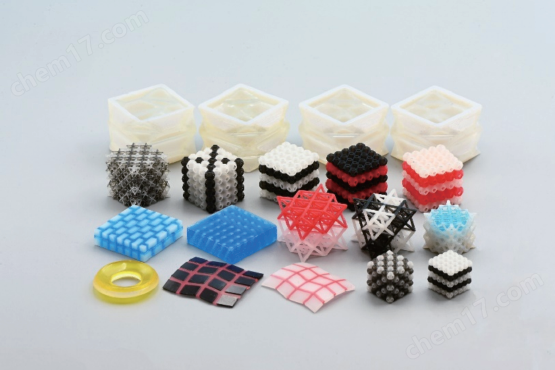
The microCube M150 multi material photopolymerization 3D printer is based on centrifugal photopolymerization multi material 4D printing technology. It uses a 405nm wavelength UV LED light source to project onto the liquid surface of functional materials for precise curing and molding, and efficiently removes residual materials using the high-speed centrifugal effect of the printing platform. The equipment has the ability to print composite materials within/between layers, ultimately achieving integrated molding of high complexity, high precision, multifunctional, and multi material coupled structural products.
Product Details
Multi material photopolymerization 3D/4D printing system: microCube M150
In view of the core problems faced by traditional printing equipment, such as poor compatibility of multiple materials, insufficient molding accuracy, and difficult integration of multiple functions, M150 (optical accuracy: 25 μ m) supports the integrated molding of multi-functional materials such as hard resin, elastomer, hydrogel, shape memory polymer, and conductive elastomer. Its 4D printing solution meets the needs of complex precision scenarios such as biomedicine, soft robotics, aerospace, etc., successfully achieving a leapfrog upgrade from single precision machining capability to intelligent material integration application capability.
Technical core: Centrifugal 4D printing technology
Based on centrifugal light curing multi material 4D printing technology, precise curing molding is achieved by projecting a 405nm wavelength UV LED light source onto the liquid surface of functional materials. The high-speed centrifugal effect of the printing platform is used to efficiently remove residual materials, successfully breaking through the technical bottleneck of dynamic switching of multiple materials and residual liquid removal. Through technological collaboration, the two core challenges of microstructure accuracy control and intelligent material adaptation that have long existed in the field of 4D printing have been effectively solved, enabling the equipment to have the ability to print multiple materials within/between layers, ultimately achieving integrated molding of high complexity, high precision, multifunctional, and multi material coupled structure products.
Technical features: 4 major innovations to break through industry bottlenecks
Feature 1: Centrifugal Multi Material Switching Technology
The centrifugal speed can be adjusted (up to 10000 revolutions per minute), and multi material dynamic switching can be quickly completed within 60 seconds. Single printing supports up to 2500 material conversions, and the material switching efficiency and residual liquid removal ability reach a high level in the industry, effectively ensuring the continuity and stability of multi material molding.
Feature 2: Supporting multi material slicing software
We have independently developed a multi material model slicing system that supports multi material model slicing with arbitrary spatial distribution of multiple materials. The slicing processing speed can reach up to 500 sheets per minute, significantly improving the data processing efficiency and printing preparation speed of complex structural models, and providing intelligent support for efficient production.
Feature 3: Supports various high-performance 4D printing functional materials
A diversified 4D printing material system with viscosity ranging from 5 to 5000 cps, including 4D printing materials such as hard resin, elastomer, hydrogel, shape memory polymer and conductive elastomer, as well as their combined structures and multi material 4D printing, can meet the functional requirements of materials in different application fields.
Feature 4: Integrated molding of multi material and multifunctional coupling structure
Realize high complexity, high precision, and multifunctional integrated molding of multi material coupling structures, support simultaneous printing of three materials, achieve intra layer/inter layer multi material switching, and the size of the transition zone within the multi material layer is less than 100 microns, ensuring precise connection and performance synergy of functionally graded materials.
Application field: The leap from laboratory to industrialization
In the field of flexible electronics, the integration of electronic circuits and flexible substrates is achieved through composite printing of conductive elastomers and elastic substrates. This technology breaks through the compatibility limitations of rigidity and flexibility in traditional electronic devices, providing key technical support for lightweight and adhesive design of wearable devices, health monitoring sensors, and other products, and assisting in the development of a new generation of intelligent terminals.
In the field of metamaterial micro robots, the innovative use of a multi material combination process of hard resin and tough resin has successfully overcome the manufacturing challenges of structural complexity and functional diversity in micro mobile robots. This solution supports the integrated design of precision transmission structures and flexible drive units, providing a manufacturing foundation for the research and development of micro robots in medical micro operations, environmental monitoring, and other scenarios, and promoting the development of intelligent microsystems towards high integration.
Biomedical field: through functional combination of hydrogel and hard resin reinforcement/shape memory polymer (SMP), innovative manufacturing paths are provided for tissue engineering scaffolds, implantable medical devices, etc. The ability of the device to accurately regulate the distribution and functional gradient of materials can simulate the complex microstructure of biological tissues, promoting the development process of personalized implants and intelligent responsive medical devices.
In the aerospace field, the combination of shape memory polymers and conductive elastomers can be used to manufacture adaptive spacecraft structures. This type of structure can achieve autonomous shape control and intelligent unfolding through environmental perception, providing key technical support for lightweight design and space adaptability improvement of spacecraft.
Similar Product Recommend