- Phone
-
Address
West Development Zone, Dacheng County, Langfang City, Hebei Province
Product Categories
Langfang Xinhong Sealing Materials Co., Ltd


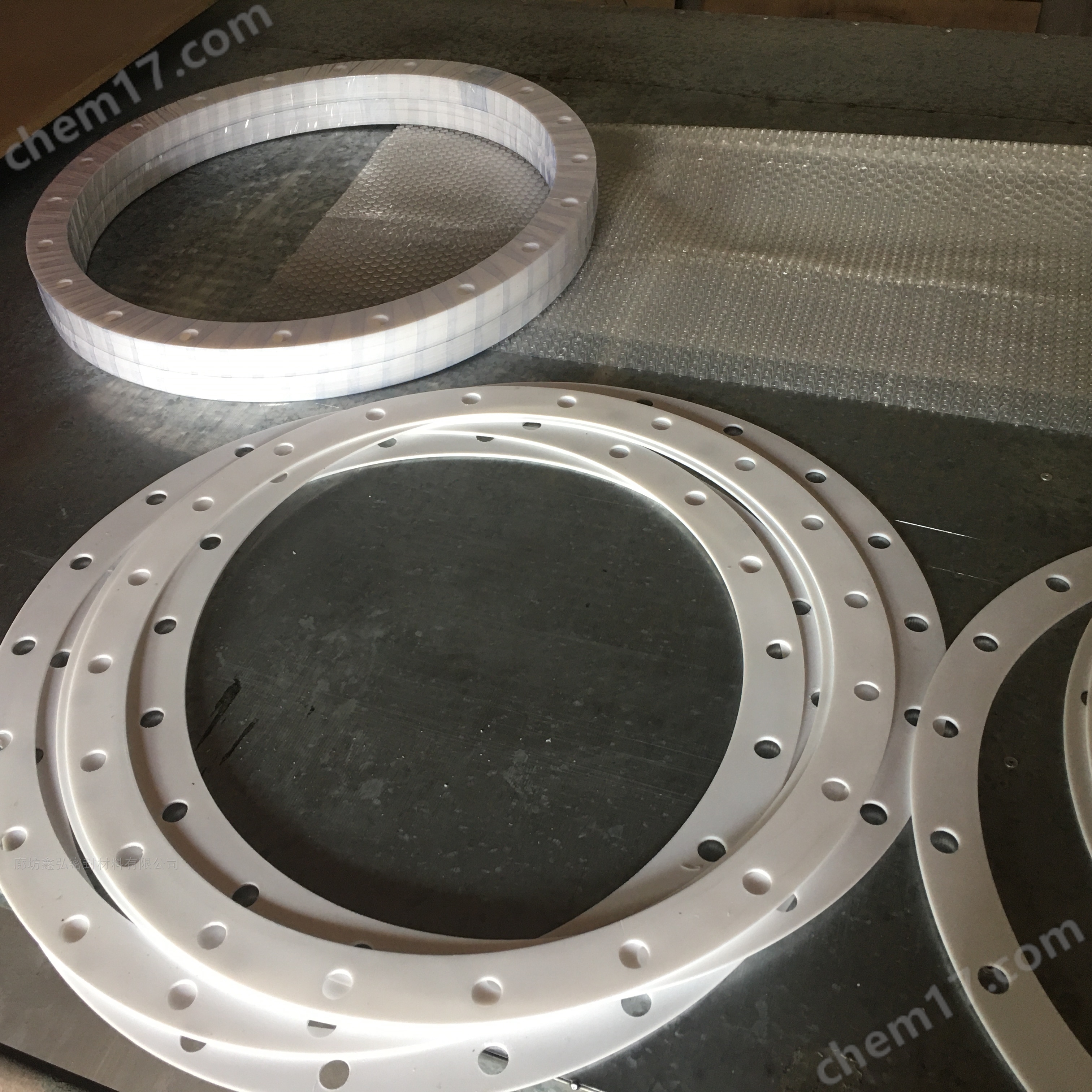
Modified PTFE gasket filled with glass fiber PTFE gasket
NegotiableUpdate on 05/06
- Model
- Nature of the Manufacturer
- Producers
- Product Category
- Place of Origin
Overview
Modified PTFE gasket filled with glass fiber PTFE gasket is made by adding a certain amount of filler, such as glass fiber, bronze powder, molybdenum disulfide, graphite, carbon fiber, etc., to PTFE resin. After high-speed mixing and uniform mixing, it is pressed and formed by a mold, and then sintered at high temperature to make gasket and other products, or first pressed into modified PTFE plate and then stamped or cut into shape. By adding a certain amount of filler to PTFE products, the filling of PTFE gaskets greatly improves certain characteristics of PTFE, especially in terms of wear resistance, thermal conductivity, resistance to deformation, and self-lubricating properties, which are significantly improved compared to pure PTFE products.
Product Details


Modified PTFE gasket filled with glass fiber PTFE gasketModified PTFE gasket, also known as filled PTFE gasket, is made by adding a certain amount of filler, such as glass fiber, bronze powder, molybdenum disulfide, graphite, carbon fiber, etc., to PTFE resin. After high-speed mixing and uniformity, it is pressed and formed by a mold, and then sintered at high temperature to make gaskets and other products, or first pressed into modified PTFE plate and then stamped or cut into shape. By adding a certain amount of filler to PTFE products, the filling of PTFE gaskets greatly improves certain characteristics of PTFE, especially in terms of wear resistance, thermal conductivity, resistance to deformation, and self-lubricating properties, which are significantly improved compared to pure PTFE products. Suitable for lubricating and conducting sealing components with corrosion resistance, thermal conductivity, wear resistance, oil-free lubrication, shock absorption and wear resistance within the temperature range of -180 ℃ to 250 ℃. In order to meet the needs of customers for high-quality PTFE gaskets, we have introduced some high-performance expanded PTFE gasket materials from abroad, such as Gore, Garlock, Valqua, TEMAC, etc. You can refer to the expanded PTFE gasket. Our company has a full range of PTFE gasket molds with standards such as GB2506-89, GB/T17727, HG/T20627, HG/T20606, etc. Welcome to inquire about modified PTFE molded gaskets with a thickness of 2mm or more.Modified PTFE gasket filled with glass fiber PTFE gasketPerformance characteristics: The performance of modified (filled) PTFE is closely related to the properties, content, and preparation process of the filling material. The filler must meet the following requirements: (1) the filler must be stable under sintering conditions of 380-400 ℃; (2) Particle size of filler? 150μm; (3) Fillers do not absorb moisture; (4) Under sintering conditions, the filler itself will not cluster; (5) The filler does not react with PTFE. Common fillers: graphite, molybdenum disulfide, ceramic particles/fibers, carbon fiber (CF), glass microbeads and glass fiber (GF), quartz, etc. 1. Improve cold flow resistance and creep performance: Fill graphite, glass microbeads and glass fiber (GF, polyphenylene sulfide) 2. Improve lubricity: Fill MoS2 3. Improve thermal conductivity: Fill bronze powder, molybdenum, nickel, etc., carbon fiber 4. Improve wear resistance: Fill glass microbeads and glass fiber (GF) Polyimide and polyphenylene ester 5. Improve stability and reduce deformation: Carbon fiber and polyphenylene sulfide modified PTFE gaskets are used in industries such as chemical, petrochemical, refining, chlor alkali, acid production, phosphate fertilizer, pharmaceuticals, pesticides, chemical fibers, dyeing, coking, coal gas, organic synthesis, non-ferrous metallurgy, steel, atomic energy and high-purity product production (such as ion membrane electrolysis), viscous material transportation and operation, and food and beverage processing and production departments with highly strict hygiene requirements. Equipment used: Sealing parts at flange connections such as pipelines, valves, pumps, pressure vessels, heat exchangers, condensers, generators, air compressors, exhaust pipes, refrigeration units, etc
Similar Product Recommend