-
E-mail
13931789006@139.com
-
Phone
13930795477
-
Address
Building 3, Sunshine Yuecheng, Xian County, Cangzhou City, Hebei Province
Product Categories
Cangzhou Nanhua Experimental Instrument Co., Ltd


Mixing plant laboratory instruments and equipment
NegotiableUpdate on 01/02
- Model
- Nature of the Manufacturer
- Producers
- Product Category
- Place of Origin
Overview
Cangzhou Nanhua Experimental Instrument Co., Ltd. provides long-term spot supply of laboratory instruments and equipment for mixing plants. The quality is good and the price is cheap. Welcome to purchase.
Product Details
JJ-20H new standard cement mortar mixer
According to the unified drawings of China National Building Materials Institute Cement Institute, it is manufactured in accordance with the international strength test methods implemented in China(ISO679)Standard equipment.
Can replace JC/T722used asGB/T17671Mixing machine for cement mortar test method. And it can be used as a grout and mortar mixer for cement testing according to American standards, European standards, and Japanese standards.
It is one of the equipment used in cement factories, construction units, relevant professional colleges, and research institutions' cement testing laboratories.
Main specifications and technical parameters
1The working gap between the mixing blade and the mixing pot is 3±1mm
2The movement trajectory of the mixing blade in the mixing pot is the same as ISO679
3Mixing blade width 135mm
4Mixing pot capacity 5L, wall thickness 1.5mm
5Mixing blade rotation speed
6The motor is a single-phase AC servo motor with power 750W
7Dimensions: LengthThe width and height are 620×420×815(mm)
8Net weight 75kg
ZS-20H new standard cement mortar compaction table
Equivalent to the strength testing method for cement mortar in China ISO679Designed according to international standards.
comply with JC/T 682According to the requirements of the "Cement Mortar Sample Forming Vibration Table", it is suitable forPreparation of test specimens for cement strength testing.
Mixing plant laboratory instruments and equipmentTechnical Specifications
1The total mass of the platform (including the arm, mold frame, etc.) 13.75㎏±0.25㎏
2Total weight of vibrating parts
3Amplitude (fall distance)
4Vibration 60The next time
5Motor model
20kg±0.5kg
15mm±0.3mm
60second±2second
90TDY4
6Motor speed
60turn/divide
7Electric motor power
8Power supply voltage
70W
AC220V 50Hz
(1240×570×580)㎜
≈83㎏
9External dimensions (length)X Width x Height)
10Net weight
NJ-20HNew Type StandardCement slurry mixer
implementOne of the specialized equipment specified in GB1346 is a new type of slurry mixer manufactured according to the main technical parameters of JC/T729.
According to the standard regulations, cement and water are mixed to form a uniform test slurry, which is used to determine the standard consistency, setting time, and make stability test blocks of cement. It is an equipment used in cement testing laboratories of cement plants, construction units, relevant professional colleges, and research institutions.
Main Features
Higher accuracy and ultra-low noise; Protection against dust, energy conservation and environmental protection; Automatic lifting and easy operation.
Mixing plant laboratory instruments and equipmentMain technical parameters
1Mixing blade speed and time
stirring speed revolutionR/min Rotation r/min Automatic control program time s
slow 62±2 140±2 120±1
stop 15
quick 125±3 285±3 120±1
2Mixing blade width:111mm。
3Mixing blade and mixing blade shaft connection threadM16×1。
4. The wall thickness of the mixing pot is 1mm.
5. The working gap between the mixing blade and the mixing pot is 2 ± 1mm.
6. Mixing pot inner diameter x maximum depth: φ 160 x 139 (mm).
7. Dimensions: Length x Width x Height 590 x 420 x 670 (mm).
8. Single phase AC servo motor power 400W
9. Net weight75kg。
NLD-3 cement mortar flowability tester
According to the new standardsDesigned and manufactured according to the requirements of GB/T2419-2005 "Cement Mortar Fluidity Tester", it is mainly used for cement mortar flowability testing and is designated as an instrument for this standard.
Main parameters
Total weight of vibration part:4.35 kg±0.15kg
Vibration drop distance:10mm±0.2mm
Vibration frequency:1Hz
Vibration frequency:15time
Desktop parameters:
Material: cast steel, hard chrome plated working surface
Diameter:φ300mm±1mm
DW-40 Low Temperature Test Chamber
Suitable for low-temperature quick freezing tests of various productsFor example, the frost resistance test of permeable concrete pavement bricks, low-temperature storage of chemical, physical, instrumentation, electrical, marine organisms, and low-temperature detection of building materials, it consists of a low-temperature compressor, condenser, filter, capillary tube, evaporator constant temperature bath, digital display instrument, digital temperature control system, etc.
Fast cooling speed, low noise, reliable and convenient to use.
Technical Specifications
Volume:200L
temperature -50℃
Temperature control accuracy:±0.5℃
Power Supply:AC220V、50Hz
Ambient temperature0-23℃
Relative humidity: not greater than75%
HWHS typeConstant temperature and humidity control equipment
Used for standard curing experiments on cement, concrete specimens, insulation materials, coatings, and wood, it has a wide range of applications and significant promotional value in highway transportation, railways, bridges, civil buildings, water conservancy, hydropower, and scientific research institutions.
Equipped with a microcomputer insideLCD (Liquid Crystal Display)High degree of automation, with different temperatures in different seasons without manual adjustment. The instrument automatically switches to cooling, heating, humidifying, and dehumidifying, ensuring that the insulation and humidity remain constant within the set temperature and humidity range
working principle
1. Temperature control: In summer, when the indoor temperature is higher than the set temperature, the temperature control equipment starts cooling. When the temperature drops to the set temperature, the machine stops working. In winter, when the indoor temperature is lower than the set temperature, the temperature control equipment starts heating and sends out hot air. When the temperature rises to the set temperature, the equipment stops working.
2. Humidity control: When the indoor humidity is lower than the set humidity, the temperature and humidity sensor
Send the signal to the microcomputerLCD (Liquid Crystal Display)Wet mold humidifier and centrifugal fan, start humidifying. The air sent out by the centrifugal fan ensures uniform humidity throughout the room. When the indoor humidity is higher than the set humidity, the temperature and humidity sensor sends a signal to the microcomputerLCD (Liquid Crystal Display)Start the industrial dehumidifier and begin dehumidification.
Main technical parameters∶
instrument display∶±0.1
temperature range:(10-40)℃
temperature deviation:±1℃
humidity range:30-80%
Humidity deviation soil:2%
humidification power:500w
Dehumidification power:1200w
voltage frequency:220v 50±1Hz
Cement sample cylinder
Suitable for the extraction and reception of inspection samples in cement by central laboratories of highways, railways, water conservancy, construction, construction units, and colleges and universities Management of circulation, storage, disposal, identification, and other aspects.
Main Features
High strength, high temperature resistance, and low temperature resistance, in-Within the range of 30~+100, there is no deformation and it can be used normally.
Specification Model
1. 20x25mm
2. 25X30mm
Cement compression fixture
As a national standardA supporting instrument designed for GB/T17671-1999 "Method for Testing the Strength of Cement Mortar (ISO Method)".
Meets the standards of the building materials industryJC/T638-1997 and equivalent use of ISO679:1989 (E) 4.2.8 standard for cement compressive strength testing .
Main technical parameters:
1. The length of the upper and lower pressure plates is 40mm
2. The width of the upper and lower pressure plates is greater than 40mm
3. The free distance between the upper and lower pressure plates is greater than 45mm
4. Gross weight/net weight 5kg
Cement standard Vicat apparatus
Used to determine the standard consistency, water consumption, and setting time of cement paste.
Technical Specifications:
Total weight of sliding parts such as trial cones300g
Trial cone sliding*Large stroke 70mm
Net weight≈3.8kg
parameter
1. Sliding rod: 1 piece. φ12mm+0.02mm-0.10mm
2. Standard viscosity test rod: 1 piece: Effective length: 50mm ± 1mm Diameter: φ 10mm ± 0.05mm
3. Initial setting test needle: 2 needles. Effective length 50mm ± 1mm, diameter: φ 1.13mm ± 0.05mm
4. Final setting test needle: 1 piece: effective length 30mm ± 1mm, diameter: φ 1.13mm ± 0.05mm
5. Reading pointer: one
6. Total weight of sliding part: 300g ± 1g
LD-50 type Rayleigh clamp tester
Used to test the elasticity requirements of the Rockwell clamp and determine the expansion value after filling the Rockwell ring mold with standard consistency cement slurry and curing and boiling for a certain period of time.
Technical Specifications
The measuring range of the measuring instrument is±25mm。
Composed of components such as brackets, rulers, and bases.
Pure slurry flowability test mold
inner dimensions:36X60X60mm
Measure the compressive strength of concrete. comply withJG3019 standard requirements
SX2-4-10Box type resistance furnace
Resistance furnace equipped withKSWType temperature controller and nickel chromium-Nickel silicon thermocouple for controlling furnace temperature;
The furnace shell is made of thin steel plate, and the inner lining is made of silicon refractory material;
Spiral heating elements made of iron chromium aluminum alloy;
The door bricks of the electric furnace are made of lightweight refractory materials;
The insulation layer between the inner lining and the furnace shell is made of refractory fibers and expanded pearl products.
Main technical parameters:
Model:SX2-4-10
Furnace size:300*200*120MM
Power:4KW
voltage:220V
Rated temperature:1000degree
Temperature accuracy:1About degree
FYS-150B Cement Fineness Negative Pressure Sieve Analyzer
It can measure the fineness of cement such as Portland cement, ordinary cement, slag cement, volcanic ash cement, fly ash cement, etc. It has the characteristics of simple structure and easy operation, and is suitable for cement plants, construction companies, and colleges*Instruments.
Technical Specifications
1. Negative working pressure: -4000-6000pa
Jet nozzle speed: (30 ± 2) rpm
3 screening time: 120s
4 sieve analysis test fineness: 0.080mm
5 Power supply: AC220V
6. Overall power: 900w
7. Dimensions: 500x300x780mm
Net weight: 30kg
SHBY-40AType mortar standard curing box
Suitable for the maintenance of standard test blocks in various dry powder mortar factories of scientific research quality inspection departments and construction units. Adopting the advanced intelligent temperature and humidity control system, it can correctly command functions such as heating, cooling, and humidification, perform fully automatic switching work, achieve dynamic balance of temperature and humidity inside the box, and realize the state adjustment of specimens and the standard environment for testing.
Technical Specifications:
Temperature control accuracy:±1℃
Temperature difference inside the box:≤± 2℃
Humidity control accuracy:±3%RH
Moisture control range:RH45-90%Above(Adjustable)
Power supply voltage220V±10%
Humidification power:55W
Humidification capacity:400milliliter/hour
Heating power:400W
Cooling power:150W
Dehumidification power:150W
wind Machine:220V 30W
TM-3 Mortar Elastic Modulus Tester
Main functions
Suitable for measuring the elastic modulus of various masonry mortars under static compression(Abbreviated as elastic modulus).
The measured modulus of elasticity of mortar refers to the axial compressive strength under stress40%The modulus of the loaded secant at time.
Main performance parameters
1. Applicable test piece: with a cross-section of70.7*70.7mm, Gao Wei210-230mm
2. Indicator table:1/0.001mm
3. Gauge length:100mm
4. Overall dimensions:15*15*15cm
5. Weight:2kg
SP-175 Mortar Shrinkage and Expansion Instrument
During the hardening process, cement mortar undergoes volume changes; When it hardens in air, its volume shrinks, and when it hardens in water, it expands (extremely small). The vertical mortar shrinkage and expansion instrument is designed according to the current national standards; It can be used by building science research institutions, design departments, relevant laboratories, and construction units to determine the changes in the hardening process of mortar.
Main specifications
1. Standard rod length: L=176 ± 0.02mm
2. Dimensions: 150 × 150 × 250mm
3. Weight: Approximately 2 kilograms
Volume increase
Mainly used for pressing Construction SandGB/T14684-2001 and Building pebbles Gravel "GB/T18645-2001 standard instrument for testing the loose bulk density of sand, stone, and various aggregates used in construction
Features:
High quality thickened iron plate, finely crafted. It has a beautiful appearance, compact structure, wide applicability, and convenient use.
Specifications
There are two types:(1-30 liters) 8 pieces in total, including 1, 2, 3, 5, 7, 10, 20, and 30L;
(1-50 liters) 9 pieces in total, including 1, 2, 3, 5, 7, 10, 20, 30, and 50L
Scope of application:
Suitable for chemical, highway, water conservancy, municipal, building materials, construction, colleges and universities, as well as laboratories and research centers .
Main technical indicators:
1L inner diameter 108 ± 0.3mm Net height109±0.5mm wall thickness2±0.1mm
2L 152±0.3mm 156mm±0.5mm 2±0.1mm
3L 183±0.3mm 153mm±0.5mm 2±0.1mm
5L 185±0.4 186±0.7mm 2±0.1mm
10L 208±0.5 249±1mm 2±0.1mm
20L 294±0.5mm 249±1mm 3±0.2mm
30L 360±0.5mm 249±1mm 4±0.2mm
50L 295±2 mm 550±10mm 4±0.2mm
Stone crushing index tester
Mainly used to measure the ability of stone materials to resist crushing under gradually increasing loadsIt is an indicator for measuring the mechanical properties of stone materials to evaluate their applicability in highway engineering
Main parameters:
Inner diameter of pressure vessel :150mm
Pressure bucket height: 125mm
Wall thickness of the test tube:20mm
Pressure head diameter:149mm
SY-2Type concretePressure bleedingceremony
The instrument is used to test the bleeding amount of pumped concrete under a certain pressure state and calculate the bleeding rate ratio. It has the advantages of accurate measurement, easy operation, small volume, light weight, and convenient demolding. Its various technical indicators comply with the national standardsJC473-92Standard.
It mainly consists of a hydraulic jack, pressure gauge, upper cover piston, sample cylinder, base, etc.
Technical Specifications:
work pressure6MPa
High pressure:5T
Barrel diameter:125Mm height:225㎜
Vibration frequency:3000±200time/divide
Vibration table amplitude(Equipped with an empty container):0.5±0.10mm
Electric motor power:250tile
Timing range:0.1-99.9second
Overall dimensions:380×520×870
¢100 × 25mm masonry cement mortar water retention rate tester
The water retention rate of mortar is the mass of water retained in the mortar after water absorption treatment, expressed as a percentage of the original water content.
principle
Use freshly mixed mortar with a specified range of flowability and perform water absorption treatment according to the prescribed method. The water retention rate of mortar is the mass of water retained in the mortar after water absorption treatment, expressed as a percentage of the original water content.
Rigid trial mold, circular, inner diameter100 mm ± 1 mm, effective depth inside 25 mm ± 1 mm;
Rigid base plate, circular, non perforated, diameter100 mm ± 5 mm, thickness 5 mm ± 1 mm;
Dry filter paper, slow quantitative filter paper, with a diameter of110 mm±1 mm;
Metal filter screen, grid size45 μm;
金属刮刀;
Electronic balance, weighing2 kg, Sensitivity of 0.1 g;
Iron weight, with a mass of2 kg。
SC145 mortar consistency meter
Used to determine the flowability of mortar(Generally, liquidity is also known as consistency). The consistency of mortar is represented by the number of centimeters in which a standard cone with a certain geometric shape and weight freely sinks into the mortar mixture under its own weight. The consistency test is suitable for determining the mix proportion or controlling the consistency of mortar during construction to achieve the purpose of controlling water consumption.
Technical performance:
1. Measurement range:
Sinking depth:0-14.5 centimeters
Sinking volume:0-229.3 cm3
2. Small scale value (sinking depth): 1mm
3. Cone geometry parameters:
Cone angle:30°
tall Degree:145 millimeters
Cone base diameter:75 millimeters
4. Combined weight of cone and scale: 300 ± 2 grams
5. Dimensions: 350 × 300 × 800 millimeters
6. Weight: ≈ 20 kilograms
JG-1 type aggregate solidity tester
comply withJTG E42-2005 Highway Engineering Aggregate Test Code Requirements: Robustness refers to the performance of aggregates that can withstand the crystallization pressure of sodium sulfate without significant damage or strength reduction after being soaked and dried multiple times in a saturated Na2SO4 solution. It is an important indicator for describing the frost resistance of aggregates and evaluating the strength of sand (also known as stability).
Main parameters
1. Container: Double layer stainless steel heated constant temperature container
2. Coarse aggregate three legged mesh basket The outer diameter of the stainless steel mesh basket isl00*100mm, The outer diameter of the stainless steel mesh basket with a diameter of 2.36mm is 250 * 250mm, and the diameter is 2.36mm
3. Fine aggregate three legged mesh basket Made of stainless steel, with a net basket outer diameter of70*70mm, Aperture 0.15mm
4. Power supply voltage: 220V
5. Temperature should be maintained within the range of 0 ℃ to 100 ℃ (adjustable)
6. Number of lifts: 25 times
7. Heating power: 2000W
8. Motor power: 30W
Stone powder content analyzer
adopted*Frequency modulation, numerical control, and technology have improved the accuracy and speed of experiments. It is an instrument used in the laboratory. This method is applicable for determining the presence of expansive clay minerals in fine aggregates and determining their content to evaluate the cleanliness of the aggregates, expressed as MBV. This method is applicable to fine aggregates smaller than 2.36mm or 0.15mm, and can also be used for quality inspection of mineral powder. When the pass rate of 0.075mm in fine aggregate is less than 3%, this test can be considered qualified without conducting it.
Main technical parameters:
1 Power supply voltage220V
2 High speed:600 revolutions per minute/± 60 revolutions per minute
3 Low RPM:400 revolutions per minute ± 40 revolutions per minute
4 Impeller diameter:75mm±10mm
5 Number of impellers:4 of them
6 Beaker capacity:1000mL
7 Impeller diameter:75mm±10mm
11. Environmental temperature: ≤35℃。
12. Relative humidity: ≤85%
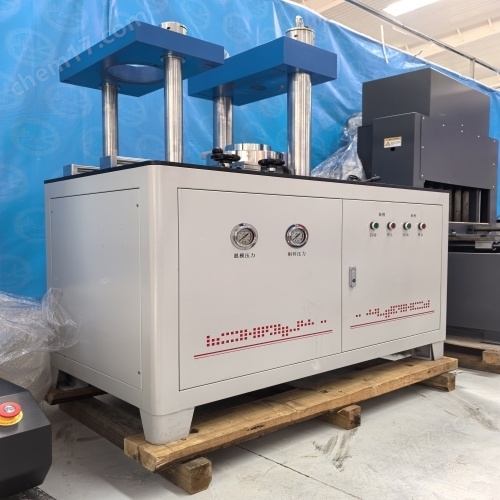
DYE-1000 100 ton electro-hydraulic pressure testing machine
This machine is used for compressive strength testing of building materials such as bricks, stones, cement concrete, and can also be used for mechanical performance testing of other materials. It adopts hydraulic loading, electronic force measurement, and has functions such as load digital display of loading rate, load large value retention, overload protection, and power-off data retention.
Main technical parameters:
Maximum load capacity: 1000KN
Testing machine level:Level 1
Compressed space:280mm
Piston stroke:30mm
Upper pressure plate size:215x255mm
Lower pressure plate size:210x255mm
Host dimensions:850x400x1100mm
Whole machine power:0.75kw
Total weight of the machine600kg
DYE-2000 200 ton electro-hydraulic pressure testing machine
This machine is used for compressive strength testing of building materials such as bricks, stones, cement concrete, and can also be used for mechanical performance testing of other materials. It adopts hydraulic loading, electronic force measurement, and has functions such as load digital display of loading rate, load large value retention, overload protection, and power-off data retention.
Main technical parameters:
Maximum load capacity: 2000KN
Testing machine level:Level 1
Compressed space:320mm
Piston stroke:30mm
Upper pressure plate size:240x240mm
Lower pressure plate size:350x260mm
Host dimensions:900x400x1250mm
Whole machine power:0.75kw
Total weight of the machine830kg
DYE-3000 300 ton electro-hydraulic pressure testing machine
This machine is used for compressive strength testing of building materials such as bricks, stones, cement concrete, and can also be used for mechanical performance testing of other materials. It adopts hydraulic loading, electronic force measurement, and has functions such as load digital display of loading rate, load large value retention, overload protection, and power-off data retention.
Main technical parameters:
Maximum load capacity: 3000KN
Testing machine level:Level 1
Compressed space:340mm
Piston stroke:50mm
Upper pressure plate size:260x325mm
Lower pressure plate size:260x325mm
Host dimensions:960x490x1350mm
Whole machine power:0.75kw
Total weight of the machine1000kg
DYE-2000B 200 ton Micro Electro Hydraulic Servo Pressure Testing Machine
This machine is used for compressive strength testing of building materials such as bricks, stones, cement concrete, and can also be used for mechanical performance testing of other materials. It adopts hydraulic loading, electronic force measurement, and has functions such as load digital display of loading rate, load large value retention, overload protection, and power-off data retention.
Main technical parameters:
Maximum load capacity: 2000KN
Testing machine level:Level 1
Compressed space:320mm
Piston stroke:50mm
Fixed upper pressure plate size:240x285mm
Lower pressure plate size:240x285 mm
Host dimensions:400x320x1100mm
Whole machine power:1.1kw
Total weight of the machine1100kg
DYE-2000A 200 ton electro-hydraulic servo pressure testing machine (split)
This machine is used for compressive strength testing of building materials such as bricks, stones, cement concrete, and can also be used for mechanical performance testing of other materials. It adopts hydraulic loading, electronic force measurement, and has functions such as load digital display of loading rate, load large value retention, overload protection, and power-off data retention.
Main technical parameters:
Maximum load capacity: 2000KN
Testing machine level:Level 1
Compressed space:320mm
Piston stroke:50mm
Fixed upper pressure plate size:235x285mm
Lower pressure plate size:235x285 mm
Host dimensions:460x370x1200mm
External dimensions of control cabinet:1200x550x870mm
Whole machine power:1.1kw
Total weight of the machine1200kg
DYE-3000A 300 ton electro-hydraulic servo pressure testing machine (split)
This machine is used for compressive strength testing of building materials such as bricks, stones, cement concrete, and can also be used for mechanical performance testing of other materials. It adopts hydraulic loading, electronic force measurement, and has functions such as load digital display of loading rate, load large value retention, overload protection, and power-off data retention.
Main technical parameters:
Maximum load capacity: 2000KN
Testing machine level:Level 1
Compressed space:340mm
Piston stroke:80mm
Fixed upper pressure plate size:265x265mm
Lower pressure plate size:285x360 mm
Host dimensions:510x440x1300mm
External dimensions of control cabinet:1200x550x870mm
Whole machine power:1.1kw
Total weight of the machine1600kg
DYE-300 30 ton hydraulic cement pressure testing machine
Used for flexural strength testing of concrete specimens and compressive strength testing of building materials such as cement, mortar, and red bricks.
Main technical parameters:
Maximum load capacity: 300KN
Testing machine level:Level 1
Compressed space:210mm
Piston stroke:80mm
Upper pressure plate size: diameter170mm
Lower pressure plate size: diameter170mm
Host dimensions:800x400x1350mm
Whole machine power:0.75kw
Total weight of the machine400kg
DYE-300B 30 ton Micro Electro Hydraulic Servo Cement Pressure Testing Machine
Used for flexural strength testing of concrete specimens and compressive strength testing of building materials such as cement, mortar, and red bricks.
Main technical parameters:
Maximum load capacity: 300KN
Testing machine level:Level 1
Compressed space:180mm
Piston stroke:60mm
Fixed upper pressure plate size: diameter108mm
Ball head type lower pressure plate size: diameter170mm
Lower pressure plate size: diameter205mm
Host dimensions:1200x500x1370mm
Whole machine power:0.75kw
Total weight of the machine510kg
DYE-300A 30 ton microelectromechanical hydraulic servo cement flexural and compressive integrated machine
Used for flexural strength testing of concrete specimens and compressive strength testing of building materials such as cement, mortar, and red bricks.
Main technical parameters:
Maximum load capacity: 300KN
Testing machine level:Level 1
Compressed space:180mm
Piston stroke:60mm
Fixed upper pressure plate size: diameter108mm
Ball head type lower pressure plate size: diameter170mm
Lower pressure plate size: diameter205mm
Host dimensions:1150x500x1400mm
Whole machine power:0.75kw
Total weight of the machine500kg
ZBSX-92A Shock Strike Standard Shaking Instrument
Composed of swing mechanism, shock mechanism, clamping mechanism, and other components. The electric motor rotates the main eccentric shaft on the worm gear supporting swing frame by rotating the shaft, which in turn drives the other two supporting eccentric shafts to rotate, promoting the swing radius of the entire screen group, which is also equal to the plane circumference swing of the eccentricity. At the same time, another pair of worm gears are driven by the same electric motor through a cam, and the top rod is equipped with a swing frame of a screen group, which periodically lifts and falls onto the anvil of the machine base by its own weight, causing the swing frame to oscillate in a flat circular motion while undergoing vibration.
Technical Specifications
1. Sieve diameter: 300mm
2. Screen seat vibration amplitude: 8mm
3. Strike frequency: 147 times/minute
4. Screen shaking frequency: 221 times/minute
5. Turning radius: 12.5mm
6. Motor power: 0.75KW
7. Voltage 380V
HJ-84Type concrete accelerated curing box
Predict through different accelerated maintenance methodsThe compressive and flexural strength of concrete during the 7-day and 28 day curing periods are equipment for quality control of concrete.
Main technical parameters:
Box size:810X580X400mm
Power supply voltage380V 50HZ
Electric heating power: single group3KW in total, 3x3KW
Temperature control range:10℃-100℃
Water storage capacity:125kg
Test modulus:6 sets of 100 triple trial models and 3 sets of 150 trial models.
SY-84 cement rapid curing box
Suitable for rapid constant temperature curing methods of ordinary cement, Portland cement, slag cement, volcanic cement, fly ash cement, etc. in cement plant construction and scientific research units. It can be used inPredict the compressive and flexural test results for 3-day, 7-day, and 23 day periods within 34 hours (users can determine the predicted number of days based on specific circumstances) to shorten the cement inspection cycle and accelerate the cement delivery time.
Main technical parameters;
Temperature control range:10-100℃
Time control range:0.5-24 hours
Electric heating tube parameters:1000W/220V
The amount of hot water is approximatelyHeating up to 100 ℃ in 12 hours is equivalent to 2 hours
The power consumption for one quick test is about20 degrees
Working size inside the box: (can hold three sets of test molds)550x305x260mm
SHBY-40BType concrete standard curing box
According to the countryGB1345-99The method for testing the stability of cement standard consistency, water consumption, and setting time, developed, designed, and manufactured based on technical data provided by the National Building Materials Research Institute and relevant departments, is suitable for large, medium, and small cement plants, as well as construction and engineering departments for the setting and curing of concrete and cement specimens.
Main technical parameters:
1Control humidity temperature:RH95%Above
2Control temperature:20℃±1℃
3Power supply voltage:220V/50HZ
4Heating power:500W
5Cooling power:145W
6Humidification power:45W
7Increase wet Quantity:400milliliter/hour
8Humidifier volume:5.5L
9Box space:
40Btypesingle doorcan be placed150³Concrete test block15Group(45A)Heating tube power500W)
Exterior dimensions (length)×wide×High):1020×630×1460mm
Inner container size (length)×wide×High):600×500×1200mm
SHBY-40BType concrete standard curing box
According to the countryGB1345-99The method for testing the stability of cement standard consistency, water consumption, and setting time, developed, designed, and manufactured based on technical data provided by the National Building Materials Research Institute and relevant departments, is suitable for large, medium, and small cement plants, as well as construction and engineering departments for the setting and curing of concrete and cement specimens.
Main technical parameters:
1Control humidity temperature:RH95%Above
2Control temperature:20℃±1℃
3Power supply voltage:220V/50HZ
4Heating power:800W
5Cooling power:145W
6Humidification power:45W
7Increase wet Quantity:400milliliter/hour
8Humidifier volume:5.5L
9Box space:
40BtypeOpen the door up and downcan be placed150³Concrete test block20Group(60A)Heating tube power800W)
Exterior dimensions (length)×wide×High):1120×630×1550mm
Inner container size (length)×wide×High):700×520×1250mm
SHBY-60BType concrete standard curing box
According to the countryGB1345-99The method for testing the stability of cement standard consistency, water consumption, and setting time, developed, designed, and manufactured based on technical data provided by the National Building Materials Research Institute and relevant departments, is suitable for large, medium, and small cement plants, as well as construction and engineering departments for the setting and curing of concrete and cement specimens.
Main technical parameters:
1Control humidity temperature:RH95%Above
2Control temperature:20℃±1℃
3Power supply voltage:220V/50HZ
4Heating power:1000W
5Cooling power:145W
6Humidification power:45W
7Increase wet Quantity:400milliliter/hour
8Humidifier volume:5.5L
9Box space:
60BTwo doors opencan be placed150³Concrete test block40Group(120A)Heating tube power1000W)
Exterior dimensions (length)×wide×High):1640×620×1470mm
Inner container size (length)×wide×High):1200×500×1100mm
SHBY-90BType concrete standard curing box
According to the countryGB1345-99The method for testing the stability of cement standard consistency, water consumption, and setting time, developed, designed, and manufactured based on technical data provided by the National Building Materials Research Institute and relevant departments, is suitable for large, medium, and small cement plants, as well as construction and engineering departments for the setting and curing of concrete and cement specimens.
Main technical parameters:
1Control humidity temperature:RH95%Above
2Control temperature:20℃±1℃
3Power supply voltage:220V/50HZ
4Heating power:2000W
5Cooling power:145W
6Humidification power:45W
7Increase wet Quantity:400milliliter/hour
8Humidifier volume:5.5L
9Box space:
90Bthree-doorcan be placed150³Concrete test block60Group(180A)Heating tube power2000W)
Exterior dimensions (length)×wide×High):1980×700×1460mm
Inner container size (length)×wide×High):1550×630×1200mm
BCL-355 Compensatory Concrete Shrinkage and Expansion Rate Tester
according to the standardDesigned according to GB 50119-2003 "Technical Specification for Application of Concrete Admixtures".
The detection instrument is mainly used to determine the longitudinal limit expansion rate and longitudinal limit shrinkage rate of compensating concrete. Used to determine the amount of concrete expansion agent used in the project.
The instrument has the advantages of simple operation and convenient reading.
Technical Specifications
measure Quantity range Surrounding:350~360mm
Standard pole length:355±0.02mm
Range of micrometer:0~12.7mm±0.001mm
try Model size Grid:100*100*400mm
outside Shape ruler Inch:410*142*120mm
package Measuring tape Inch:446*335*160mm
net Heavy:7.45kg
SP-540 concrete shrinkage and expansion meter
comply withThe provisions of GBJ82-85 are instruments used to measure the length (volume) changes of concrete specimens during the hardening process under certain environmental conditions. They can provide reliable support for research institutes, education departments, design and construction units to study, educate, quality control and test the characteristics of concrete.
Technical Specifications
1. Measurement range: 534-545mm
2. Standard rod length: 540 ± 0.2mm
3. Range of dial gauge: 0-10mm, accuracy 0.01mm
4. Dimensions (length x width x height): 655 x 155 x 185mm
5. Weight: 5.3kg
混凝土抗折装置
according toGB/T50081-2002 "Standard for Test Methods of Mechanical Properties of Ordinary Concrete" is made, which is mainly used for the flexural strength test of concrete.
Technical Specifications
1. Diameter range of specimen support and loading head: 20-40
2. Length of specimen support and loading head: not less than b+10 mm
3. Applicable concrete specimens: standard 150 × 150 × 600 (or 550 mm)
4. Non standard: 100 × 100 × 400 mm
Concrete mixture slump conedeterminationceremony
Suitable for slump in1cm-15cm, *Conduct slump tests on plastic concrete with large aggregate particle size not exceeding 40cm. The slump cone is an ideal equipment for teaching, training, and laboratory use, with convenient instrument use and simple maintenance.
Industry standards:
《JG/T 248-2009 Concrete slump tester
structural composition
Composed of slump cone, funnel, ruler, and pestle.
Appearance quality of slump cone
The inner and outer surfaces of the cylinder are flat, smooth, and without any bumps or indentations. The surface of the pounding rod is smooth and the end is circular.
Cement compression fixture
As a national standardA supporting instrument designed for GB/T17671-1999 "Method for Testing the Strength of Cement Mortar (ISO Method)".
Meets the standards of the building materials industryJC/T638-1997 and equivalent use of ISO679:1989 (E) 4.2.8 standard for cement compressive strength testing .
Main technical parameters:
1. The length of the upper and lower pressure plates is 40mm
2. The width of the upper and lower pressure plates is greater than 40mm
3. The free distance between the upper and lower pressure plates is greater than 45mm
4. Gross weight/net weight 5kg
Stone crushing index tester
Used to measure the ability of stone to resist crushing under gradually increasing loadsIt is an indicator for measuring the mechanical properties of stone materials to evaluate their applicability in highway engineering
Main parameters:
Inner diameter of pressure vessel :150mm
Pressure bucket height:125mm
Wall thickness of the test tube:20mm
Pressure head diameter:149mm
Digital display concrete Weber viscosity meter
According to the standards of the People's Republic of ChinaGBJ80-85, Require design and manufacturing. On the basis of complying with standard regulations, electronic timing technology is actively adopted to synchronize with the vibration table and automatically time, thereby eliminating human errors in the past stopwatch timing process and improving the accuracy of measuring the consistency of concrete mixtures. It is a measuring instrument used in the construction industry to control the process of concrete mixing substances.
Main technical parameters:
Slump cone:100±2mm
Bottom inner diameter:100±2mm
tube High:300±2mm
inside Diameter:240±5mm
inside High:200±2mm
Vibration frequency:3000 ± 200 times/minute
Vibration table amplitude(with empty container): 0.5 ± 0.10mm
Electric motor power:250 watts
Timing range:0.1-99.9 seconds
Overall dimensions:380×520×870
HG-1000Type digital displayConcrete penetration resistance meter
Use the penetration resistance method to determine the setting time of concrete.
The penetration resistance test is achieved by fixing the sample container with a penetration needle and moving it upwards. The electric motor is driven by a planetary reducerThe speed of 2 revolutions per minute is transmitted to the cam, which drives the roller to rise uniformly. Therefore, the lifting sleeve and the sample container placed on the chassis rise uniformly at the same time, achieving penetration motion.
The resistance is measured using a sealed chamber pressure gauge. When the test sample generates resistance to the penetration needle, this force compresses the oil in the sealing chamber through the force measuring rod, and the increase in oil pressure is indicated by the pressure gauge.
Technical Specifications
Sample container(Upper caliber × Lower caliber × Depth) φ 160mm × φ 150mm × 150mm
*Large penetration force: 1000N
Penetration depth:25mm
Penetration speed:2.5mm/s
Penetration needle cross-section:100 mm 2、 50 mm2 、20 mm2
Penetration position: outer ringnine o'clock 、 inner circlefour o'clock
Force measurement method: hydraulic, pressure gauge force measurement
*Small division value: 5N
Indication error:±10N
FBT-9 fully automatic surface area measuring instrument
Automated operation, user-friendly interface, easy to learn; By adopting joint ventures or imported spare parts, the reliability and service life of the product have been greatly improved. The overall design of the product is perfected and the strict manufacturing and testing processes ensure that the product better meets the actual needs of users. At the same time, the high cost-effectiveness of the series of products effectively guarantees the investment interests of users. The flexible product configuration can meet the different needs of different users.
Technical Specifications:
Diameter of the inner cavity of the breathable cylinder:φ12.7+0.05 mm
Height of the sample layer inside the breathable cylinder cavity:(15±0.5)mm
Number of holes in perforated plate:35 of them
Perforated plate aperture:φ1.0 m
Perforated plate thickness:1-0.10 mm
Working voltage of electromagnetic pump:220V;
cycle:50HZ
Electromagnetic pump power consumption:<15VA
Operating voltage of solenoid valve:12V
Instrument weight: approximately6kg
External dimensions:(320 × 100 × 460) mm (width × thickness × height)
HC-7L Concrete Air Content Tester
Use the air pressure method to determine the air content in concrete. There are two ways to measure the gas content by injecting water, and the operation is simple and accurate. The gas content value can be directly read from the dial. The black scale is read for water injection type measurement, and the red scale is read for non water injection type measurement.
construction
1. The measuring bowl is made of special lightweight aluminum alloy, with precision machining on the inner wall. It is lightweight and corrosion-resistant, with a capacity of 7000ml.
2. Upper dial, air chamber, exhaust (water) port, fine adjustment valve, pressure balance valve, hand pump, water injection valve, clamp.
3. Accessories include scraper, tamper, water injector, copper tube, U-shaped tube, and measuring cylinder for testing.
concretevibrateMoving platform
( Three leakage protectors must be installed at the power cord )Used for laboratory and on-site testing of specimen forming and pre fabricated components, slabs, columns, beams, and other concrete and mortar components through vibration compaction.
It is mainly composed of a tabletop, a chassis, a vibrator, springs, and other components. The tabletop and chassis are welded together with steel plates and channel steel. The vibration motor consists of an electric motor with an eccentric wheel installed on each side. By lifting four long bolts at the center position of the table (below), it plays a stable and vertical role during the compaction process.
Main technical parameters:
countertop dimensions : 50 x 50 cm 80 x 80 cm 100 x 100 cm
vibration frequency(Times/Minutes): 2860 2860 2860
amplitude(mm): 0.3—0.6 0.3—0.6 0.3—0.6
Vibrator power(KW) : 0.35 1.1 1.1
*Large load (Kg): 65 140 200
power supply voltage : 380V 380V 380V
Weight: 35 kg, 70 kg, 85 kg
40×40×160mmCement sand test mold
national standard“Method for testing the strength of cement mortar(ISOlaw) GB/T17671-1999'The unified equipment specified in the regulations.
Technical Specifications:
Cast iron trial mold;
Mold cavity size(long×wide×deep):140×40×160 mm;
Base appearance*Large size:245×165×60 mm;
net Heavy:≈6.5k
HP-4.0 concrete impermeability tester
Used for testing the impermeability performance of concrete and determining the impermeability grade. At the same time, it can also be used for measuring the breathability and quality inspection of building materials, and has been widely used by relevant departments such as production, construction, design, and research. The main function is to display the pressure value on the pressure display instrument through sensors, and to automatically increase the pressure according to the set program, complete the test automatically, and reduce the burden on the staff. comply withGB/T50081-2002 (Standard for Test Methods of Mechanical Properties of Ordinary Concrete), T0528-94, GBJ81-85 and other standard requirements.
Main technical parameters
1. High work pressure: 4mpa
2. Working mode: automatic constant voltage (digital display type: automatic constant voltage and automatic boost)
3. Number of test pieces that can be tested at once: 6
4. Geometric dimensions of the trial mold (also known as the main mold): upper diameter of the mold cavity: φ 174.8mm, lower diameter of the mold cavity: φ 185mm
Height: 153mm
5. Piston pump parameters: Flow rate: 0.16L/min
6. Electric motor: power: 120W, power supply: 380V-50HZ
7. Dimensions: 950 × 800 × 950mm
8. Mass: ≈ 220kg
HJW-60 type single horizontal shaft forced concrete mixer
(Please connect three leakage protectors at the power cord)
Suitable for architectural research, construction companies, and concrete component unit laboratories, it can mix ordinary concrete and lightweight concrete, and can also be used in other industry laboratories to mix different materials.
This machine is easy to operate, with high mixing efficiency, small residual amount, and convenient cleaning, making it an ideal laboratory equipment for concrete mixing.
Main technical parameters
1. Feed capacity:Type 1518 litersType 3033 litersType 6066 litersType 100110 liters150 type160 liters200 type220 liters.
2、 出料容量:Type 1515 litersType 3030 litersType 6060 litersType 100100 liters150 type150 liters200 type200 liters.
3. Large discharge capacity:Type 1518 litersType 3033 litersType 6066 litersType 100110 liters150 type160 liters200 type220 liters .
4 Mixing time:≤ 45 seconds
5 Mixing shaft speed:48 revolutions per minute
6 Electric motor power:1.5/5.5/7.5 kW
7 Power supply voltage380 V
8 Net weight of the product:110/150/190/400/500 kg
HX-15 mortar mixer (horizontal)
Suitable for architectural research, construction companies, and concrete component unit laboratories, it can mix ordinary concrete and lightweight concrete, and can also be used in other industry laboratories to mix different materials.
Easy to operate, high mixing efficiency, small residual amount, and convenient cleaning, it is an ideal laboratory equipment for mortar mixing.
Main technical parameters
1. Feed capacity: 20 liters.
2. Discharge capacity: 15 liters.
3. Large discharge capacity: 18 liters.
4 Mixing time:≤ 45 seconds
5 Mixing shaft speed:48 revolutions per minute
6 Electric motor power:1.1 kW
7 Power supply voltage380 V
8 Net weight of the product:150 kg
Special laboratory testing projects and required instruments and equipment for ready mixed concrete enterprises
Experimental items and parameters
Experimental project:Inspection of raw materials such as cement, sand and gravel, additives, admixtures, and concrete.
Experimental parameters:
1. Cement:Strength, flowability, water consumption for standard consistency, setting time, stability, fineness, chloride ion content, and alkali content of the adhesive sand.
2. Sand and gravel:Particle size distribution, mud content, clay block content, crushing value index, apparent density, bulk density, needle like content, solidity, moisture content, fineness modulus, chloride ion content, harmful substance content, and stone powder content.
3. Admixtures:Water reduction rate, gas content, setting time, compressive strength, chloride ion content, frost resistance, alkali contentPH value and limited expansion rate.
4. Admixtures:Loss on ignition, fineness, water demand ratio, moisture content, density, strength, chloride ion content, flowability, sulfur trioxide content, free calcium oxide content, stability, specific surface area.
5. Concrete:Slump, air content, setting time, pressure bleeding rate, strength (compressive, flexural), impermeability, frost resistance, chloride ion content.
Instruments and equipment to be equipped
1. Cement constant load pressure testing machine*
2. Cement electric flexural testing machine*
3. Cement sand compaction table*
4. Cement standard curing box*
5. 4 electronic scales * (weighing 50g with a sensitivity of 0.01mg; weighing 100-200g with a sensitivity of 0.1mg; weighing 1000g with a sensitivity of 0.1g; weighing 2000g with a sensitivity of 1g, 1 each)
6. Cement binder flowability tester*
7. Cement slurry mixer*
8. Cement standard consistency and setting time tester*
9. Boiling box*
10. Cement negative pressure sieve analyzer*
11. Breathable ratio surface area meter*
12. Electric heating blower box (0-300 ℃)*
13. Chloride ion content analyzer*
14. Atomic absorption spectrometer*
15. Flame photometer*
16. Sand and gravel vibrating screen machine*
17. Crushing value tester*
18. Pressure testing machine * (Level 2 qualification: no less than 1 pressure testing machine for 300kN, 1000kN, 2000kN, and 3000KN each; Level 3 qualification: At least one pressure testing machine with a capacity of 300kN, 1000kN, and 2000KN each
19. Density meter*
20. Three piece or four piece impeller agitator*
21. Concrete mixer*
22. Concrete vibration table*
23. Gas content analyzer*
24. Concrete penetration resistance tester*
25. Pressure bleeding meter*
26. Concrete impermeability tester*
27. Concrete dynamic elastic modulus tester*
28. Expansion rate measuring instrument*
29. High temperature furnace (0-1000 ℃)*
30. Frost resistance test chamber*
(Above with)*The inspection equipment should provide a purchase invoice
31. Cement specimen curing water tank
32. Supporting trial mold
33. Cement scraper ruler
34. Cement compression fixture
35. Lei's clamp
36. Rayleigh clamp tester
37. Platinum crucible
38. Low temperature electric heating plate
39. Ventilation hood
Dear customer friend: Hello! I am Cangzhou Nanhua Experimental Instrument Co., Ltd., a professional enterprise engaged in the sales of laboratory instruments and equipment. It is located in the west of Cangzhou City, Hebei Province, adjacent to the Bohai Sea to the east, Beijing and Tianjin to the north, as well as the Shihuang and Jingkai expressways,106、307The national highway runs through my area, making transportation convenient.
We can set up complete sets of instruments and equipment (commercial concrete mixing plant instruments and equipment) for users and friends in the first, second, and third level laboratories.
“quality*Customer first, honest management, and adherence to contracts are our principles.
Welcome friends from all walks of life to visit and guide us. We are dedicated to win-win cooperation with new and old customers at home and abroad, to develop together and create brilliance!
Our company's instruments and equipment (excluding vulnerable parts) are covered by a one-year warranty and are responsible for lifelong maintenance.
Similar Product Recommend