-
E-mail
info@ztgzmic.com
- Phone
-
Address
Room 5128, Kaibin Technology Building, No. 59 Banbidian, Xijiao, Haidian District, Beijing
Product Categories
Beijing Zhongtian Guangzheng Technology Co., Ltd

MA200 inverted microscope
NegotiableUpdate on 06/22
- Model
- Nature of the Manufacturer
- Producers
- Product Category
- Place of Origin
Overview
The inverted metallographic microscope ECLIPSE MA200 is a new generation product and the successor to the EPIPHOT TME300/200 metallographic microscope. It supports observation methods such as bright field, dark field, differential interference, fluorescence, and simple polarization, and has the characteristics of compact structure, easy operation, uniform illumination, clear imaging, energy saving, and durability.
Product Details
Inverted metallurgical microscope
ECLIPSE MA200

As a new generation product, it is the successor model of EPIPHOT TME300/200 metallographic microscope, supporting observation methods such as bright field, dark field, differential interference, fluorescence, and simple polarization. It has the characteristics of compact structure, easy operation, uniform illumination, clear imaging, energy saving, and durability.
easy operation
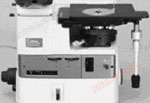
The parts that often need to be operated are concentrated near the observer, that is, in front of the microscope. Such as: field of view aperture, aperture stop, polarizer, analyzer, inspection board insertion and removal, and switching between bright and dark fields.
Compact structure, small footprint, anti vibration, sturdy and durable

Box shaped structure, sturdy and durable; Compared to TME300, it occupies a smaller area and can save approximately one-third of the space.
High optical performance, uniform illumination, energy-saving and power-saving

By using Nikon's unique CFI60 optical system, not only can high contrast and clear bright field images be obtained, but also dark field images with brightness three times higher than before can be obtained;
Newly developed 1x and 40x objective lenses;
The eyepiece has a field of view of 25mm, combined with the newly developed 1x objective lens, allowing samples with a diameter of 25mm to be seen all at once;
Uniform illumination and clear imaging;
The newly developed 12V50W halogen lamp lighting has a brightness comparable to the previous 12V100W halogen lamp lighting, and can save half of the electricity.
Microscopic photography and image processing
By selecting Nikon's DS series digital camera, microscopic photography can be performed;
The microscopic images captured can be observed and processed in two ways, namely:
1) DS-L2 independent display controller (image data can be saved to a USB drive),
1) DS-L2 independent display controller (image data can be saved to a USB drive),
 DS-L2
DS-L2
 DS-U2
DS-U2
By utilizing the functions in NIS Elements software, seamless stitching of microscopic images can be achieved;

By utilizing the functions in NIS Elements software, material analysis can be performed, such as grain size analysis and graphite spheroidization rate analysis of ductile iron.


