- Phone
-
Address
15th Street, Kaifa Road, Tiexi District, Shenyang City
Product Categories
Shenyang Maixinyu Technology Co., Ltd
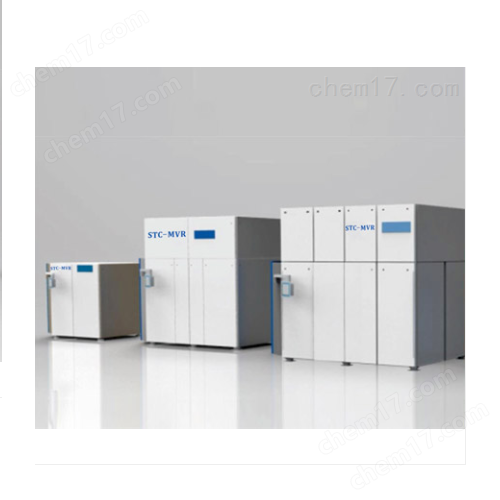
Laboratory waste liquid treatment equipment
NegotiableUpdate on 05/06
- Model
- Nature of the Manufacturer
- Producers
- Product Category
- Place of Origin
Overview
Classification and treatment of waste liquids in laboratory waste liquid treatment equipment: Chemical waste liquids should be stored in suitable containers and locations based on their chemical properties. They should be stored in sealed containers and not mixed. Container labels must indicate the type of waste, storage time, and regular disposal. Generally, waste liquids can be discharged after acid-base neutralization, coagulation precipitation, and sodium hypochlorite oxidation treatment. Organic solvent waste liquids should be recovered according to their properties.
Product Details
1Laboratory waste liquid treatment equipmentDefinition of intermediate waste liquid:
1. Expired drugs, high concentration solutions discarded from experiments, standard solutions, and improperly prepared solutions.
2. Waste chemical solutions excluded during the use of detection instruments.
IILaboratory waste liquid treatment equipmentIntermediate waste liquid treatment:
1. Purpose: To prevent the spread of drug contamination in the laboratory.
2. Scope of application: Waste and liquid generated during production and inspection processes.
3. Responsibility and supervision: The laboratory operators shall implement this management system, and the supervisor shall be responsible for supervising the implementation of this system.

3、 General principles for treating waste liquids:
When it is proven that the concentration of waste liquid is relatively low and safe, it can be discharged into the drainage ditch;
2. Concentrate the waste liquid as much as possible to reduce its volume, and store it in a safe place for isolation and disposal;
3. Use distillation, filtration, adsorption and other methods to separate hazardous substances, while only discarding the safe parts;
4. Regardless of whether it is a liquid or a solid, any substance that can be safely burned should be burned, but the quantity should not be too large. During combustion, harmful gases or residues should not be left behind. If it cannot be burned, it should be buried in a safe place and not exposed on the ground;
5. Generally, toxic gases can be discharged through fume hoods or ventilation ducts, diluted with air, and a large amount of toxic gases must be fully burned or adsorbed with oxygen before being discharged;
6. Waste liquids should be stored in suitable containers and locations based on their chemical properties. They should be stored in sealed containers and should not be mixed. The type of waste, storage time, and regular disposal should be indicated.
4、 The classification processing is as follows:
1. Chemical waste liquid
Waste liquid should be stored in suitable containers and locations based on its chemical properties. It should be stored in sealed containers and not mixed. The container label must indicate the type of waste, storage time, and regular disposal. Generally, waste liquids can be discharged after acid-base neutralization, coagulation precipitation, and sodium hypochlorite oxidation treatment. Organic solvent waste liquids should be recovered according to their properties.
2. Biological waste liquid
Biological waste liquids should be collected in suitable containers and locations based on their pathogen characteristics and physical properties. A dedicated person should classify and collect them for disinfection, incineration, and daily cleaning. Liquid waste can generally be treated with bleach powder for chlorination disinfection.
3. Comprehensive waste liquid
Adjust the pH of the waste liquid to 3-4 with acid and alkali, add iron powder, stir for 30 minutes, then adjust the pH to around 9 with alkali, continue stirring for 10 minutes, add aluminum sulfate or basic aluminum chloride coagulant, and perform coagulation precipitation. The supernatant can be directly discharged and treated as waste residue.
5、 Specific handling:
1. For waste acid solution, acid resistant plastic mesh or glass fiber can be used for filtration first, then alkali can be added for neutralization, and the pH value can be adjusted to 6-8 before being discharged. A small amount of waste residue should be buried underground.
2. For highly toxic waste liquids, corresponding measures must be taken to eliminate their toxic effects before processing.
3. A large amount of condensed water is used in the laboratory, which can be directly discharged without pollution.
4. Used for washing, with minimal pollution, can be discharged into the sewer.
5. After use, acid, alkali, and salt solutions are all poured into acid, alkali, and salt wastewater tanks, neutralized, and discharged into the sewer.
6. The organic solvent is recovered in the organic waste tank using separation methods such as distillation and rectification.
7. Concentrated treatment of heavy metal ions, including precipitation methods.
6、 Attention:
1. With different compositions of waste liquid, toxic gases, heat generation, explosion and other hazards often accompany the treatment process. Therefore, it is necessary to fully understand the properties of the waste liquid before treatment, and then add a small amount of the required drugs separately. It is necessary to observe and operate at the same time.
2. First, treat the waste liquid separately. If it is stored and treated together, although the treatment methods may vary, in principle, various compounds that can be uniformly treated should be collected and processed.
3. Choose a container that is not damaged or corroded by waste liquid for collection. Label the composition and content of the collected waste liquid clearly and store it in a safe location. Especially for highly toxic waste liquids, special attention should be paid.
4. Waste liquids containing explosive substances such as peroxides should be handled with caution and disposed of as soon as possible.
5. Waste containing radioactive substances must be collected using alternative methods and must be handled strictly in accordance with relevant regulations to prevent leakage and with caution.
7、 Safety measures for waste liquid treatment:
When handling chemical waste liquids, splash proof goggles, gloves, and laboratory coats must be worn.
2. Waste liquids that release smoke and vapor should be dumped in the fume hood.
To prevent the escape of smoke and vapor, the container should be tightly sealed after each waste dumping.
4. Highly active compounds, water-soluble compounds, high concentration oxidants or reducing agents must not be mixed with other chemical waste.


