- Phone
-
Address
Room 3023, 3025, Innovation Building, No. 101 West Fourth Ring South Road, Fengtai District, Beijing
Product Categories
Beijing Chuangpu Technology Co., Ltd

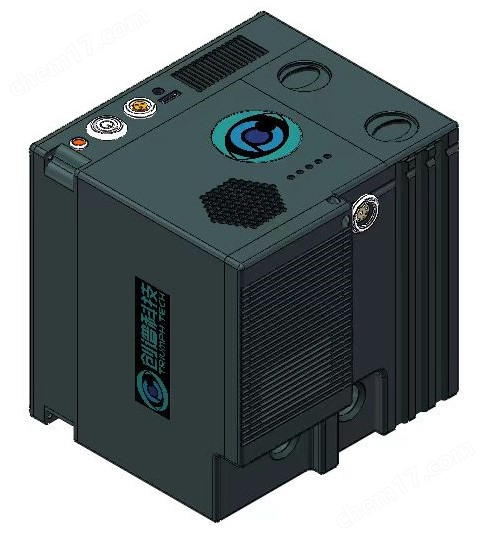
KUSTA 4004M Online Near Infrared Multiplexing Spectrometer
NegotiableUpdate on 05/06
- Model
- Nature of the Manufacturer
- Producers
- Product Category
- Place of Origin
Overview
KUSTA 4004 is a measuring device used for qualitative and quantitative evaluation of solid or liquid samples. As long as the material has near-infrared activity, it can be identified and its composition can be determined. Samples can be directly measured without any preparation work, regardless of surface texture, humidity content, and color. $r $nKUTA 4004 has two product lines. KUSTA 4004S/C/P/L is suitable for measuring a single sample point (please refer to separate documentation), while KUSTA 4004M is suitable for measuring multiple measurement points simultaneously.
Product Details
The KUSTA 4004 near-infrared spectrometer operates based on reflectance spectroscopy technology. A light source integrated into the probe shines infrared light onto the sample. This infrared light can cause the molecular structure of the sample components to oscillate. These oscillations absorb energy from light within a specific spectral range. Different components absorb energy at characteristic wavelengths. Characteristic absorption bands appear in the spectrum, which are related to the compositional characteristics. The light reflected from the sample (including the absorption band) will be directed towards the entrance slit of the spectrometer. The spectrum will be recorded there by a linear array camera. After the user-defined integration time, the linear array camera transmits the measurement data to the internal control computer through the USB interface.

In the above figure, four different spectra can be seen. Some obvious absorption bands (with lower intensity) can be seen between 1700 and 1765 nanometers. Through the nanometer position of this point, the material of each sample can be identified.
The following figure shows the working principle of KUSTA 4004M. Usually, a probe line is installed above the conveyor belt. The probe line can contain up to 64 probes, which are connected to an optical multiplexer. This optical multiplexer can read measurement data from the probe within 20 milliseconds. Using 64 probes, 5800 measurements can be taken per second. Each measurement point on the conveyor belt measures 128 wavelengths within the range of 1400 to 1910 nanometers, with a dynamic range of 16 bits.

The number of probes (i.e. measurement points) is selected based on the size of the sample. For the identification of large samples, a wider grid and fewer probes can be chosen, while smaller samples require a tighter grid. The following figure shows a schematic diagram of the grid.

The resolution grid has two dimensions. One is along the direction of the conveyor belt, and the other is across the direction of the conveyor belt. Using probe wires like PTT can achieve a track width of 10 millimeters (across the conveyor belt). The resolution in the direction of conveyor belt movement depends on the speed of the conveyor belt. For large samples, a speed of up to 3 meters per second can still recognize all samples.
KUSTA 4004M performs precise calibration of wavelength and reflection in every measurement. Calibration will not be affected by position and will not produce differences. This is a prerequisite for ensuring accurate measurement results. Competitive products that use rotating polygonal lenses cannot perform reflection calibration. This means that the measurement parameters may change from one measurement point to the next and cannot be determined. Therefore, the accuracy of the measurement results is relatively low. Although it is possible to make a rough distinction between plastics, it is not possible to distinguish the details of polymers. For example, a higher resolution 4 x 4mm grid cannot solve this problem.
The KUSTA solution consists of three main components, selected according to the requirements:
·KUSTA 4004M, including software suite
·Probe or probe wire and lighting equipment
·Fiber optic cable
·(Third party components are required to complete the entire device)
LLA does not provide complete sorting machines. The components of LLA are integrated into the complete machine by our OEM partners. Usually, mechanical components such as conveyor belts and discharge devices, as well as logic components such as PLCs, are required to complete a machine.
KUSTA itself consists of two physical building blocks, an optical multiplexer and a near-infrared spectrometer (including industrial computers). Both modules are designed to accommodate a 19 inch rack. As standard options, both of these building modules can be delivered in air conditioning facilities. According to the requirements, these two building modules can also be delivered separately (OEM versions: KUSTA M/32-OEM, KUSTA M/64-OEM) for installation in existing facilities. There are two different versions of optical multiplexers that can connect up to 3 (KUSTA M/32) or up to 64 (KUSTA M/64) probes.
During online use, KUSTA is usually controlled by PLC. Operators can manually input data through the touch screen built into the chassis to provide protection in harsh environmental conditions.
KUSTA M can also choose to be equipped with optional color sensors. Color information and material information are provided together on each probe without the need for weighing.
KUSTA offers a wide range of probe options. A single probe (such as PT) is suitable for identifying large parts and can be freely arranged. On the other hand, probe wires (i.e. physical combinations of individual probes) have a fixed probe grid, although this grid can be manufactured according to demand. Typical probe line widths are 1000 and 2000 millimeters.
All probes require illumination. Depending on the selected probe, the lighting device can be integrated or delivered separately.
Different probes are developed for specific requirements. Measurement can be performed in reflection (analyzing the light reflected by the sample) or transmission (analyzing the light transmitted through the sample). The latter method is applicable to materials such as transparent films. The intensity of transmitted light is much weaker than that of reflected light. The optical unit of the PMT probe is installed above the conveyor belt, and the fiber optic sensor is integrated in a slot to receive light transmitted through the transparent sample.
The PTT probe wire is used for measurement in a reflective manner. The probe can be very close: a spacing of 10 millimeters or even smaller is possible, which can accurately identify fragmented materials. The probe wire is delivered in units of 500 millimeters (standard) and can be seamlessly connected to wider units.
A special feature of KUSTA is the ability to connect a PSP probe (used as a handheld scanner) to the KUSTA 4004M. This allows for manual identification of materials using the same KUSTA without the need to stop online recognition. An idle channel on KUSTA 4004M will be used to connect PSP probes. Can load separate handheld scanner recognition software.
The probe is connected to KUSTA through a special fiber optic cable. You can choose the length of the optical cable according to your needs. Although it is not recommended to use lengths exceeding 10 meters for commercial reasons, it can actually be achieved. The use of special optical fibers limits the attenuation of the transmitted optical signals.
LLA has designed special plugs to limit light scattering at the transmission points between the probe fiber optic cable and the fiber optic cable KUSTA.
KUSTA 4004M has been practically validated in the global plastic and paper recycling industry.
However, KUSTA 4004M can also play a role in many other applications, such as:
·Analyze the fat content in cookies on the conveyor belt
·Identifying plastic packaging residues in cotton
·Identify unwanted impurities in wheat straw
·Mineral assessment
KUSTA software: KUSTA computers run the Windows embedded operating system. In addition to the operating software KustaMPL delivered with KUSTA, some other software tools are also provided. All of these software are Windows applications.
KustaMPL: The operating software for KUSTA M, responsible for spectral recognition. All KUSTA M devices come with this software.
The optional software for KUSTA M includes:
·KustaMonitor (Remote Diagnosis)
·KustaBelt (online display of conveyor belt load)
·KustaControl (setup and testing program)
·Backup (used to create a full backup of LLA programs and settings)
There are already some identification procedures for qualitative and quantitative evaluation of plastic identification. In order to develop customer specific applications, KustaSpec is provided.
Other specifications:
·Non contact and non-destructive measurement based on near-infrared spectroscopy
·Measurement of absolute reflection depends on wavelength, ranging from 1400 to 1910 nanometers
·Number of probes: 1 to 64
·Spectrometer, control electronics, industrial PC
·Size: 600mm x 610mm x 515mm (including air conditioning unit width of 700mm)
·Weight: 56 kilograms (net weight, only referring to KUSTA 4004M)
·Operating System: Windows XP Embedded; Pentium M 1.8 GHz,RAM 512 MB, Solid state drive 32 GB
·VGA, PS/2 keyboard, COM,USB, Ethernet interface
·KustaMPL, including application software and analysis software provided based on the selected application
·Optional: Spectral development software
·Temperature range:+0 to+40 degrees Celsius
·Humidity range: 20% to 80%
·Power supply: 30 V~50 Hz, fuse 4 A (optional 115 V~60 Hz)
Similar Product Recommend