- Phone
-
Address
Building 20, No. 1-42, Lane 83, Hongxiang North Road, Pudong New Area, Shanghai
Product Categories
Shanghai Jingge Industrial Control Equipment Co., Ltd

Jingge Advantage Supply ETL 204772 KLD-SW
NegotiableUpdate on 05/19
- Model
- Nature of the Manufacturer
- Producers
- Product Category
- Place of Origin
Overview
Shanghai Jingge is committed to providing one-stop European and American original industrial control electromechanical equipment, instruments, and spare parts for customers in Chinese Mainland. The company is based in Shanghai and radiates. Headquartered in Frankfurt, Germany, the European aviation center, 100% original and genuine, sourced from the source. Company Name: Shanghai Jingge Industrial Control Equipment Co., Ltd. Jingge Advantage Supply ETL 204772 KLD-SW
Product Details
Jingge Advantage Supply ETL 204772 KLD-SWJingge Advantage Supply ETL 204772 KLD-SW
Shanghai JinggeIt is committed to providing one-stop European and American original industrial control electromechanical equipment, instruments and spare parts procurement suppliers for customers in Chinese Mainland. The company is based in Shanghai and radiates. 100% original genuine product, purchased from the source.
You choose our advantages:
1. Europe and America *, *, can provide customs declaration form and original factory certificate
2. German source procurement, enjoy local low prices, and effectively save procurement costs
3. Collaborate with logistics service providers to ensure accurate delivery times and reduce cargo wear and tear
4. Strictly implement national warranty regulations and cooperate with suppliers to ensure the quality of goods
5. Quick quotation, polite cooperation, guaranteed fast quotation speed, VIP experience
Ahlborn W5600WC2 Tester Ahlborn W5600WC2 Tester
Advantage brand:
Electronic and electrical category:
Schneider (full range of controllers, modules, switches, drivers, motors)
MURR (Switching Power Supply, Bus Connectors, Bus Modules, Relays, Cables)
HBM (torque sensor, weight sensor)
Heidenhain (encoder, grating ruler, measuring head, digital display device, cable)
Phoenix (modules, relays, touch panels, cables, terminal blocks)
Pilz (relay, controller, module, switch, grating, amplifier)
Euchner (switch, safety system) BECK (pressure switch, pressure transmitter)
Baumer (sensor, encoder, switch) PMA (temperature controller, temperature control module)
SUCO (pressure switch, pressure transmitter) Kuka (robot and its spare parts)
JUMO (temperature transmitter, thermocouple) Finder (relay, interface module)
GMC (multimeter, analyzer, testing instrument, transmitter)
Contrinex (proximity switch, sensor, cable)
Mechanical transmission:
Schunk (Claw, Fixture, Chuck) Spieth (Lock Nut, Tight Expansion Sleeve)
Sommer (Claw Hand, Cylinder, Clutch) Zimmer (Fixture)
GEMUE (valve, flow meter, pump) Hongsberg (flow meter, flow switch)
Mahle (filter, filter element) vahle (sliding wire, carbon brush, cable)
Goods packaging: We have accumulated a lot of experience in goods transportation packaging for a long time, and all goods are repackaged domestically to avoid domestic transportation risks. Flight cycle: Arrange flights every week to ensure timely delivery of goods
After sales service: Customer service, centralized repair operation, *'s after-sales system ensures that customers have no worries.
Processing efficiency: The ERP system can process orders and provide full process query of orders.
Universal typeGPP5000 series refers to parallel gripper
SOMMER Gripper GPP5000seriesIt is common in both industry and daily life. To learn about GermanyHonsberg flow switch/flowmeterThe application scope and precautions of the flow switch require a thorough understanding of its working principle. Firstly, there is a fluid channel in the flow switch, and the calcium channel is located inside the housing. A piston with an internal magnet is installed on the channel. When working, the fluid will give a certain pressure. When the piston is pushed by the pressure difference caused by the fluid flow, the magnetic piston will cause the sealing switch inside the equipment to operate. The diameter of the piston determines the starting flow rate. If the liquid flow decreases, the pressure will change accordingly, and the stainless steel spring will push the piston to reset. If the switch is activated, it can provide remote alarm or indication, and can also be integrated into the automatic control system. These are the simple operating principles of flow switches.
The clamping force exceeds the general standard by 30%
Static and torque are 10% higher than the general standard
Compared to other standard grippers in the industry, the fingers are 10% longer
Compared to other standard grippers in the industry, the weight of the fingers is 15% heavier
Sealed rail rating IP64/protection rating IP67 (with air pressurization)
corrosion-resistant
Up to 30 million cycles maintenance free
Zui atmospheric operating pressure 8 [bar]
Zui operates at a low pressure of 3 [bar]
Operating temperature -10 .. +90 [°C]
Maximum operating temperature+90 ° C
Zui low operating temperature -10 [° C]
Weight 0.08 [kg]
Open grip force of 150 [N]
Closing grasping force 140 [N]
Grasping direction Au? En -/Innengreifen
Unilateral travel 2.5 [mm]
The maximum grip finger length is 65 [mm]
Opening time 0.01 [s]
Closing time 0.01 [s]
Closing time/opening time 0.01/0.01 [s]
According to IEC 60529 standard, the safety protection is IP64
Repetitive positioning accuracy+/-0.01 [mm]
The maximum weight per finger is 0.12 [kg]
Gas consumption volume per cycle 2.1 [cm?]
German Sommer automatic product applications: automotive manufacturing, food and medicine, optical disc production, steel industry, electronics field. SOMMER MATIC, a German company, has many years of design and production history in the fields of automated grabbing and changing; Has rich experience in automobile manufacturing, packaging, logistics, casting, equipment production and other fields. Customers include many automobile manufacturers and supporting suppliers such as Volkswagen, BMW, Kia, Hyundai, Fiat, Chery, as well as customers in other packaging, logistics and other industries. The main products of Sommer automatic in Germany include machine grippers, robot quick change discs, rotating grippers, rotating trays, vacuum suction cups, and other automation related products. The product quality is at the highest level in the industry.SOMMER Gripper GPP5000 Series
Application Industry
Automobile manufacturing, food and medicine, optical disc production, steel industry, electronics field. Has many years of design and production history in the fields of automated grabbing and changing equipment;
Has rich experience in automobile manufacturing, packaging, logistics, casting, equipment production and other fields.
Customers include many automobile manufacturers and supporting suppliers such as Volkswagen, BMW, Kia, Hyundai, Fiat, Chery, as well as customers in other packaging, logistics and other industries.
The products mainly include machine grippers, robot quick change discs, rotating grippers, rotating trays, vacuum suction cups and other automation related products, and the product quality is at the highest level in the industry.
The main products include: SOMMER rollers, SOMMER air van motor, SOMMER linear cylinder, SOMMER robots access, SOMMER shock absorbers, SOMMER rotary cylinders, SOMMER-vacuum components, SOMMER-axis modules, SOMMER-swivel units, SOMMER-separers, SOMMER-atoolchanger, SOMMER-a-toolchanger. Accessories, SOMMER pivot, etc.
Technical Specifications
GP series rotary cylinder
The cam switch is installed on the clamp positioning sensor
Central clamping synchronous clamp
Smooth ball guidance through rolling friction
High precision, due to low activity guidelines
Maintenance free for 10000000 times
The high-temperature version (150 ° C) can be adjusted according to
| Montabert | 86646965 |
| Montabert | 86665916 |
| Montabert | 86737186 |
| Montabert | 86737830 |
| Heinrichs | MMG100L-2-28FF215-E1 |
| Heinrichs | MMG132SA-2-38FF265-E1 |
| Schneider | AC230V-DC24V/2.5A-±1% ABL-6RF2402 |
| PFANNENBERG | PN:11004152440 |
| SKF | 6003-2Z |
| SKF | 6912Z |
| Rexroth | R932004903/BWN:CPM 101575 |
| zimmer | MK 3001A JC224AC |
| Peters | 96.036 |
| Hydraulic | EB9 |
| Hydraulic | PPDB-LAN |
| Hydraulic | SARASOTA-GBY |
| JAKSA | PART M2451 |
| LEM | LTS25-NP |
| KUHNKE | SP763.0257 24VDC |
| Hitex | PGSISI-P |
| CLASS | O-ring Kiesel 17052 |
| CEMB | 5600900 |
| CEMB | 5606100 |
| CEMB | 3-90296 |
| allweiler | TECFLOW AEB 1E 100 22A F |
| JUMO | TN:48461470 |
| ROEMHELD | 8.1196.8011 |
| Sommer | KUS-25-120-SD 51549 |
| Sika | VHS0 5M 03173R23 |
| LINK BELT | MU5311UM |
| hydac | DFBN/HC160TE10C1.1 |
| hydac | DFBN/HC330TF10C1.0 |
| hydac | DFBN/HC660TF10C1.0 |
| hydac | HM63-160-R2-G1/4 |
| hydac | SB330-10A1/112A9-330A |
| hydac | SB330-20A1/112A9-330A |
| FAFNIR | TORRIXHART |
| PULSAFEEDER | LB64SB-PTC1-XXX; 230V; 50Hz; 7bar; 4.7LPH |
| Hosco | FEPM-6 * 4,20bar, 100ft (30 meters) |
| P+F | 380-XE-21501 |
| AVENTICS | 821302406 |
| Hydropa | DS117/B/V3/KKK PV=20-350bar |
| Kleinwaechter | CPS022 High Voltage Generator |
| Kleinwaechter | battery charger |
| Rexroth | R422002213 |
| pall | ETN PE-100-P01H-202 (PALL HC3310FGP13Z) |
| Mahle | Mahle KE 2660/A-1/30-SMN 5 FPM 11M05 |
| Schneider | AKKUTEC 2403-0 |
| Karl Klein | DNG 8-70 S/N1201-213591, 3450m/h .50HZ |
| Ringfeder | RFN8006S-90x101 |
| mts | RHM1570MD531P102 |
| emecanique | gskc24vacdc gskc/SerieD |
| Meister | SG30*70 -20~120 |
| lust | SC52.0075.0012.0000.0 |
| levin | 8132-00 3.2MM WW |
| mts | RHS 0200M K10 1S2B6 100 |
| mts | RHS 1350MP101S2B6100 |
| IPF | MZ072176 |
| LEF | AT0070 |
| MID-WEST INSTRUMENT | 140AA-00-O(AA) 881635 |
| MID-WEST INSTRUMENT | 140AA-00-OO 882787 |
| LORENZ | 41382 XS-KD12 |
| LORENZ | D-DR2112-R/M220-G22 |
| LORENZ | D-DR2112-R/M250-G22 |
| CARLO GAVAZZI | SM125 230 |
| Beckhoff | CX1100-0910 |
| PQS | SLI-40-2-BN 6μm |
| MABO | Coil 002482 12-30 24VDC |
| emecanique | M200 4X12 240V 1.5A 0-300µS/cm |
| MIEBACH | Part Lists Hot Strip Laser Welder HSL 17 Order :101 152 |
| Nass Magnet | 0545 00.1-00 |
| LANNY | E1B06A GRVA1 |
| Phoenix | Oeder No:2726256 |
| Phoenix | Oeder No:2726308 |
| baumer | IGFK 20P1599/S35L B112 |
| NORRES | 356-65 |
| Premotec | BL-4016 48553 |
| Support | EEx 335AZ 20 |
| linde | 861007456-1024 |
| Rexroth | R911322261 RKL4725/015.00 |
| ELAN | IEC60947-5-1 |
| mts | EP00150UD341V03 |
| mts | RHS0670MD701S1G8101 |
| COLVERN | LM10/3M29IK0M |
| Anderson-Negele | NCS-L-11/60/PNP |
| Contrinex | YBB-14R4-1700-G012 light curtain |
| Border Effect | 42x30x3 PIEFFECI P3 |
| Lanner | 100250 |
| METAL WORK | 7010022200 |
| MADER | APK 14-30 |
| ELTROTEC | FAD-T-C2.0-2.5-15000-67+Mountable lenses |
| Advance | Advance Transformer L1551H4 Lamp Ignitor |
| PELI | PSD-NB |
| Lumberg | RKMWV/LED A 3-90/5,0M M8x1 |
| LENSES | BCL 34R1 F 100 |
| Leuze | 67840615 |
| Murr | Connector 7000-08121-6200500 |
| Murr | Connector 7000-40821-230 0300 |
| Murr | MURR 8-FOLD DISTRIBUTOR27867 |
| Murr | MURR L=2m. 33012 |
| Murr | Sensor 55615 |
| Bachmann | CPU MX213 |
| Bachmann | SLC284 |
| norelem | axis cover NLM 03089-1105 |
| norelem | buffer NLM 07100-20630 |
| norelem | Buffer position limited NLM 3055-06 |
| norelem | handlebar NLM 06610-4101X30 |
| norelem | Joint plate NLM 07144-106 |
| norelem | Joint plate NLM 07144-108 |
| norelem | Norelem coupling NLM23000-170-D1=25G7-D2 |
| ELTROTEC | KL-8 10823920 |
| Nippon | TOP-2MY400-203HBMVB |
| PFEIFFER | TPR 010 NO:PTR02270 F-NO:44956394 |
| Computers | Kas- 80 - 35 -o-m 32 -dual-nl sm-ka 001 x |
| sew | R47DRE90M4/3D/TF/AL 1.1KW,88rpm,i=16.22,220V/380V/50HZ,IP65/F,MTG:M6,TB:180/3,Ma=120Nm,Fb=1.9 3d Ex tc ⅢC T 120℃ DC |
| Turck | BI1-EG05-AP6X-V1331 |
| Magnetrol | 705-510A-110 / 7MR-A110-058 (2-wire, 4-20mA, HART protocol, 58 cm for waveguide) |
| AB | 1762IF4 |
| AB | 1762IQ8 |
| AB | 1766L32BXBA |
| Euchner | CES-I-AP-U-C04-USI-115150 / 115150 |
| Euchner | 12043 |
| Euchner | MGB-H-AA1A1-R-100464 |
| BTSR | TS55/STCH1000A C03AV V15.0S4.90517 03356 |
| PMA | TB40-101-0000D-D00 |
| Meyle | PF090401000135 |
| LAPPORT | 100277 |
| LAPPORT | 100318 |
| LAPPORT | 100336 |
| OTT | 95.600.073.9.2 |
| PATLITE | LME-UFBWQ Type RATING 1 |
| PMA | Corrugated pipe PIST-23B.50 |
| Mors Smitt | D-U204-KLC |
| Mors Smitt | TDE4-U204-C/10-100S(60S)+V23BR |
| PKP | PKP DS52.2 20L/min 350bar |
| PMA | PART 506209 |
| m-system | W5FV-A-R |
| Bussmann | 50LET |
| Turck | FCS-G1/2A4P-AP8X-H1141 24VDC 400mA |
| PaCo | S06-008-001-04.00R2-1020-BHN :700-06019-1 |
| OMRON | E39-R9 |
| newson-gale | BREZ05/IPX45 |
| Sensor Parts | V10-OB-A1-W12 |
| Prevost | DRF0815N |
| Prevost | JFT 1212 |
| Prevost | JFT 1216 |
| Prevost | PUGN M081225 |
| Prevost | RMD MG1201 |
| Alfing | 0008077.563; SIZE35 L=5720mm |
| PULSAFEEDER | LB64SB-PTC1-XXX; 230V; 50Hz; 7bar; 4.7LPH |
| Oerlikon | E 214.A07 496055/01 S.NR:1024249 |
| AII | GP-226 |
| AII | GPR-1200 |
| AII | Gx- 8000 |
| IFM | PN3002 |
| PERCEPTRON | 926-0220 B 5958 |
| ZF | 6632 143 012 |
| Mechanical Engineering | GD-M20 (B67.02.006) |
| DDK | 3108A 36 3SF |
| Sterling SIHI | LPHX 65327 AB XHE 4B 1 pump head |
| LO-CAT | 610204010-0768 |
There are many domestic manufacturers of electro-hydraulic push rods, but it is not easy to become a brand in the electro-hydraulic push rod industry. Firstly, the products produced by the electro-hydraulic push rod manufacturers must be recognized by the market, so the quality of the electro-hydraulic push rod products must be excellent. Middling coal Industry and Mining Materials Co., Ltd. is a good electro-hydraulic push rod manufacturer. Next, let's take a look at the advantages of electro-hydraulic push rods.
Advantages of electro-hydraulic push rod:
1. Working principle: The electro-hydraulic push rod is powered by an electric motor and outputs pressure oil through a bidirectional gear pump. It is controlled by an oil circuit integrated block and reaches the oil cylinder to achieve the reciprocating motion of the piston rod.
2. Overload automatic protection function: When the electro-hydraulic push rod is working, if the external force acting on the piston rod exceeds the set output force or the piston reaches the end point while the motor is still rotating, the oil pressure in the circuit increases to the set limit, and the overflow valve quickly and accurately overflows to achieve overload protection. Although the motor is rotating, it will not burn out.
3. Self locking function: In the oil circuit integrated block of the electro-hydraulic push rod, a pressure self-locking mechanism is designed. When the motor stops, the piston rod can lock in a certain position and be in a pressure holding state.
4. Structural features: compact structure, easy installation, small space occupation, and simple maintenance.
Firstly, if the seal is not tight, hydraulic oil will leak out, polluting the environment and causing air and dust to enter the hydraulic station. After the operation of the ultra-high pressure hydraulic station, these air and dust will seriously affect the stability and accuracy of the entire hydraulic station. If the leakage is severe, it will directly cause a pressure drop, making the entire hydraulic station unusable.
Since there are so many hazards to not sealing tightly, shouldn't we just seal the hydraulic station to achieve the same level of sealing? In fact, it's not entirely the case. Everything has its two sides, and the opposite is true for extreme things. The same goes for the sealing of ultra-high pressure hydraulic stations.
If the sealing work has been done, of course, the sealing degree can be guaranteed. There is no doubt about this, but due to its tight sealing, it will increase the friction between the sealing components, thereby increasing the friction of other components in the hydraulic station. This also reduces the service life of the sealing components and other components, and reduces the working efficiency of the hydraulic station. Over time, the harm caused is not much less than that of a loose seal.
From this, it can be seen that the sealing work in the ultra-high pressure hydraulic station of the four column hydraulic press is either too much or too little. So, what degree should we grasp for the sealing work?
*Do not pursue overly strict sealing. The degree of sealing should be determined based on comprehensive factors such as temperature and pressure.
Secondly, the wear resistance and service life of the sealing components should be long.
Thirdly, seals and working media often come into contact, so they need to be compatible with each other, both physically and chemically.
For a long time, Germany has adhered to the principle of building the country through industry and focusing on the development of the real economy. "Made in Germany" enjoys a high reputation, thanks to its commitment to the manufacturing industry. The German economy has shown strong resilience in the financial crisis and has been able to quickly overcome the crisis. However, since the second half of 2018, the sustained weakness of the manufacturing industry has dragged the German economy into a difficult situation, increasing the risk of recession.
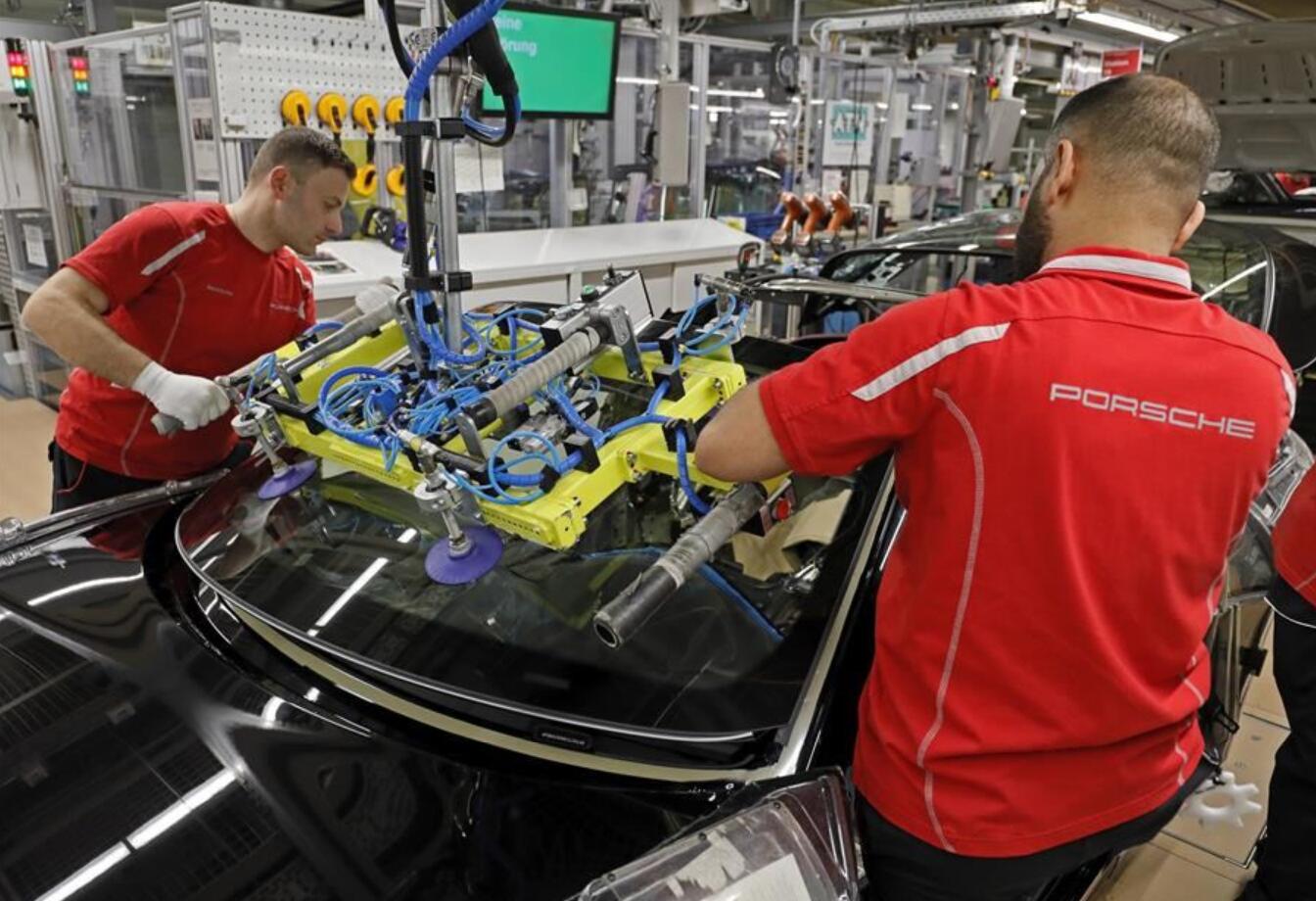
According to data from the UK market research firm IHS Markit, the German manufacturing PMI fell to an 84 month low in July, marking the seventh consecutive month below the 50 boom bust line. IHS Markit economist Smith believes that as the manufacturing industry further deteriorates, the risk of a mild technical recession in the major economies of the eurozone increases.
The recently released mid year performance reports of some manufacturing companies also reflect the harsh reality faced by the German manufacturing industry. For example, Daimler's net profit in the first half of the year decreased by 78% year-on-year, and its Mercedes Benz brand passenger car sales and profits both decreased; BASF's operating profit in the first half of the year shrank by 45% year-on-year, while lowering its full year sales and profit expectations.
Looking into the reasons, the weak performance of German manufacturing companies is mainly related to the accelerated decline in export orders, and this round of decline is the most obvious in over a decade. The President of the German Chamber of Commerce, Schweitzer, stated that German business enterprises have low expectations for overseas operations in the past 10 years.
According to data from the Federal Statistical Office of Germany, new industrial orders in Germany decreased by 2.2% month on month in May this year, significantly lower than market expectations. Due to the limited capacity of the domestic market, the German economy is highly dependent on exports, and economic growth has slowed down. In addition, protectionism, trade frictions, increasing uncertainty about Brexit, and geopolitical risks have led to sluggish external demand. The International Monetary Fund (IMF) recently pointed out that the export dependent German economy has been severely hit by a slowdown in demand.
Data shows that in the first five months of this year, Germany's goods trade surplus was 93.3 billion euros, a year-on-year decrease of 7%, with goods exports increasing by 2.3%. The German Wholesale and Foreign Trade Association predicts that Germany's exports may grow by 1.5% for the whole year of 2019, which is only half of last year's growth rate.
The President of the German Wholesale and Foreign Trade Association, Binman, pointed out that the increase in trade barriers is particularly concerning for German export companies, involving not only tariffs but also so-called non-tariff barriers such as technical regulations. This seriously affects the daily business of German export enterprises.
It is worth noting that although Germany's GDP in the first quarter of this year exceeded expectations by 0.4% month on month growth, the growth in the second quarter is likely to slow down or even stagnate when "one-time" factors such as a warm winter subside. What is even more worrying is that Germany has not yet "stopped falling and rebounded" in both exports and industrial output. As of July, export expectations and related indicators such as business prosperity continue to deteriorate. The German Federal Ministry of Economy stated that, based on the current situation, German industry is expected to remain sluggish in the coming months.
In addition, the sustained downturn in exports and manufacturing is likely to gradually spread to employment and consumption, causing the German economy to further 'stall'. Currently, many institutions have lowered their expectations for Germany's economic growth in 2019 to below 1%.
Apart from external and cyclical factors, Germany, which has always been regarded as a "top student" in Europe, has made slow progress in addressing its own structural problems. Some political elites fantasize that Germany does not need to change, but that other European countries need to follow Germany's "high-quality" development path.
The director of the German Economic Research Institute in Berlin, Frantzscher, criticized that despite the increasing imbalance and vulnerability, Germany has implemented almost no meaningful economic reforms in the past decade and failed to use the prosperous period to update its economic model.
He pointed out that low levels of public and private investment lead to low productivity in non trade sectors, while low productivity and weakened social partnerships result in the expansion of low-income groups in society.
The IMF also pointed out that Germany faces severe structural challenges in the medium term. The IMF calls on Germany to adopt more proactive fiscal policies and promote structural reforms.
Similar Product Recommend
