-
E-mail
3183329475@qq.com
-
Phone
19150158475
-
Address
Medtech Park, No. 600 IoT Third Road, Shuangliu District, Chengdu City
Product Categories
Chengdu Zhongshan Technology Co., Ltd


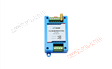
Industrial grade 2-channel analog input module
NegotiableUpdate on 11/12
- Model
- Nature of the Manufacturer
- Producers
- Product Category
- Place of Origin
Overview
Industrial grade 2-channel input analog signal acquisition, 2-channel switch digital output conversion to 485 module, supporting Modbus RTU protocol transmission, various configuration software docking, 2-channel 4-20mA current or 0-10/0-30V voltage acquisition, providing Modbus programming instruction set, built-in jumper technology, supporting various range switching. Unique correction algorithm technology, with an analog acquisition accuracy of 1 ‰.
Product Details

The industrial grade analog acquisition module supports standard Modbus RTU protocol, and converts analog signals to RS485 serial port output to the upper computer
High precision, wide voltage, suitable for -40~85 ° stability, 2 analog inputs, 2 DO outputs
Hardware and software dual watchdog, automatic reset in case of abnormalities, stable and reliable equipment without downtime.

Basic functions of 2-channel analog acquisition module:
1. Analog to RS485 data transmission, converting analog instrument data into digital signals and transmitting them to the monitoring center through RS485
2. Supports high-precision acquisition of voltage 0-5V/0-10V/0-30V, current 0-20mA/4-20mA

Supports 2 DO outputs and can be combined with external relays to control the start stop AI+DO linkage function; Built in high-precision 12 bit ADC acquisition chip.

Independent 32-bit ARM embedded processor: high speed, high stability, low power consumption
Using first-line components and high-precision acquisition chips to measure the input 10V voltage signal to be tested, the measurement result is at 10.000, with good accuracy.

Supports Modbus RTU protocol: Supports seamless integration of configuration software and touch screen devices, and provides Modbus programming instruction set.
Support voltage and current acquisition switching: According to user needs, the range can be adjusted by jumper processing. The default acquisition range at the factory is 10V.

Terminal structure and operation indicator light design, convenient for installation and wiring, supporting a wide voltage supply of 6-30V
The built-in indicator light can check the operating status of the device, and provide configuration parameter software and upper computer testing software.

Technical support for secondary development:
1. Provide Modbus protocol specifications
2. Detailed description of device register addresses and instructions, and complete documentation
3. Artificial technical support for one-on-one service


Similar Product Recommend