- Phone
-
Address
Liubao Industrial Park, Yangzhou City, Jiangsu Province
Product Categories
Jiangsu Ruyan Busbar Manufacturing Co., Ltd


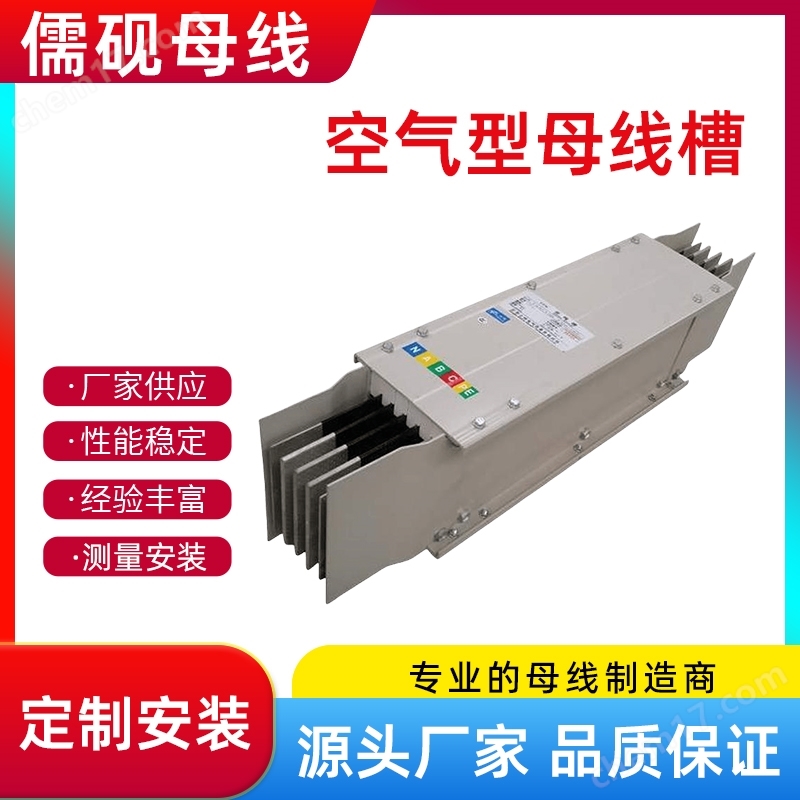
IP6 high-voltage common box bus duct can be used outdoors
NegotiableUpdate on 05/06
- Model
- Nature of the Manufacturer
- Producers
- Product Category
- Place of Origin
Overview
IP6 high-voltage common box bus duct can be used outdoors. As the name suggests, it is a closed bus system used for high-voltage and high current transmission. It is usually composed of one or more conductors (such as copper or aluminum bars) enclosed in a metal casing, which are used to transmit high voltage and high current. The design of the common box busbar allows multiple conductors to share the same enclosure, saving space and cost while improving the overall performance of the system.
Product Details
IP6 high-voltage common box bus duct can be used outdoorsAs the name suggests, it is a closed busbar system used for high-voltage and high current transmission. It is usually composed of one or more conductors (such as copper or aluminum bars) enclosed in a metal casing, which are used to transmit high voltage and high current. The design of the common box busbar allows multiple conductors to share the same enclosure, saving space and cost while improving the overall performance of the system.
Firstly, the basic parameters of the bus duct should be determined based on the rated voltage and operating current of the system. High voltage common box bus duct is usually suitable for voltage levels of 10kV and below. When selecting, it is necessary to ensure that its rated voltage is not lower than the system operating voltage and has sufficient current carrying capacity to meet load requirements. At the same time, the tolerance of short-circuit current must be considered, and the dynamic and thermal stability performance of the bus duct must comply with relevant electrical standards, and be able to withstand instantaneous high current impact without deformation or damage in the event of a short-circuit fault.
Secondly, the selection of conductor materials is crucial. The current mainstream conductor materials are electrolytic copper and aluminum. Copper conductors have excellent conductivity, low resistance, and low temperature rise, making them suitable for places with high requirements for controlling electrical energy loss; Aluminum conductors are lightweight and cost-effective, and have certain advantages in long-distance power transmission or space limited situations. However, it should be noted that the expansion coefficient of aluminum is relatively large, and the connection parts are prone to looseness, so the installation process requirements are higher. When selecting, a comprehensive judgment should be made based on the project budget, operating environment, and maintenance conditions.
Thirdly, the protection level and insulation method of the shell are also key considerations. The high-voltage common box bus duct generally adopts a fully enclosed metal shell with a protection level of not less than IP54 to prevent dust, moisture, and foreign objects from entering and ensure internal insulation performance. In humid, highly corrosive, or outdoor environments, stainless steel or casing materials that have undergone anti-corrosion treatment should be selected. Common insulation methods include air insulation, composite insulation, and cast insulation. Among them, air insulation has a simple structure and good heat dissipation, but occupies a large space; Composite insulation combines the advantages of air and solid media, resulting in a more compact volume; Cast in place insulation has stronger sealing performance and is suitable for high pollution or high-altitude areas.
Fourthly, the installation method and spatial layout need to be planned in advance. Bus ducts can be installed horizontally, vertically in vertical shafts, or fixed along wall brackets. They should be arranged reasonably according to the on-site civil structure, cable routing, and maintenance channels. The configuration of accessories such as curved sections, branch joints, expansion joints, etc. should be accurately matched with path changes to avoid structural damage caused by stress concentration. At the same time, sufficient heat dissipation space should be reserved to ensure good ventilation and prevent local overheating from affecting the service life.
Fifth, the design of the grounding system cannot be ignored. The metal casing of the high-voltage common box bus duct must be reliably grounded to form a continuous protective circuit, in order to prevent the accumulation of induced voltage and endangering personal safety in case of faults. The cross-sectional area of the grounding conductor should meet the requirements of the specifications, and the grounding resistance value should be regularly tested to ensure that it is within a safe range.
Finally, attention should also be paid to the testing and certification status of the product. Qualified high-voltage common box bus ducts should pass type tests conducted by national institutions and have complete inspection reports, including temperature rise tests, short-circuit strength tests, power frequency withstand voltage tests, etc., to ensure that all performance indicators meet national standards or industry specifications. In the design and selection stage, it is recommended to refer to relevant technical regulations, such as the GB 7251 series standards, and conduct technical comparisons and scheme optimization based on specific engineering requirements.

IP6 high-voltage common box bus duct can be used outdoorsWhy do we need a starting box?
The reason why the high-voltage common box bus duct requires a starting box is mainly based on the following reasons:
1. Ensuring system security: As the entrance of the busbar trunking system, the protective function of the starting box is crucial. By installing protective devices, the starting box can quickly cut off the circuit in case of abnormal current, prevent the spread of faults, and ensure the safe operation of the entire system.
2. Improving system reliability: The connection function of the starting box ensures smooth distribution and transmission of electrical energy from the power equipment into the bus duct. This helps to improve the reliability and stability of the system, ensuring a continuous supply of electrical energy.
3. Easy to maintain and manage: The design of the initial box usually takes into account the convenience of maintenance and management. Through reasonable layout and structural design, the starting box can be easily inspected, repaired, and replaced, reducing maintenance costs and management difficulties.
Similar Product Recommend