- Phone
-
Address
No. 116, Qinxing New Village, Qinnan, Yancheng City, Jiangsu Province
Product Categories
Jiangsu Huahang Underwater Engineering Co., Ltd


How much does it cost to conduct underwater foundation testing for bridge pile foundations and underwater bridge piers
NegotiableUpdate on 05/06
- Model
- Nature of the Manufacturer
- Producers
- Product Category
- Place of Origin
Overview
The fee standard for underwater foundation testing - How much does it cost for underwater testing of bridge pile foundations and bridge piers? Bridges are the 'lifeline' of urban transportation, and every test is to build a strong safety line for citizens' travel. ”Recently, the Highway Maintenance Center carried out a special underwater inspection work for the GG37 Line Second Bridge. By introducing a third-party professional technical team and advanced equipment, a comprehensive "physical examination" and "consultation" were conducted on the underwater foundation piers and columns of the bridge to ensure the safety and stability of the bridge structure.
Product Details
How much does it cost to conduct underwater foundation testing for bridge pile foundations and underwater bridge piers
How much does it cost to conduct underwater foundation testing for bridge pile foundations and underwater bridge piers
First, perform a full body scan of the bridge and capture all structural details into the data. ”Pointing to a silver gray device on a tripod at the intersection, this is the 3D laser scanner, which is the first "artifact" for bridge inspection.
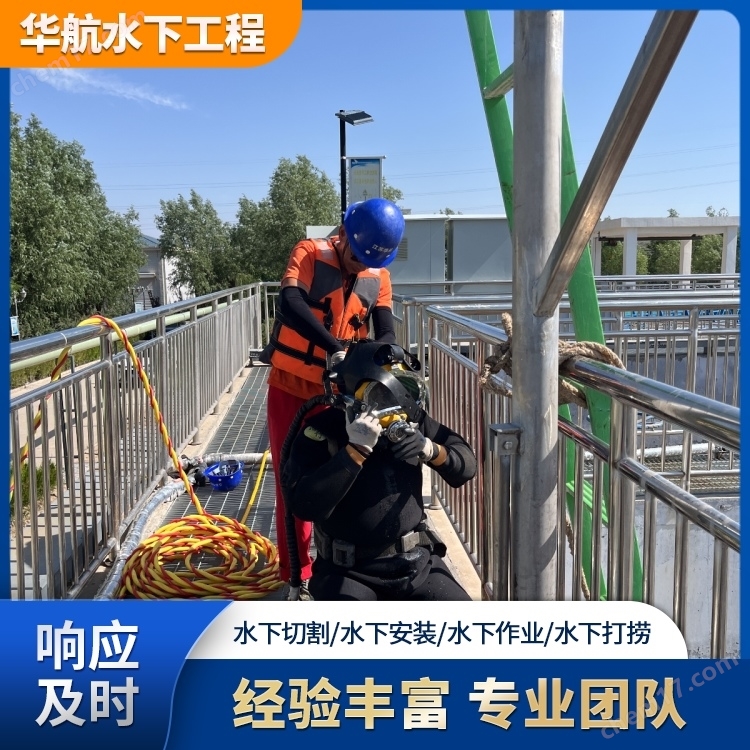
The pile foundation of a bridge is like a person's' foot ', hidden underwater and invisible. Once problems such as erosion and exposed reinforcement occur, the safety of the entire bridge will be affected. ”Pointing to the water surface, he said, "The pile foundation is soaked in water for a long time and is easily affected by water flow erosion, chloride ion erosion, and other factors, which can easily lead to diseases. In the past, relying on divers to go underwater for testing not only posed risks of drowning and infection, but also made it difficult to see details in turbid waters. Now, with underwater robots, these problems have been easily solved


The safety issues of underwater bridge components caused by complex geological conditions, changes in riverbed cross-sections, perennial erosion and corrosion of water flow are difficult to detect in routine bridge inspections, and have always been blind spots that are difficult to reach in routine testing.
We have set up more than 20 control points on the bridge deck and piers in advance, with strict spacing controlled within 50 meters, and the positioning accuracy of each point does not exceed 2 millimeters. ”While debugging the equipment, I explained to the reporter that in the past, detecting bridge deformation relied on manual stretching, climbing visual inspection, and level measurement, which not only had low efficiency but also posed risks of high-altitude operations, and many subtle deformations were easily overlooked.
Upon closer observation, as the scanning progresses, the light points on the screen quickly merge, gradually forming the complete three-dimensional outline of the bridge. Two hours later, all scanning tasks were completed. These data will be analyzed and processed to generate dynamic display videos of bridge deformation deviation and 3D comparative models of key areas. The data will be included in the digital archives of the bridge to provide full cycle data support for subsequent maintenance and reinforcement


Manipulate the robot through a tablet computer and transmit real-time underwater images on the screen. As seen, the robot flexibly shuttles around the pile foundation, and the camera captures every detail of the pile body clearly. The key to underwater inspection is to check the appearance of the pile foundation, whether there are concrete falling blocks, exposed steel bars, etc., especially to pay close attention to the connection between the pile body, tie beam, and bearing platform, as well as the corrosion of the tidal zone. At the same time, the erosion of the pile foundation should be checked to see if the bottom of the riverbed has been washed away or hollowed out. In addition, the riverbed will be measured and compared with previous data to judge its changes. "While staring at the screen, he explained.
If suspected areas of erosion or hollowing are found, sonar equipment should be used to focus on detecting and accurately confirming the area, shape, and scope of the disease. ”Introduction. During the inspection, the robot stopped at the base of a pile, and sonar data showed that the riverbed in that area was 28 centimeters deeper than during the last inspection. This is a normal erosion and there has been no emptying phenomenon. We will record this change in detail and remind future maintenance to pay close attention, "breathed a sigh of relief.
I deeply appreciate the rigor and difficulty of bridge inspection, and witness the power of technology empowering urban traffic safety. A transformation from "experience judgment" to "data speaking" is building the lifeline of urban traffic. On site, equipment such as 3D laser scanners, underwater robots, and steel bar scanners are working together, combined with unmanned aerial vehicles and image recognition technology, to achieve directional and high-precision blind spot detection, promoting the bridge inspection industry from traditional manual extensive detection to a new era of efficient, safe, accurate, and data-driven intelligent management and maintenance. Bridges are the arteries of cities, and their safety cannot be achieved without the silent dedication of "bridge doctors" and the continuous empowerment of technology.
Similar Product Recommend