-
E-mail
chinarel@163.com
-
Phone
18015536306
-
Address
No. 7 Changsheng Industrial Park, Jiancheng Road, Rennan Village, Zhitang Town, Changshu City, Jiangsu Province
Product Categories
Heatwave Electric Heating Technology (Suzhou) Co., Ltd
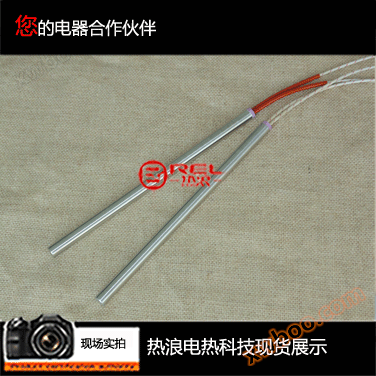
Hot runner electric heating tube
NegotiableUpdate on 12/01
- Model
- Nature of the Manufacturer
- Producers
- Product Category
- Place of Origin
Overview
Hot runner electric heating tube
Product Details
Hot runner electric heating tube, high heat heating tube, mold heating tube, FASTHEAT, same model


The pictures, prices, and attributes are for reference only. Please refer to the actual product for details. Please feel free to inquire by phone or on Wangwang before placing an order!


There are thousands of specifications of standard heating tube products in stock, and the size, power, and attribute parameters are detailed in the specialized classification page. You can directly purchase the standard electric heating products you need in the store
Products can be shipped within three days. If you need to use non-standard customized products with strict requirements (high-end mold heating tubes/hot air electric heaters/tank heaters/temperature control heating equipment/thermocouples/electric heaters)
If you need to communicate with the relevant personnel in our factory about the specifications and production cycle of the product, we will check if there are any non-standard inventory of this product for you or provide it based on your usage
Tailored a suitable heating product. If you have any questions during the installation process, please consult our technical personnel. We will patiently answer them until normal use!
Product Overview:
The metal mold heating tube, also known as the single head electric heating tube, uses Ni80Cr20 alloy heating wire as the heating element, high-temperature resistant insulating magnesium oxide powder as the insulating thermal conductive medium, and high-temperature resistant alloy material as the shell sheath. Combined with the wire winding process of one end outlet structure, it has the characteristics of high heat generation, small volume, high temperature resistance, high precision, and fast heating speed. In order to facilitate temperature detection, overheating protection, and extend the service life of the heating tube, temperature measuring thermocouples can be integrated into the interior of the heating tube.
Product Usage
Metal mold heating tubes have the advantages of high heat generation, small size, high temperature resistance, high precision, and fast heating speed. They are widely used for heating metal templates, such as packaging machinery, plastic machinery, hot stamping forming equipment, automated welding equipment, etc. In order to facilitate temperature detection, overheating protection, and extend the service life of the heating tube, temperature measuring thermocouples can be integrated into the interior of the heating tube for superior performance. Fixed methods such as flange plates and threads can be used.
Selection Guide
Before designing and ordering, users must have a clear understanding of the characteristics of the heated medium, and choose a suitable heater based on its characteristics. Do not use it arbitrarily. If you are unsure, please refer to the design and production parameters and inform us of the following information. We will provide the best design services and products according to your needs.
Notify information:
1. Characteristics and operating temperature of heating medium;
2. Power and voltage used (including phase lines);
3. The size and accuracy of the installation aperture of the heating tube;
4. Heating tube length and heating length;
5. Do you have any special requirements for the material of the heating tube;
6. Heating tube fixing method, whether there are fasteners;
Similar Product Recommend