-
E-mail
15900517856@163.com
-
Phone
15900517856
-
Address
No. 168 Dongshe Road, Songjiang District, Shanghai
Product Categories
Shanghai Pinkui Electromechanical Technology Co., Ltd
High temperature and low load ball disc testing machine
NegotiableUpdate on 01/08
- Model
- Nature of the Manufacturer
- Producers
- Product Category
- Place of Origin
Overview
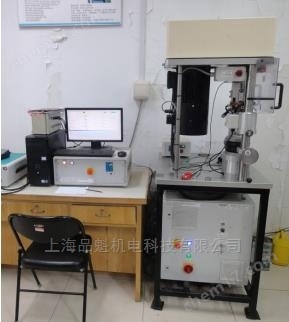
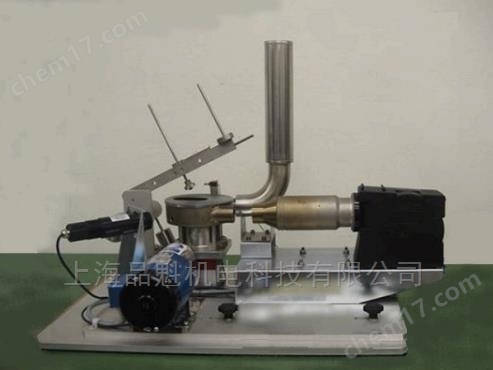
The high-temperature and low load ball disc testing machine is a specialized friction and wear detection equipment designed for high-temperature environments and low load conditions, widely used in fields such as aerospace, precision electronics, new energy, and special materials research and development. Its core function is to simulate ball disc friction pairs, apply low loads to materials under high temperature conditions, accurately detect key parameters such as friction coefficient and wear, and provide data support for performance evaluation of high-temperature components of aircraft engines, micro contacts of electronic components, new energy materials, etc. under special working conditions. It is a professional equipment in the fields of manufacturing and scientific research.
Product Details
The high-temperature and low load ball disc testing machine is a specialized friction and wear detection equipment designed for high-temperature environments and low load conditions, widely used in fields such as aerospace, precision electronics, new energy, and special materials research and development. Its core function is to simulate ball disc friction pairs, apply low loads to materials under high temperature conditions, accurately detect key parameters such as friction coefficient and wear, and provide data support for performance evaluation of high-temperature components of aircraft engines, micro contacts of electronic components, new energy materials, etc. under special working conditions. It is a professional equipment in the fields of manufacturing and scientific research.
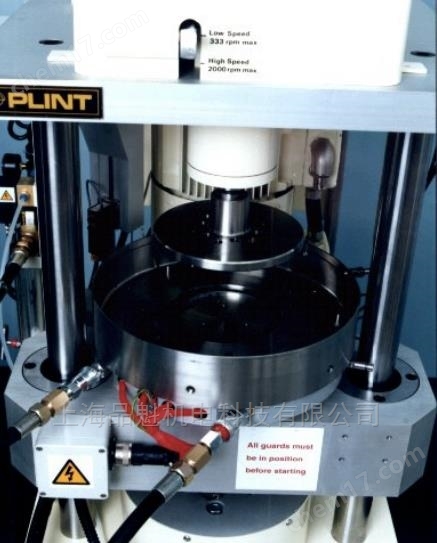
From the perspective of device construction, the core consists ofHigh temperature heating system、Low load precision loading module、Ball disc friction testing unit、Temperature control systemandHigh sensitivity data acquisition systemComposition. The high-temperature heating system adopts high-frequency induction heating or resistance heating methods, which can achieve precise temperature control from room temperature to 1200 ℃. The temperature uniformity error in the heating area is less than ± 5 ℃, meeting the high-temperature testing needs of different materials; The low load precision loading module is driven by piezoelectric ceramics and can apply low loads of 0.01-50N with a loading accuracy of ± 0.001N. It is suitable for low force friction testing of micro and precision materials; The ball disc friction testing unit is equipped with a high-precision spindle, which can adjust the speed within the range of 0.1-3000r/min. The ball disc fixture is compatible with metal balls of different sizes, ceramic balls, and various disc samples (such as alloy sheets and coated discs); The temperature control system is equipped with an infrared thermometer and a closed-loop control module to monitor and stabilize the temperature in the testing area in real time, avoiding temperature fluctuations that may affect the detection results; The data acquisition system can capture small changes in friction coefficient (resolution 0.0001) and trace wear amount (accuracy 0.001mg), with a data sampling frequency of 500Hz, ensuring accurate and reliable detection data.
The core advantages of this device lie in "precise reproduction of working conditions" and "professionalism in low load testing". The high-temperature system can accurately reproduce scenes such as the combustion chamber of aircraft engines and the interior of industrial high-temperature equipment, while the low load module precisely matches low force friction conditions such as electronic component contact and micro mechanical transmission, and the detection results are more in line with actual usage scenarios; Compared to conventional friction testing machines, it improves high-temperature stability and low load control accuracy by 1-2 orders of magnitude, and can detect subtle friction and wear changes that are difficult for conventional equipment to capture. In addition, the device supports inert gas protection function, which can isolate oxygen at high temperatures to avoid material oxidation affecting test results and further improve detection accuracy.
In practical applications, equipment functions cover key areas: in the aerospace field, detecting the friction and wear performance of turbine blade coatings and high-temperature alloys in combustion chambers under high temperature and low load, ensuring reliable engine operation; In the field of precision electronics, testing the low load friction characteristics of chip micro contacts and sensor conductive materials in high-temperature environments to avoid contact failures caused by wear; In the field of new energy, evaluate the friction loss of lithium battery cathode materials and fuel cell plates under high temperature and low stress, and optimize material properties; In the research and development of special materials, analyzing the wear resistance mechanism of ceramic based composite materials and high-temperature alloys under high temperature and low load conditions can help upgrade material formulations.
As a specialized testing equipment for specific working conditions, the high-temperature and low load ball disc testing machine provides scientific support for material research and product quality control in the field, helping to break through material application bottlenecks under high-temperature and low load conditions, and promoting the development of related industry technologies towards higher precision and better performance.
Similar Product Recommend