-
E-mail
15900517856@163.com
-
Phone
15900517856
-
Address
No. 168 Dongshe Road, Songjiang District, Shanghai
Product Categories
Shanghai Pinkui Electromechanical Technology Co., Ltd
High speed reciprocating testing machine
NegotiableUpdate on 01/08
- Model
- Nature of the Manufacturer
- Producers
- Product Category
- Place of Origin
Overview
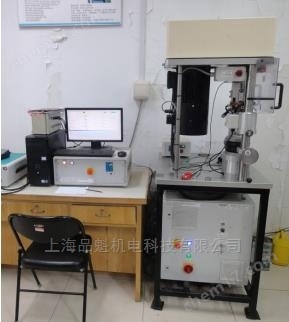
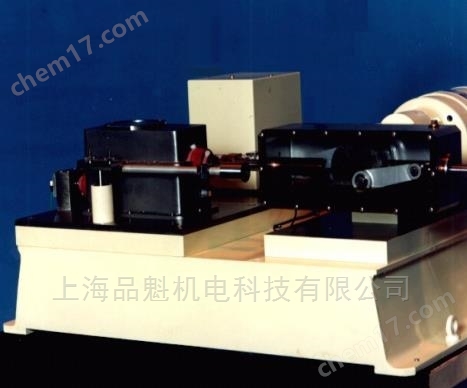
High speed reciprocating testing machine is a professional testing equipment designed for the high-speed reciprocating friction and wear performance of materials or components, widely used in fields such as automotive, electronics, aerospace, precision machinery, etc. Its core function is to simulate high-speed reciprocating motion conditions (such as reciprocating friction between automobile piston rings and cylinder walls, reciprocating friction when inserting and removing electronic connectors), accurately detect key indicators such as friction coefficient, wear, temperature rise, etc., and provide data support for the research and development, quality verification, and life evaluation of high-speed reciprocating motion components. It is a key equipment to ensure the reliability of high-speed motion systems.
Product Details
High speed reciprocating testing machine is a professional testing equipment designed for the high-speed reciprocating friction and wear performance of materials or components, widely used in fields such as automotive, electronics, aerospace, precision machinery, etc. Its core function is to simulate high-speed reciprocating motion conditions (such as reciprocating friction between automobile piston rings and cylinder walls, reciprocating friction when inserting and removing electronic connectors), accurately detect key indicators such as friction coefficient, wear, temperature rise, etc., and provide data support for the research and development, quality verification, and life evaluation of high-speed reciprocating motion components. It is a key equipment to ensure the reliability of high-speed motion systems.
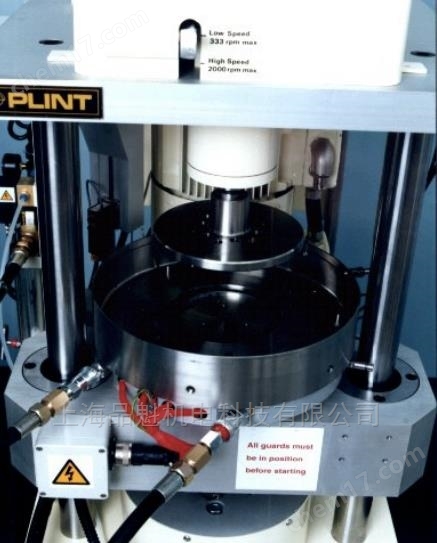
From the perspective of device construction, the core consists ofHigh speed reciprocating drive system、Multiple testing units、Precision load control module、Temperature and Wear Monitoring ComponentsandIntelligent Data Collection and Analysis SystemComposition. The high-speed reciprocating drive system adopts servo motor combined with precision ball screw transmission, with a reciprocating frequency of 10-100Hz, a stroke adjustment range of 0.5-50mm, and a motion positioning accuracy of ± 0.01mm, ensuring stable and controllable high-speed reciprocating motion; The standard configuration of the testing unit is 2-4 sets (customizable and expandable), each set is equipped with replaceable fixtures, compatible with various material samples such as metal, plastic, coating, rubber, etc., and adaptable to different forms of components such as piston rings, seals, connectors, etc; The precise load control module applies a contact load of 0.1-500N through piezoelectric ceramics or servo motors, with a loading accuracy of ± 0.001N, restoring the actual working force state; The temperature monitoring component adopts infrared thermometer or embedded sensor to collect real-time temperature of the friction surface (accuracy ± 0.5 ℃), avoiding high temperature damage to the sample; The intelligent data acquisition system can record real-time parameters such as reciprocating frequency, travel distance, friction coefficient, wear amount, temperature, etc. The data sampling frequency is as high as 1000Hz, the data error is less than 2%, and it can automatically generate test reports.
The core advantages of this device lie in "precise simulation of high-speed working conditions" and "testing efficiency". Compared to conventional reciprocating testing machines, its reciprocating frequency is increased by 3-5 times, which can truly reproduce high-speed scenarios such as the reciprocating of automotive engine pistons and the movement of internal components of high-speed precision instruments. The detection data is more in line with actual usage needs; Multiple testing units are designed in parallel, allowing for parallel testing of different parameters or the same sample simultaneously. The testing efficiency is 2-3 times higher than that of single station equipment, significantly reducing the R&D and quality inspection cycle. In addition, the device supports custom motion curves (such as sine waves and square waves), which can simulate non-uniform high-speed reciprocating working conditions and further expand the testing range.
In practical applications, equipment functions cover key areas: in the automotive industry, detecting the high-speed reciprocating friction and wear performance of piston rings and cylinder liners, optimizing engine power efficiency and service life; In the field of electronics, test the friction loss during the insertion and extraction process of high-speed connectors to ensure signal transmission stability; In the aerospace field, evaluate the wear resistance of high-speed reciprocating transmission components (such as valve push rods) inside spacecraft to ensure reliable operation in the environment; In the field of precision machinery, testing the reciprocating friction characteristics of high-speed guides and sliders to improve equipment motion accuracy; In the field of scientific research, the performance research of new high-speed wear-resistant materials (such as ceramic coatings and composite materials) accelerates material iteration and upgrading.
As a professional testing equipment for high-speed reciprocating friction scenarios, high-speed reciprocating testing machines provide scientific guarantees for quality control and technological innovation of high-speed moving parts in various industries, helping to promote the development of related products towards higher speeds and better wear resistance.
Similar Product Recommend