-
Phone
13585321285
-
Address
No.2 Xuedong Road, Xueyan Industrial Zone, Changzhou City, Jiangsu Province
Product Categories
Jiangsu Runli Boiler Co., Ltd
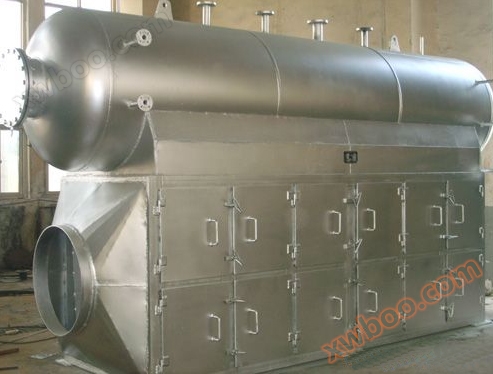
Heat pipe waste heat boiler
NegotiableUpdate on 03/08
- Model
- Nature of the Manufacturer
- Producers
- Product Category
- Place of Origin
Overview
The waste heat steam boiler adopts heat pipe heat exchange elements, which periodically recover the waste heat of flue gas to produce steam, which is integrated into the pipeline network for use according to the working conditions, or directly used for production and daily life. ...
Product Details
● Principle
The waste heat steam boiler adopts heat pipe heat exchange elements, which periodically recover the waste heat of flue gas to produce steam, which is integrated into the pipeline network for use according to the working conditions, or directly used for production and daily life. Its heat transfer efficiency is higher than that of conventional single structure heat exchangers. The flue gas temperature can be reduced to about 30 ℃ higher than the steam temperature. The equipment has a high degree of automatic control and is equipped with an automatic water level control device, which can automatically control water replenishment and shutdown without the need for duty.
The structure of the equipment
The heat pipe steam boiler is a vertical structure consisting of upper and lower parts. The upper part is the steam drum, and the lower part is the flue gas channel. The upper and lower parts are separated by tube plates.
Heat transfer element - the heat pipe passes through the middle tube plate. The heating section inside the flue is welded with high-frequency welding fins to enhance heat transfer, and the heat release section inside the steam drum is a light pipe.
Main features of the equipment
(1) Due to the use of heat pipes as a highly efficient thermal conductive element, coupled with the high-frequency welded spiral fins used in the heating section of the heat pipe element to enhance heat transfer, the entire device has high heat transfer efficiency, compact equipment, and relatively low resistance to hot side flue gas flow;
(2) The heat is transferred from the flue gas to the water, entirely accomplished by the heat pipe components. The water is indirectly heated, and the flue gas is completely separated from the feedwater, avoiding the possibility of boiler feedwater leakage into the flue;
(3) The heat pipe components in the system are relatively independent, and damage to a single or multiple heat pipes does not affect the operation of the system;
(4) The pitch of the fins in the evaporation section of a single heat pipe has been adjusted during design to regulate the transmission efficiency of the heat pipe, thereby controlling the wall temperature of the heat pipe and preventing acid dew point corrosion.
(5) The calculation of the heating surface in the system has fully taken into account the dew point temperature of the flue gas, ensuring the normal operation of the heat pipe system.
● Installation of equipment
1. The equipment is hoisted at the designated location in the process and civil engineering design. When lifting, lift according to the position shown on the drawing or approved by relevant technical personnel, and there should be no additional load or impact load during lifting.
2. After the equipment is positioned according to its actual location, it should be leveled. The bottom basket of the equipment should be in even contact with the foundation support, and there should be no instability.
3. In order to ensure the uniformity of the imported flue gas, it is necessary to install a guide plate in the inlet flue.
4. After the installation of the system pipeline is completed, a hydrostatic test shall be conducted in accordance with GB-150-98. The hydrostatic test pressure shall be 1.5 times the operating pressure. During the pressure test, verify the starting performance of the safety valve at the same time.
5. After passing the hydrostatic test, the pipeline shall be insulated.
● Equipment operation, maintenance, and upkeep
1. Preparation before driving
(1) Check the smoothness or normal status of all water, electricity, and gas pipelines;
(2) Before driving, the steam drum system should be boiled out.
(3) Start the feedwater pump and open the pipeline valve to fill the steam drum with water. After the steam drum is filled with water, open the system drain valve and flush the steam drum appropriately.
● Conventional driving procedures
(1) Start the water treatment device, check the water quality, and after the effluent is qualified, fill the soft water tank with water;
(2) Start the water supply pump, open the valves on the pipeline to fill the steam drum with water. Before that, open the top drain valve of the heat pipe steam generator steam drum. After the steam drum is filled with water, open the system drain valve, flush the steam drum and connecting pipes appropriately, close the drain valve, adjust the opening of the return pipe valve and the water supply valve to make the water level of the steam drum reach the middle position, and close the drain valve.
(3) Adjust the system to run mode.
(4) Start the blower or induced draft fan to allow the hot fluid to pass through the flue, and put the heat pipe steam generator into operation.
(5) After the air is discharged from the top vent valve of the steam drum, adjust the opening of the pump outlet valve and the water supply valve appropriately to maintain the normal water level. After the steam production stabilizes, close the vent valve and start the vehicle.
● Equipment operation and maintenance
The heat pipe waste heat recovery steam generation system has no rotating parts except for the make-up water pump, and does not require fuel or other power sources. Therefore, maintenance during operation is relatively simple, and only the following precautions are required:
(1) The operation and management of this system must refer to the general operating procedures for waste heat boilers.
(2) During operation, regular water quality inspections should be conducted to ensure that the water quality inside the feedwater and steam drum is qualified. The steam drum should be properly drained during each shift.
(3) Regularly flush the steam drum with water during operation intervals to remove residual dirt and scale inside.
(4) During system operation, the output may vary due to fluctuations in production conditions. Personnel on duty should adjust the water supply flow appropriately to ensure normal steam output.
(5) When the system is shut down or undergoing maintenance due to a malfunction, the hot fluid should be stopped first, followed by the cold fluid.
(6) If the system encounters a malfunction and stops, it should ensure that the water circuit in the steam drum is unobstructed to prevent the water in the steam drum from overheating and vaporizing, resulting in overpressure.
● Fault handling