- Phone
-
Address
West Exit of Aerospace Avenue, Xi'an City
Product Categories
Shaanxi Ploudi Measurement and Control Technology Co., Ltd


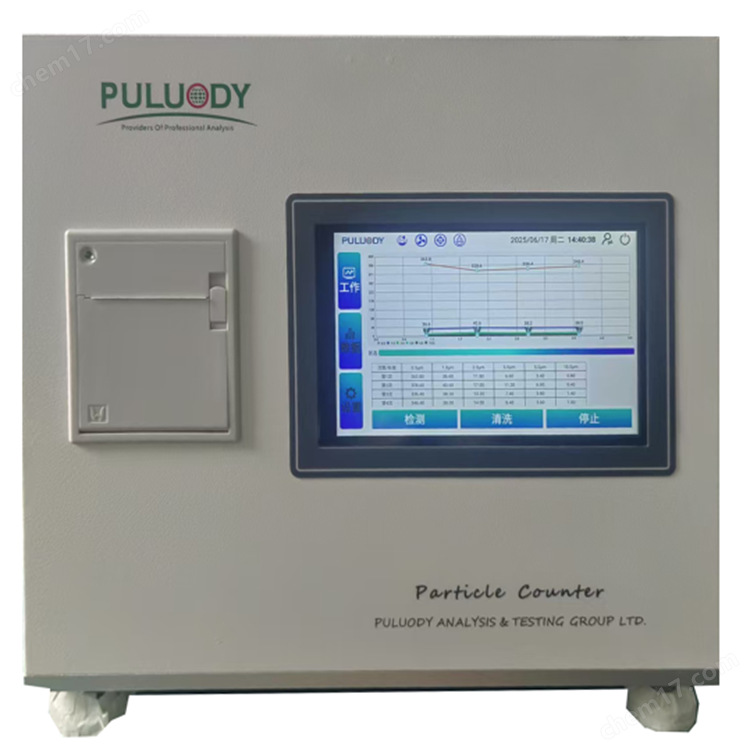
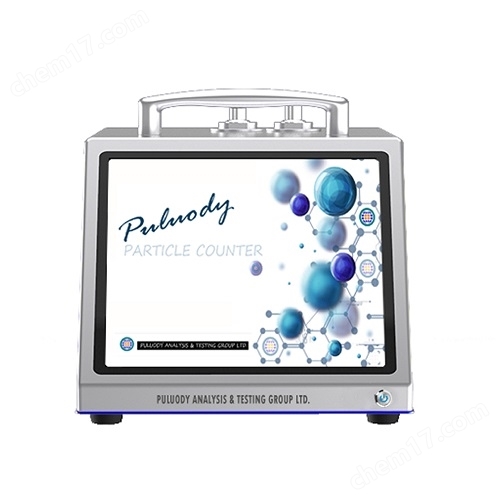
Grinding fluid liquid particle counting and distribution system
NegotiableUpdate on 05/06
- Model
- Nature of the Manufacturer
- Producers
- Product Category
- Place of Origin
Overview
The key to the manufacturing of commercial integrated circuits for abrasive liquid particle counting and distribution systems depends on chemical mechanical planarization; CMP is an abrasive slurry used to polish the surface of silicon chips to near atomic flatness; The physical and chemical properties of material particles. The abrasive slurry (Slurry) contains relatively; Less particles larger than 1.0 μ m (such as silica and alumina), these particles; Particles may cause micro scratches during the planarization process on the wafer surface. Therefore; The Large Particle Counting (LPC) of abrasive slurry particles is a CMP process; Key factors in art.
Product Details
Product IntroductionGrinding fluid liquid particle counting and distribution system The key to manufacturing commercial integrated circuits depends on chemical mechanical planarizationCMP is the physical and chemical properties of abrasive slurry particles used to polish the surface of silicon wafers to near atomic flatness. The abrasive slurry (Slurry) contains relatively few particles larger than 1.0 μ m (such as silica and alumina), which may cause micro scratches during wafer surface planarization treatment. Therefore, the Large Particle Count (LPC) of abrasive slurry particles is a key factor in the CMP process.

Detection PrincipleThe liquid to be tested flows through a flow cell, which is equipped with optical glass on both sides. The laser beam is collimated through a lens group, passes through the flow cell, and is directed onto a light trap. If there are no particles in the liquid to be tested, the photodetector cannot receive the light signal. If there are particles in the liquid, they will pass through the flow cell and cause obstruction or scattering with the laser beam. The occlusion and scattering signals at a certain angle (or angles) are collected and converged onto the photodetector through a lens, generating positive electrical signal pulses whose amplitude is proportional to the light intensity. Small particles in liquid can be counted and detected based on the amplitude and number of signals. The photoresist method mainly detects larger particles larger than 2 μ m, while the light scattering method mainly detects particles smaller than 2 μ m. The clever fusion detection of two models widens the detection range of particles and increases accuracy, making particles nowhere to hide. The PLD-FX-801 liquid particle counter is based on the detection principle of dual-mode light scattering method and light resistance method. It adopts the eighth generation dual laser narrow light particle detection sensor of Prologi core technology, dual precision flow control, and offline automatic dilution system. It can be used to evaluate the concentration of defective particles in grinding fluid. The PLD-FX-801 liquid particle counter can effectively help us identify the source of particle contamination in the system, evaluate the effectiveness of filtration, and reduce the risk of selecting defective particles.

Typical Applications applied to CMP POU detects large particles causing scratches and defects in the Slurry at the final out of the supply equipment, in order to prevent accidents from occurring; Applied to detect and distinguish sludge good/bad test, good/bad sludge, and analyze it on the supply side to prevent accidents from occurring; Applied for particle monitoring and analysis in pure water in the electronic semiconductor industry; Applied to particle monitoring and analysis in electronic chemicals in the electronic semiconductor industry; Application in the filtration industry for monitoring filtration efficiency and membrane integrity; Applied to water purification plants, steel plant recycling water, tap water use, etc.
Performance characteristics The dual-mode detection principle ensures that particles have nowhere to hide;Standard particle size of 0.5-100 μ m, ultra wide particle monitoring range; Accurate flow control makes monitoring data more constant and stable; Suitable for ultra-high concentration particles in offline automatic dilution systems; High flow rate ensures fast cleaning time and system cleanliness; The integrated design of the instrument ensures a low failure rate and low maintenance costs; Latex ball calibration, traceable to NIST standards; Real time observation of particle size, quantity, and trend analysis in the grinding slurry; Flexible setting of limit alarm, fast response to dynamic changes; Optional flexible communication methods to achieve modern management of the factory;

Technical specifications
Sensor: 8th generation dual laser narrow light detector (more accurate, stable, and rapid)
∝ Test principle: dual-mode of light resistance and light scattering
∝ Test samples: water and organic solvents
∝ Detection range: 0.5-100 μ m
∝ Number of channels: 1000 channels can be freely set to 16 channels
∝ Detection time: 5s~Custom
∝ Particle size accuracy: ≥ 90%
∝ Counting accuracy: ± 3%
∝ Sampling accuracy: ± 1%
∝ Sampling flow rate: 5mL/min~150mL/min
∝ Measurement methods: online/offline, dilution/direct
∝ Alarm methods: sound and light alarm, liquid leakage alarm, particle restriction alarm
∝ Control System: Windows Operating System
∝ Communication method: standard TCPIP; Optional: RS232/RS485/4-20mA
Order configuration
Standard configuration:
One set of testing host;
Install and debug a set of consumables package;
One set of factory paper documents.
Inlet pressure regulation module.
Application Cases
When measuring online or offline, it is possible to The LPC data caused by changes in supply device events such as filter exchange or charge can effectively monitor the grade of Slurry.
Similar Product Recommend