- Phone
-
Address
Room 505, Building 18, Yuguang Industrial Park, No.1 Qiantouxinqiao Street, Dongcheng Street, Dongguan City
Product Categories
Dongguan Tianji Automation Equipment Co., Ltd

Germany's Beijiafu P+F inductive sensor is shipped from the place of origin
NegotiableUpdate on 05/06
- Model
- Nature of the Manufacturer
- Producers
- Product Category
- Place of Origin
Overview
The P+F inductive sensor from Germany is mainly used to measure temperature and temperature related parameters by utilizing the characteristic that the resistance value changes with temperature. In situations where high temperature detection accuracy is required, this type of sensor is more suitable. The more widely used thermal resistance materials are platinum, copper, nickel, etc. They have the characteristics of high temperature coefficient of resistance, good linearity, stable performance, wide temperature range of use, and easy processing. Used for measuring temperatures within the range of -200 ℃ to+500 ℃.
Product Details
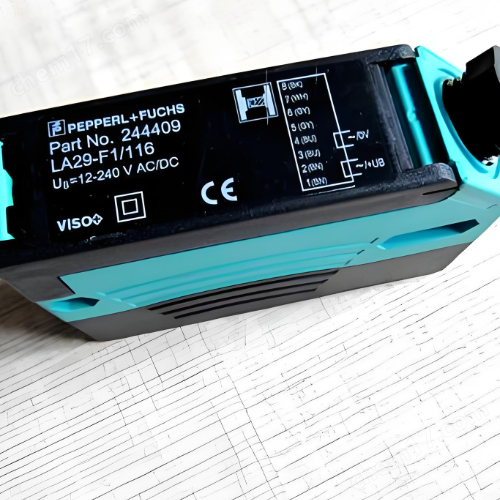
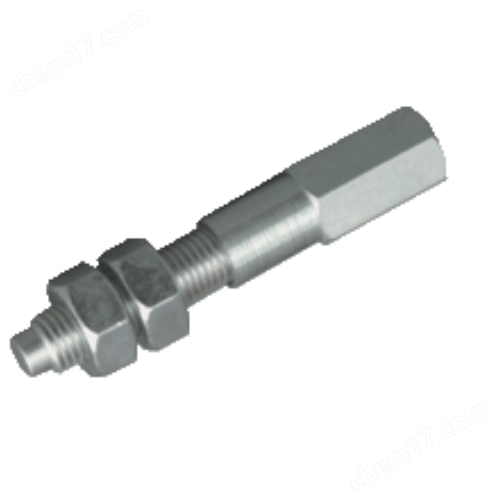
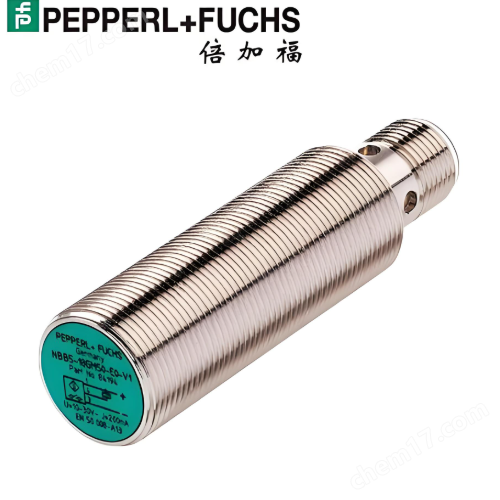
Germany's Beijiafu P+F Inductive Sensor Origin
resistive
A resistive sensor is a device that converts physical quantities such as displacement, deformation, force, acceleration, humidity, temperature, etc. into resistance values. There are mainly resistance sensors such as strain gauges, piezoresistive sensors, thermistors, thermosensitive sensors, gas sensitive sensors, and humidity sensitive sensors.
Resistance strain gauge
The resistance strain gauge in the sensor has the strain effect of metal, which produces mechanical deformation under external force, resulting in a corresponding change in resistance value. There are mainly two types of resistance strain gauges: metal and semiconductor. Metal strain gauges can be divided into wire type, foil type, and thin film type. Semiconductor strain gauges have advantages such as high sensitivity (usually tens of times that of wire and foil) and small lateral effects.
piezoresistive
A piezoresistive sensor is a device made by diffusing resistance on a semiconductor substrate based on the piezoresistive effect of the semiconductor material. The substrate can be directly used as a measuring sensing element, and the diffusion resistance is connected in the form of a bridge inside the substrate. When the substrate is deformed by external force, the resistance values will change, and the bridge will produce corresponding unbalanced output.
The substrate (or membrane) materials used as piezoresistive sensors are mainly silicon wafers and germanium wafers. Silicon piezoresistive sensors made of silicon wafers as sensitive materials are increasingly being valued, especially solid-state piezoresistive sensors used for measuring pressure and velocity.
Germany's Beijiafu P+F inductive sensor is shipped from the place of origin
Sensor range: up to 150 mm (KLR-C02-2.2-2.0-K146)
Detection range: up to 450 mm (KLE-C01-2.2-2.0-K116)
Light source: LED
Light source type: modulated visible red light, 660 nm
Environmental light limit: 10000 Lux
Centralized installation: up to 20
MTTFd: 500 a
Task Time (T)M) : 20 a
Diagnostic coverage rate (DC): 0%
Work indicator light: Power on: static lighting, undervoltage indicator: green LED, flashing (approximately 0.8 Hz), short circuit: green LED flashing (approximately 4 Hz)
Diagnostic indicator: 7-segment display
Function indicator light: yellow LED: static lighting switch status, flashing when stability control is insufficient
Control element: menu selection button (mode); Teaching button (group); Button for fine-tuning and parameter setting (up/down)
Working voltage: 10 .. 30 V DC
Ripple: 10%
No load current: ≤ 30 mA
Pre fault indication output: 1-channel push-pull (4-in-1) output NPN/PNP, short circuit protection
Switch type: bright/dark, selectable, programmable
Similar Product Recommend