- Phone
-
Address
Room 505, Building 18, Yuguang Industrial Park, No.1 Qiantouxinqiao Street, Dongcheng Street, Dongguan City
Product Categories
Dongguan Tianji Automation Equipment Co., Ltd
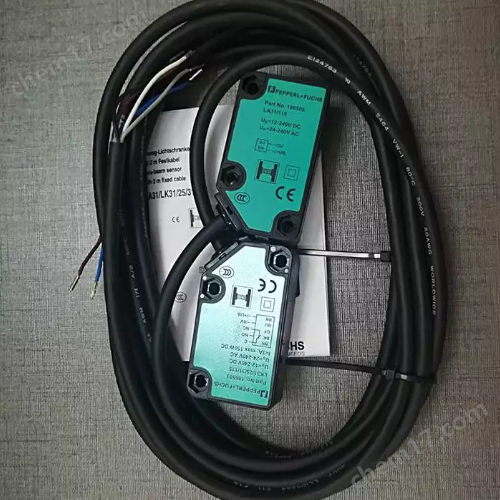
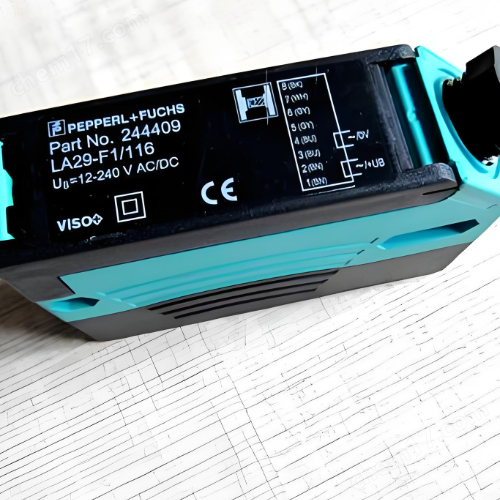
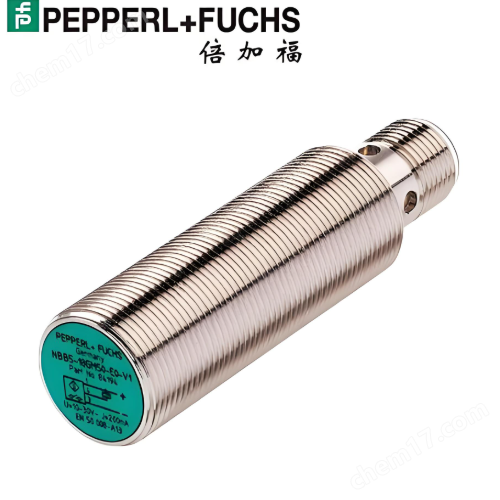
German Beijiafu P+F first level agent spot goods
NegotiableUpdate on 05/06
- Model
- Nature of the Manufacturer
- Producers
- Product Category
- Place of Origin
Overview
The low cost and ease of use of the P+F first level agent in Germany's visual sensors have attracted machine designers and process engineers to integrate them into various applications that previously relied on manual labor, multiple photoelectric sensors, or no inspection at all. The industrial applications of visual sensors include inspection, metrology, measurement, orientation, defect detection, and sorting. The following are just some application examples:
Product Details
German Beijiafu P+F first level agent spot goods
Wireless temperature
Wireless temperature sensors convert the temperature parameters of the controlled object into electrical signals and send wireless signals to the receiving terminal to detect, adjust, and control the system. It can be directly installed in the junction box of general industrial thermal resistors and thermocouples, forming an integrated structure with on-site sensing components. Usually used in conjunction with wireless relays, receiving terminals, communication serial ports, electronic computers, etc., this not only saves compensation wires and cables, but also reduces signal transmission distortion and interference, thereby obtaining high-precision measurement results.
Wireless temperature sensors are widely used in automation industries such as chemical, metallurgical, petroleum, power, water treatment, pharmaceutical, and food. For example, temperature collection on high-voltage cables; Temperature collection in harsh environments such as underwater; Temperature collection on moving objects; Difficult to connect and transmit sensor data through space; A data acquisition solution chosen solely to reduce wiring costs; Data measurement in workplaces without AC power supply; Portable non fixed location data measurement.
intelligence
The function of intelligent sensors is proposed by simulating the coordinated actions of human senses and brain, combined with long-term research and practical experience in testing technology. It is a relatively independent intelligent unit that has reduced the strict hardware performance requirements, and with the help of software, the performance of sensors can be greatly improved.
1. With the rapid development of fully intelligent distributed control systems (SmartDistributed Systems), information storage and transmission require intelligent units to have communication functions and use communication networks for bidirectional communication in digital form, which is also one of the key indicators of intelligent sensors. Intelligent sensors achieve various functions by testing data transmission or receiving instructions. Such as setting gain, compensation parameters, internal inspection parameters, test data output, etc.
2. Engineering and technical personnel who have been engaged in sensor development for many years have been doing a lot of compensation work for temperature drift and output nonlinearity of sensors, but have not fundamentally solved the problem. The self compensation and calculation functions of intelligent sensors have opened up new avenues for temperature drift and nonlinear compensation of sensors. In this way, relaxing the precision requirements for sensor processing, as long as the repeatability of the sensor can be guaranteed, using a microprocessor to calculate the test signal through software, and using multiple fitting and difference calculation methods to compensate for drift and nonlinearity, can obtain more accurate measurement results for pressure sensors.
3. Self checking, self calibration, and self diagnostic functions are required for regular inspection and calibration of ordinary sensors to ensure sufficient accuracy during normal use. These tasks generally require disassembling the sensor from the usage site and sending it to the laboratory or inspection department for testing. If there is an abnormality in the online measurement sensor, it cannot be diagnosed in a timely manner. The use of intelligent sensors has greatly improved the situation. Firstly, the self diagnostic function performs a self check when the power is turned on, and diagnostic tests are conducted to determine if the components are present. Secondly, calibration can be performed online based on usage time, and the microprocessor compares and verifies the measurement characteristic data stored in the EPROM.
4. Composite sensitive function observes natural phenomena around, common signals include sound, light, electricity, heat, force, chemistry, etc. Sensitive component measurement is generally conducted through two methods: direct and indirect measurement. Intelligent sensors have composite functions and can simultaneously measure multiple physical and chemical quantities, providing information that can comprehensively reflect the laws of material motion.
photosensitive
Light sensitive sensors are one of the most common sensors, with a wide variety of types including phototubes, photomultiplier tubes, photoresistors, phototransistors, solar cells, infrared sensors, ultraviolet sensors, fiber optic photoelectric sensors, color sensors, CCD and CMOS image sensors, etc. Its sensitive wavelengths are around visible light wavelengths, including infrared and ultraviolet wavelengths. Light sensors are not limited to detecting light, they can also be used as detection elements to form other sensors that detect many non electric quantities, as long as these non electric quantities are converted into changes in light signals. Light sensors are one of the most widely produced and applied sensors, and they play a very important role in automatic control and non electric measurement technology. The photosensitive sensor is a photoresistor, which generates current when photons impact the junction.
The concept of biosensors
Biosensors are an interdisciplinary field that combines bioactive materials (enzymes, proteins, DNA, antibodies, antigens, biofilms, etc.) with physical and chemical transducers. They are a powerful detection and monitoring method for the development of biotechnology, as well as a fast and trace analysis method at the molecular level of substances. Various biosensors have the following common structure: including one or several related bioactive materials (biofilms) and physical or chemical transducers (sensors) that can convert signals expressed by biological activity into electrical signals. The two are combined together and processed using modern microelectronics and automated instrumentation technology to form various usable biosensor analysis devices, instruments, and systems.
The principle of biosensors
German Beijiafu P+F first level agent spot goods
Similar Product Recommend