-
E-mail
leonlok@163.com
-
Phone
18910537519
-
Address
1011, 10th Floor, Block A, Building 1, Xirong Ge Building, No. 138 Changhua Road, Haidian District, Beijing
Product Categories
Beijing Liyangtaike Technology Co., Ltd
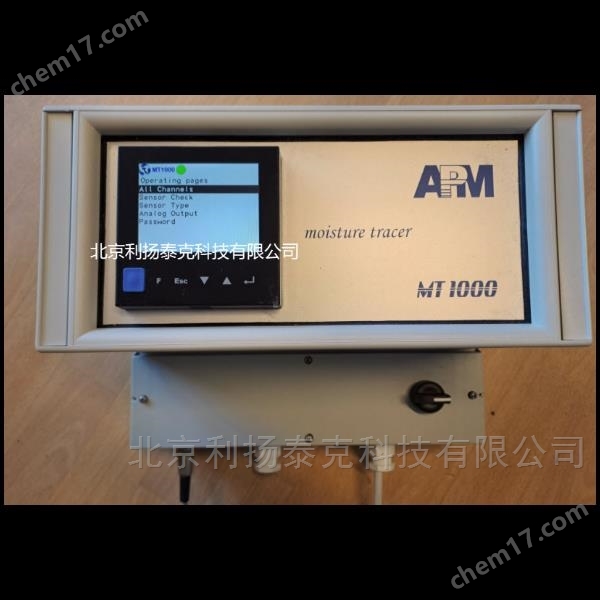
German APM electrolysis method trace water analyzer
NegotiableUpdate on 12/28
- Model
- Nature of the Manufacturer
- Producers
- Product Category
- Place of Origin
Overview
The MT 1000 trace water analyzer is designed for online measurement of trace water in chlorine gas and hydrogen chloride. The host can monitor up to three measurement channels simultaneously. The P2O5 sensor is a non consumable component, and the regeneration operation of the sensor film layer is very simple, which can be performed by the user themselves. The absolute measurement method does not require recalibration of the analyzer. Low operating costs and minimal maintenance.
Product Details
Overview
The MT 1000 trace water analyzer is designed specifically for online measurement of trace water in chlorine gas and hydrogen chloride, and is also suitable for Xe、Ar、Kr、He、D2、F2、N2、H2、O2、O3、HBr、PH3、SF6、Freon、C2H2、CO2、CH4、Natural gas、 SO2、H2S For the measurement of trace moisture in various gases (except for a few gases that undergo chemical reactions with phosphoric acid), the host can monitor up to three measurement channels simultaneously. The P2O5 sensor is a non consumable component, and the regeneration operation of the sensor film layer is very simple, which can be performed by the user themselves. The absolute measurement method does not require recalibration of the analyzer. Low operating costs and minimal maintenance.
Application field
Chlor alkali industry
petrochemical
Polycrystalline silicon industry
Gas/heat treatment inside the furnace
Industrial gases
semiconductor industry
pharmaceutical industry
Measuring principle
The P2O5 sensor utilizes the principle of electrolyzing water molecules into hydrogen and oxygen. This sensor consists of a glass cylinder and two parallel electrodes. The electrode material is selected according to the specific application (usually made of platinum or rhodium metal wire), and a thin layer of H3PO4 phosphate film is coated between the two electrodes. The electrolysis current that occurs between the two electrodes decomposes the water in the acid into H2 and O2. The final product of this process is P2O5, which is a highly hygroscopic substance. Therefore, it absorbs water from the sample gas and establishes a balance between the water content of the sample gas and the water content after electrolysis through a continuous electrolysis process. The electrolysis current is proportional to the water content of the sample gas, and the signal is amplified and displayed. And read out the data. This principle is used to measure Xe、Ar、Kr、He、D2、F2、N2、H2、O2、O3、HBr、PH3、SF6、Freon、C2H2、CO2、CH4、Natural gas, Especially suitable for measuring trace moisture in high-purity acidic gases such as Cl2, HCl, SO2, H2S, and many other gases (except for a few gases that undergo chemical reactions with phosphoric acid).
Technical Specifications
analyzer
Range: 0-2000ppm
Accuracy: 0.4ppm or 5% of the measured value
Resolution: 0.1ppm
Display: Color touch screen, buttons can be operated independently
Control function: automatic calibration
Sensor detection
Analog output: 4-20 mA (can be freely scaled)
Alarm settings: freely set within the full range
Alarm output: Relay NO/NC
Power supply: 220VAC/50 Hz @ fuse 1 × 1.0 A
Instrument casing: wall mounted, desktop, rack mounted, portable (mains power supply, no built-in rechargeable battery)
Dimensions and Weight: Width 320mm, Height 240mm, Depth 230mm; Weight Approximately 5Kg
sensor
Measurement pool: PVDF, stainless steel
Electrode: Platinum electrode
Sample gas flow rate: 20NL/h or 100NL/h optional
Sample gas pressure: maximum 200mbar (at sensor location)
Sample gas temperature:+5 ℃~+65 ℃
Response time:<1 second
Air circuit connector: 6mm card sleeve connector
Probe cable: standard 1.4 meters, can be extended as required, maximum 150 meters
Electrical connector: binder connector
Similar Product Recommend


