- Phone
-
Address
No. 735 Huangkan Village, Jiuduhe Town, Huairou District, Beijing
Product Categories
Beijing Zhongjian Road Industry Instrument Equipment Co., Ltd
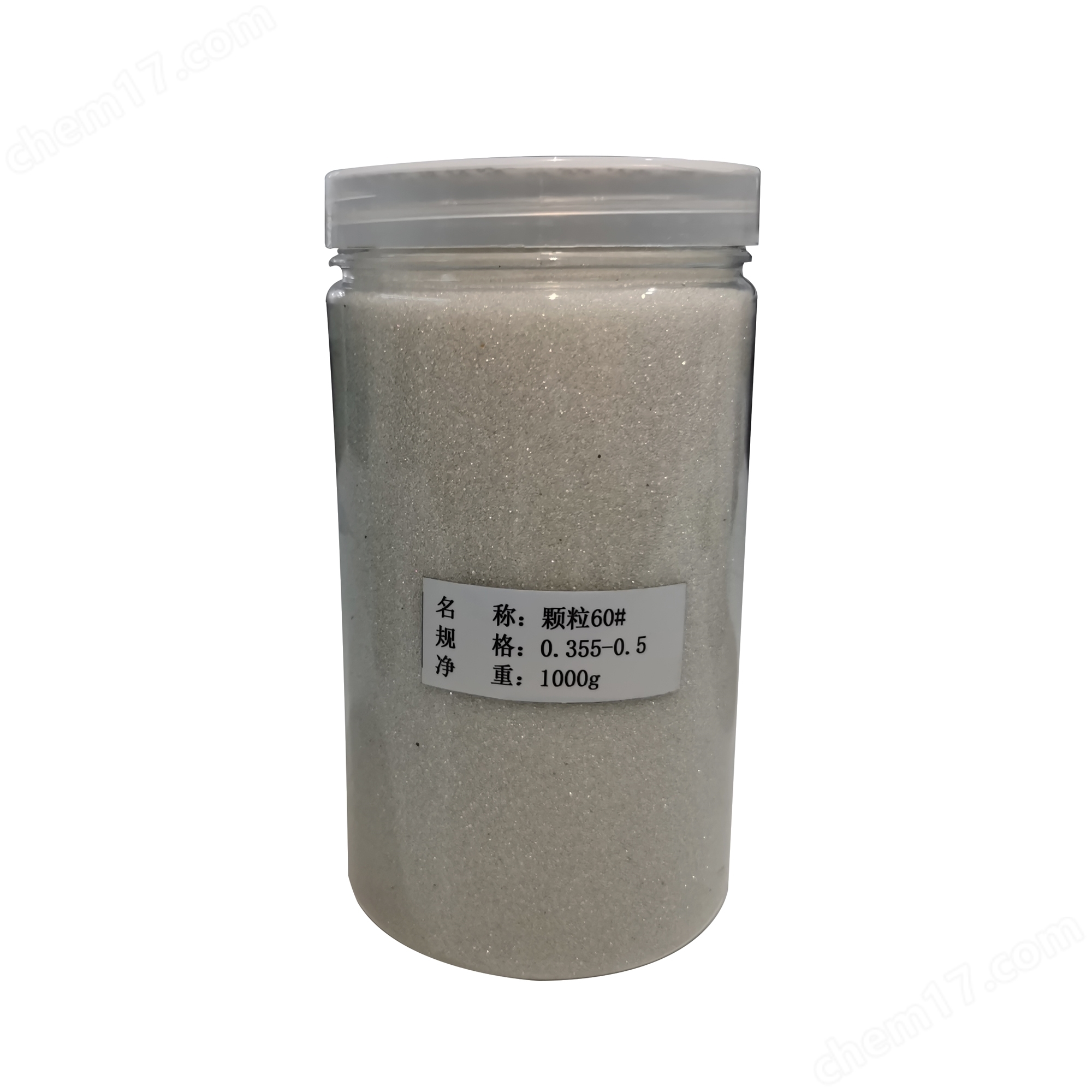
Geosynthetic material standard particles
NegotiableUpdate on 05/06
- Model
- Nature of the Manufacturer
- Producers
- Product Category
- Place of Origin
Overview
Geosynthetic material standard particles and geotextile aperture standard particles are used for geotextile aperture testing. This particle is made of spherical glass microspheres according to standard requirements, which are clean and free of impurities.
Product Details
Geosynthetic material standard particlesGeotextile aperture standard particles are used for geotextile aperture testing. This particle is made into spherical glass microspheres according to standard requirements, which are clean and free of impurities.
Standard particle size:
320#:0.045-0.063mm;
280#:0.063-0.071mm;
220#:0.071-0.09mm;
180#:0.09-0.125mm;
150#:0.125-0.18mm;
120#:0.18-0.25mm;
100#:0.25-0.28mm;
80#:0.28-0.355mm;
60#:0.355-0.5mm;
40#:0.5-0.71mm。
Geosynthetic material standard particlesMethod for determining the effective pore size of geotextiles
Geotextiles play a role in reinforcement, soft soil reinforcement, and permeable filtration in engineering. The characteristic pore size is an important physical indicator of geotextiles and a key design parameter that must be considered in the design of water conservancy, transportation, and other engineering projects.
A geotextile with a reasonable and effective aperture can maintain soil particle retention without reducing soil permeability during engineering use. At present, there are many methods for determining effective pore size, mainly including dry sieving method, wet sieving method, bubble point method, capillary method, etc. Dry sieving method and wet sieving method are commonly used in China.
Principle of effective aperture testing for geotextile
Using samples of single layer geotextile and related products without tension as sieves, the sieving rate of the samples and graded granular materials is calculated through testing at the specified vibration frequency and amplitude.
Testing method for effective aperture of geotextile
1. Fix the instrument on a flat and stable workbench
2. Connect the power supply and turn on the power switch. Before the test, be sure to set the required time according to the test requirements. The method is to press the setting button once, and the number will start flashing. Enter the desired time and press the shift button to shift the number. Press the adjustment button to increase the number. After the time is set, press the setting button to store the data, and the instrument will return to the working state. If you press the start button once, the time starts counting, stops when the set time is reached, and restarts when you press the start button
3. The experimental procedure involves placing the standard particulate material and the sample simultaneously at standard atmospheric pressure for moisture balance before the experiment.
4. Place the 5 samples in the same group flat and wrinkle free on the supporting mesh sieve.
5. Weigh 50g of standard particle material with finer particle size and evenly sprinkle it on the surface of the sample.
6. Clamp the sieve frame, sample, and receiving tray onto the instrument and start the machine. Shake the sieve for 10 minutes.
7. After shutting down, weigh the mass of the particulate material passing through the sample, record it, and then replace it with a new sample.
8. Repeat the 4-7 procedure with the next set of coarser standard particles until three consecutive sets of graded standard particle materials are obtained, and one set has a sieving rate below 5%.
Similar Product Recommend


