- Phone
-
Address
Room 202, 2nd Floor, Building 6, No. 19 Tianrong Street, Daxing Biomedical Industry Base, Zhongguancun Science and Technology Park, Daxing District, Beijing
Product Categories
Sinovac Biotech (Beijing) Co., Ltd
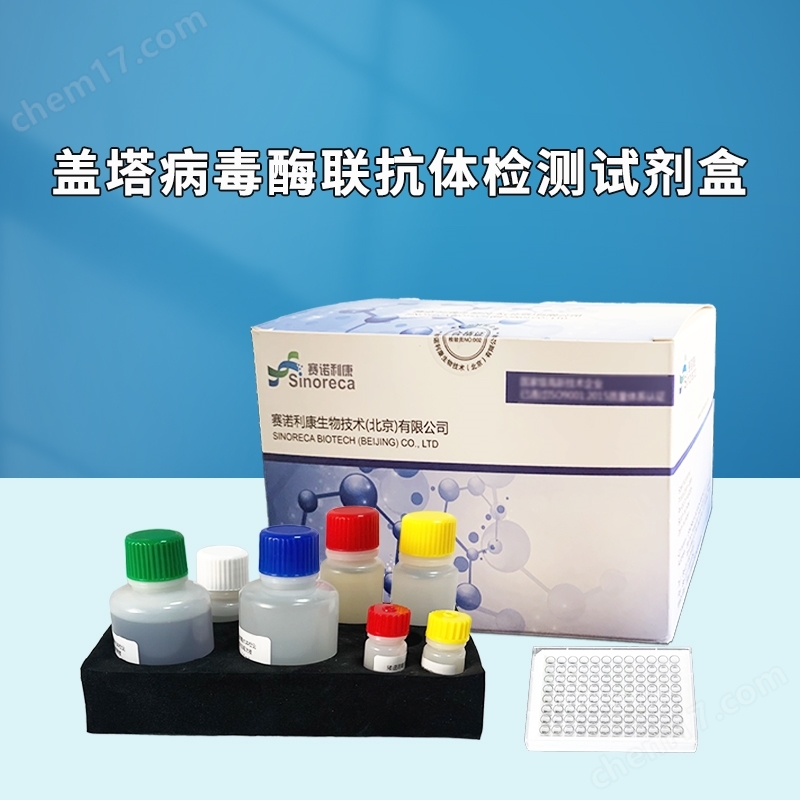


Gaita virus enzyme-linked antibody ELISA detection kit
NegotiableUpdate on 05/06
- Model
- Nature of the Manufacturer
- Producers
- Product Category
- Place of Origin
Overview
This reagent kit consists of an enzyme-linked immunosorbent assay (ELISA) plate pre coated with Gaita virus antigen, enzyme markers, and other supporting reagents. During the experiment, control serum and test sample are added to the ELISA plate. After incubation, if the sample contains Gaita virus antibody, it will bind to the antigen on the ELISA plate. After washing to remove unbound other components; Add enzyme markers and specifically bind to the antigen antibody complex on the enzyme-linked immunosorbent assay (ELISA) plate; After washing to remove unbound enzyme markers, TMB substrate solution was added to the well, which reacted with the enzyme marker to form a blue product. The color intensity was positively correlated with the specific antibody content in the sample; After adding the termination solution to terminate the reaction, the product
Product Details
Gaita virus enzyme-linked antibody detection kit
User Manual
Detection Principle
This reagent kit consists of an enzyme-linked immunosorbent assay (ELISA) plate pre coated with Gaita virus antigen, enzyme markers, and other supporting reagents. During the experiment, control serum and test sample are added to the ELISA plate. After incubation, if the sample contains Gaita virus antibody, it will bind to the antigen on the ELISA plate. After washing to remove unbound other components; Add enzyme markers and specifically bind to the antigen antibody complex on the enzyme-linked immunosorbent assay (ELISA) plate; After washing to remove unbound enzyme markers, TMB substrate solution was added to the well, which reacted with the enzyme marker to form a blue product. The color intensity was positively correlated with the specific antibody content in the sample; After adding termination solution to stop the reaction, the product turns yellow; By using an enzyme-linked immunosorbent assay (ELISA) reader to measure the absorbance values in each reaction well at a wavelength of 450nm, the presence of Gestalt virus antibodies in the sample can be determined.
Kit components
serial number |
name |
Specification/96T |
1 |
Enzyme marker |
10ml×1 |
2 |
Sample diluent |
10ml×1 |
3 |
20X concentrated washing solution |
25ml×1 |
4 |
Substrate solution A |
5ml×1 |
5 |
Substrate solution B |
5ml×1 |
6 |
Stop Solution |
10ml×1 |
7 |
positive control |
1.0ml×1 |
8 |
negative control |
1.0ml×1 |
9 |
microplate |
96T×1 |
10 |
Sealing film |
1 |
Storage and expiration date
Stored at 2-8 ℃, with a shelf life of 12 months.
After opening the packaging board, please store it in the dark at 2-8 ℃ to avoid moisture. The usage period is 2 months.
Applicable instruments
Enzyme microplate reader with 450nm wavelength, 37 ℃ constant temperature equipment, adjustable micropipette.
Sample preparation
1. Prepare serum from animal whole blood using conventional methods, requiring clear serum, no hemolysis, and no contamination. The sample can be stored at 2-8 ℃ within one week, and long-term storage at -20 ℃ is required.
2. Before using the concentrated washing solution, it should be restored to room temperature to dissolve the precipitate, and then diluted 20 times with distilled water or deionized water to form the working washing solution (such as 19 parts distilled water or deionized water plus 1 part concentrated washing solution).
Inspection Method
1. Place the reagent kit at room temperature for 30 minutes before use and restore it to room temperature.
2. Take the required amount of enzyme labeled Flat noodles, set one hole for negative and one hole for positive control, seal the unused Flat noodles as soon as possible, and store them at 2~8 ℃.
3. First add 5ul of the sample to be tested to the sample well, then add 95ul of sample diluent and shake thoroughly to mix well.
4. Add 100 μ l of negative and positive controls to each well.
5. Mix well, cover with cover film, and incubate at 37 ℃ for 30 minutes.
6. Shake off the liquid in the hole, add 250ul of working detergent to each hole, wash for 60 seconds by shaking and mixing, then discard. Repeat the washing 5 times, and pat dry the liquid in the last wash.
7. Add 100 μ l of enzyme marker to each well and let it react at 37 ℃ in the dark for 30 minutes.
8. Shake off the liquid in the hole, add 250ul of working detergent to each hole, wash for 60 seconds by shaking and mixing, then discard. Repeat the washing 5 times, and pat dry the liquid with the last wash.
9. Mix color developing solution A and color developing solution B in equal volume ratios according to the sample quantity to prepare the substrate working solution, which is ready for use. Add 100ul to each well and let it react at 37 ℃ in the dark for 10 minutes. If the overall color development speed is too fast, the color development can be stopped 5 minutes in advance, and the color development time should not exceed 15 minutes.
10. Add 100 μ l of termination solution to each well, mix well, and measure the absorbance value (OD value) of each well at 450nm.
reference value
Under normal experimental conditions, the positive control OD negative control OD is greater than 0.2.
Interpretation of Inspection Results
1. S/P=(sample OD negative control OD)/(positive control OD negative control OD).
When S/P ≥ 0.4, the result is judged as positive.
When 0.2<S/P<0.4, the results may indicate insufficient antibody potency or suspected infection.
When S/P<0.2, the result is interpreted as negative.
Limitations of experimental methods
1. This kit is only used for a rough evaluation of Gaita virus antibodies in qualitative detection samples.
2. This kit is for research purposes only and should not be used for clinical or human experiments.
Precautions
1. During experimental operations, gloves and work clothes should be worn, and a strict and sound disinfection and isolation system should be implemented. All experimental waste should be treated as infectious agents.
2. Termination solution is corrosive and should be avoided from contact with skin and clothing. If accidentally touched, please rinse immediately with plenty of tap water.
When removing the enzyme-linked immunosorbent assay (ELISA) plate from the refrigerated environment, it should be returned to room temperature before opening the bag. Unused ELISA plates should be stored in sealed bags with desiccants.
4. Concentrated washing solution is prone to crystallization at low temperatures, and should be restored to room temperature for dissolution before use.
5. The samples used for testing should be kept fresh.
The determination of experimental results must be based on the reading of the enzyme-linked immunosorbent assay (ELISA) reader.
7. Different batches of reagent components must not be mixed.
Similar Product Recommend