- Phone
-
Address
Liubao Industrial Park, Yangzhou City, Jiangsu Province
Product Categories
Jiangsu Ruyan Busbar Manufacturing Co., Ltd


Four wire air type bus duct is easy to maintain
NegotiableUpdate on 05/06
- Model
- Nature of the Manufacturer
- Producers
- Product Category
- Place of Origin
Overview
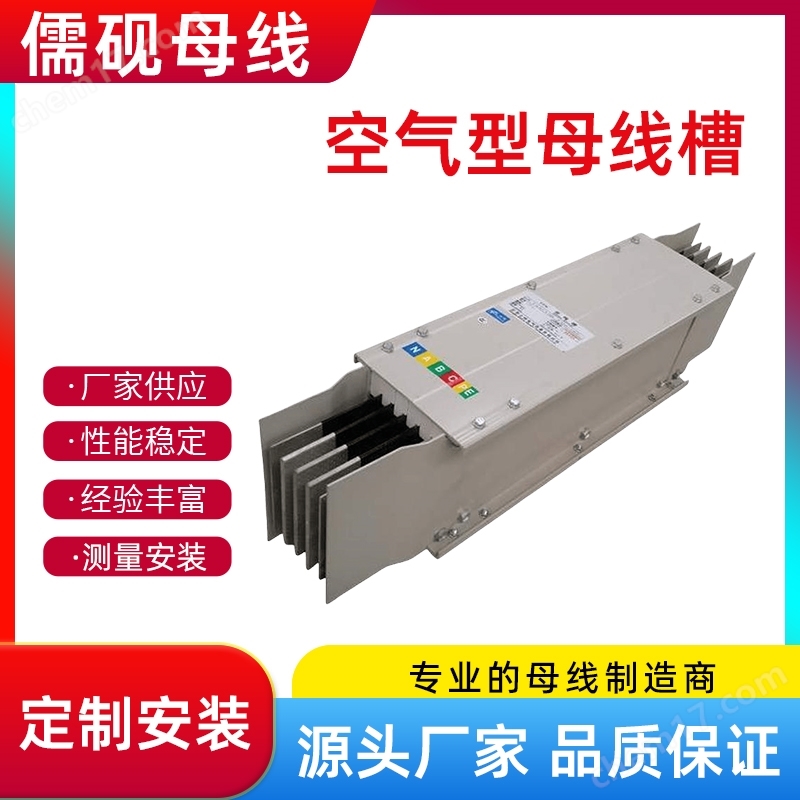
In modern power distribution systems, four wire air type bus ducts are easy to maintain and have become an important choice for power transmission in many situations due to their simple structure, flexible installation, and convenient maintenance. It mainly uses air as an insulating medium to safely and efficiently transport electrical energy from the power source to the electrical equipment. Faced with the diverse products on the market, how to choose the appropriate air type bus duct has become a concern for many users.
Product Details
In modern power distribution systems,Four wire air type bus duct is easy to maintainDue to its simple structure, flexible installation, and easy maintenance, it has become an important choice for power transmission in many occasions. It mainly uses air as an insulating medium to safely and efficiently transport electrical energy from the power source to the electrical equipment. Faced with the diverse products on the market, how to choose the appropriate air type bus duct has become a concern for many users.
Four wire air type bus duct is easy to maintainSpecification Introduction:
1. Rated current capacity
The rated current capacity is one of the core parameters of air type busbar trunking, which directly determines the innovative current value that the busbar trunking can safely carry. If the selected rated current is too small, it may cause the equipment to overheat, affect its service life, and even cause malfunctions; Choosing too much may result in wastage of resources. When determining the rated current, it is necessary to comprehensively consider the power demand of the load equipment, the simultaneous utilization factor, and possible future expansion plans. For example, based on the actual calculated total load current, selecting a bus duct slightly higher than this value can leave a certain safety margin for the system. The heat dissipation conditions under different installation environments can also affect the actual current carrying capacity, so in places with poor ventilation or high ambient temperatures, it may be necessary to choose products with higher rated currents. Attention should also be paid to the temperature rise limit of the bus duct to ensure that its temperature rise is within the allowable range during full load operation, in order to ensure stable insulation performance.
2. Insulation performance and materials
Air type busbar trunking uses air as the main insulation medium, but the insulation materials of its internal conductor support structure and outer shell are equally crucial. High quality insulation materials shall have good electrical strength, heat resistance and aging resistance, and be able to maintain stable insulation resistance in long-term use. Common insulation materials include various engineering plastics and insulation coatings, which need to be able to withstand possible overvoltage impacts and prevent breakdown accidents. When purchasing, attention can be paid to the power frequency withstand voltage and impulse withstand voltage test values of the product, which reflect the ability of the insulation system to withstand short-term overvoltage. The flame retardant performance of insulation materials cannot be ignored, especially in places with strict fire prevention requirements. Products that meet relevant flame retardant standards should be selected to reduce the risk of fire. The mechanical strength of insulating components is equally important, as they need to be able to withstand vibrations during installation and operation to avoid insulation failure caused by damage.
3. Protection level
The protection level is represented by a specific code, which defines the protection capability of the bus duct against external solid foreign objects and water. High quality digits represent dust resistance level, the second digit represents waterproof level, and the higher the digit, the stronger the protective ability. For example, common protection levels are suitable for indoor dry environments, while higher levels are suitable for dusty or humid places. When selecting the protection level, it is necessary to fully consider the actual installation environment of the bus duct. If installed in industrial workshops that may have dust or metal shavings, a higher dust prevention level is required to prevent foreign objects from entering and causing short circuits; If installed in damp environments or areas that may come into contact with water splashes, attention should be paid to the waterproof level. It should be noted that increasing the protection level usually increases product costs, so it should be selected reasonably according to actual needs to avoid excessive configuration. A higher level of protection may affect the heat dissipation effect, and a balance between heat dissipation and protection needs to be comprehensively considered in the design phase.
4. Conductor material and process
The material and manufacturing process of conductors directly affect the conductivity, mechanical strength, and long-term reliability of bus ducts. Common conductor materials include copper and aluminum, each with its own characteristics. Copper conductors have high conductivity and good corrosion resistance, but the cost is relatively high; Aluminum conductors are lightweight and cost-effective, but special attention should be paid to the processing technology at the connection points. Regardless of which material is chosen, attention should be paid to the purity, cross-sectional shape, and surface treatment quality of the conductor. The cross-sectional area of the conductor should meet the current carrying requirements, and the shape design should be conducive to heat dissipation and mechanical support. In terms of process, special attention needs to be paid to the connection parts of conductors, which are often prone to faults. A good connection design should ensure sufficient contact area, uniform contact pressure, and effectively prevent electrochemical corrosion. The coating treatment on the surface of the conductor is also important, as it can improve corrosion resistance and maintain stable contact resistance.

5. Structural design and installation adaptability
The structural design of bus duct not only affects its mechanical strength and heat dissipation performance, but also relates to the convenience of installation and the difficulty of later maintenance. When selecting, attention should be paid to the material and structural form of the bus duct casing. The shell should have sufficient mechanical strength to protect the internal conductors from external damage and facilitate heat dissipation. In terms of structural design, modular bus ducts can be easily cut and expanded according to on-site needs, adapting to different wiring paths. Installation adaptability is another aspect that needs to be carefully considered. A good bus duct design should provide flexible support schemes and connection methods that can adapt to various installation environments, such as overhead, wall mounted, or floor mounted installations. The interface design should ensure easy installation and reliable connection, reducing the difficulty of on-site construction. For systems that require frequent adjustments or expansions, consideration should also be given to whether it is convenient to add plug-in boxes or change branch lines in the later stage.
Similar Product Recommend