-
E-mail
sales@jswelink.com
-
Phone
18261695589
-
Address
Building 40, No. 60 Weixin Road, Suzhou Industrial Park
Product Categories
Jiangsu Weilinko Biotechnology Co., Ltd
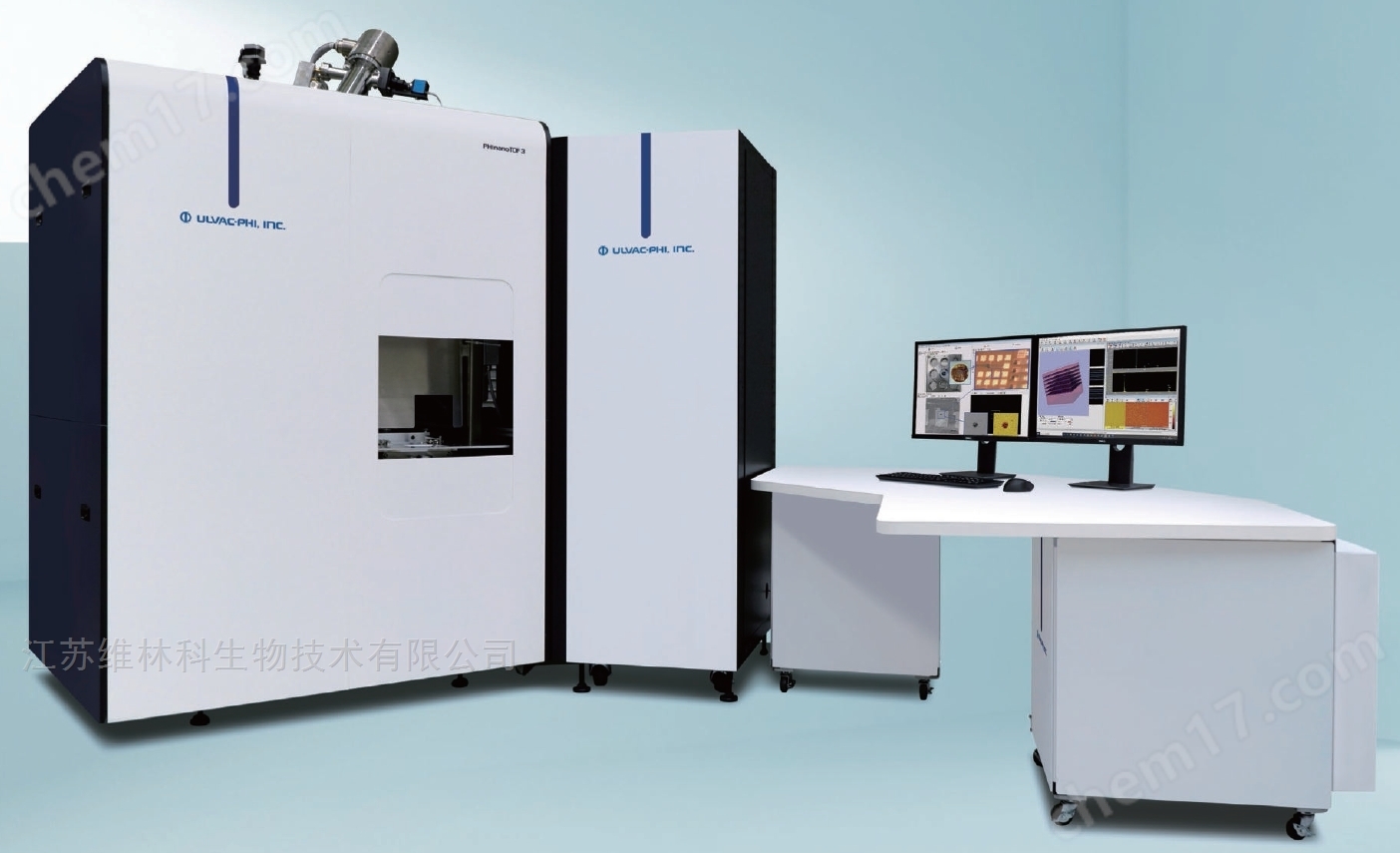
Flight time secondary ion mass spectrometer
NegotiableUpdate on 01/08
- Model
- Nature of the Manufacturer
- Producers
- Product Category
- Place of Origin
Overview
The Time of Flight Secondary Ion Mass Spectrometer (ToF SIMS) uses a single pulse ion bombardment on the surface of a solid material to measure the mass of the secondary ions excited by the surface through their flight time, in order to characterize the elemental composition, molecular structure, molecular bonding, and other information on the material surface. Can analyze all conductors, semiconductors, and insulation materials.
Product Details
*Ion beam technology for achieving high spatial resolution
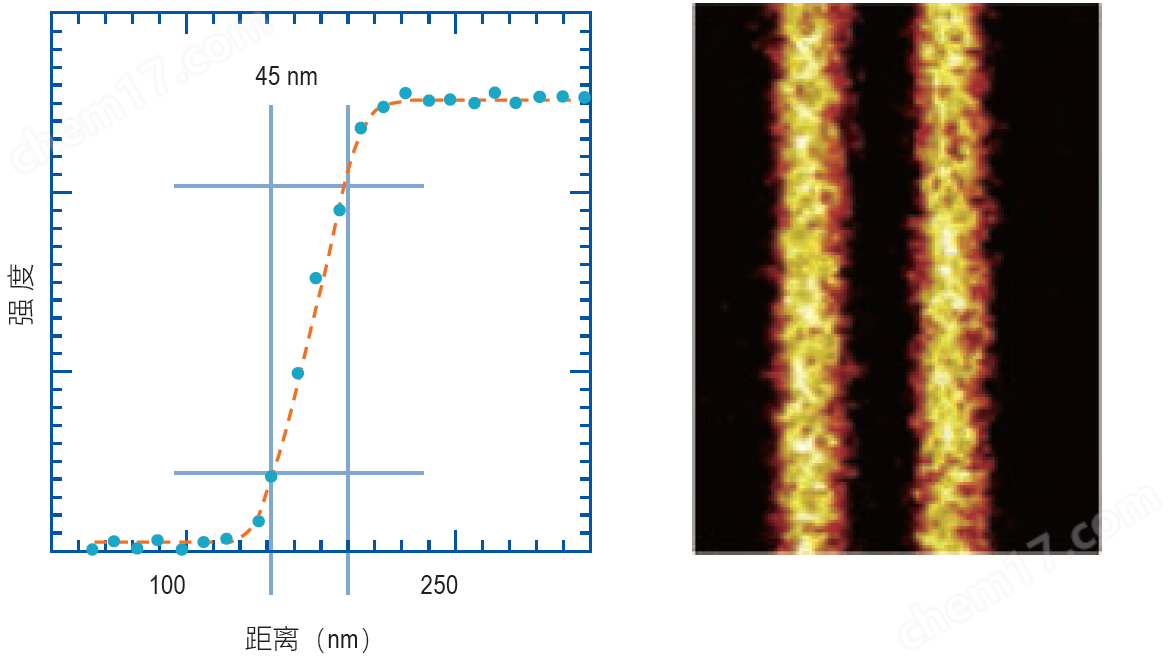
PHI nanoTOF3 can provide high-quality resolution and high spatial resolution TOF-SIMS analysis: in high-quality resolution mode, its spatial resolution is better than 500 nm; in high spatial resolution mode, its spatial resolution mode is better than 50 nm. By combining high-intensity ion sources, high-precision pulse components, and high-resolution mass analyzers, low noise, high sensitivity, and high-quality resolution measurements can be achieved.
Pulse beam spot better than 50 nm in high spatial resolution mode
Triple Ion Focusing Time-of-Flight (TRIFT)
Triple ion beam focusing mass analyzer
Broadband energy and wide stereo reception angle
- Suitable for analysis of various morphological samples
The secondary ions excited by the main ion beam will fly out of the sample surface at different angles and energies, especially for samples with height differences and irregular shapes. Even the same secondary ions may have differences in flight time in the analyzer, resulting in a decrease in mass resolution and affecting the shape of spectral peaks and background.
The TRIFT quality analyzer can simultaneously calibrate the emission angle and energy of secondary ions, ensuring consistent flight time for the same secondary ions. Therefore, TRIFT combines the advantages of high-quality resolution and high detection sensitivity, and can reduce shadow effects in imaging uneven samples.
A brand new fully automatic sample transfer system
PHI nanoTOF3 is equipped with a fully automatic sample transfer system that performs well on XPS's Q series: the maximum sample size can reach 100 mmx100 mm, and the analysis room comes standard with a built-in sample holder parking device; By combining the analysis sequence editor (Queue Editor), it is possible to achieve fully automated continuous testing of a large number of samples.

Adopting the newly developed pulsed argon ion gun
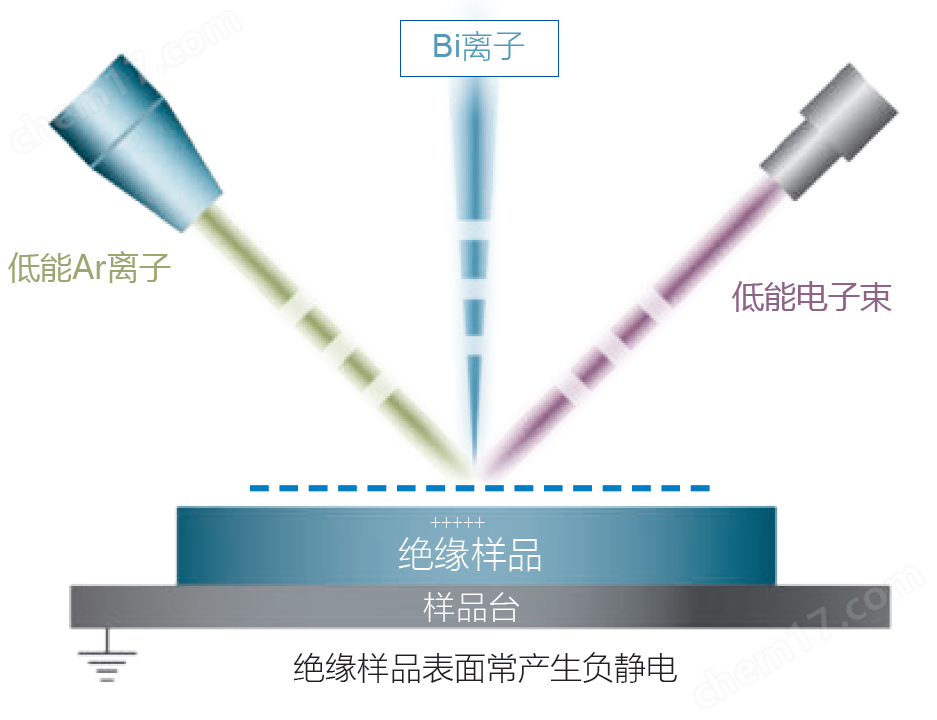
Automatic Charging Double Beam Neutralization Technology
Most of the samples tested by TOF-SIMS are insulation samples, and the surface of insulation samples usually has a charge effect. PHI nanoTOF3 adopts automatic charging dual beam neutralization technology, which can achieve true automatic charging neutralization of any type and morphology of insulating materials by simultaneously emitting low-energy electron beams and low-energy argon ion beams, without the need for additional human operation.
※ Optional Ar ion gun is required
MS/MS平行成像
Simultaneously collect MS1/MS2 data
In TOF-SIMS testing, the MS1 mass analysis analyzer receives all secondary ion fragments generated from the surface of the sample. For large molecular ions with similar mass numbers, the MS1 spectrum is difficult to distinguish. By installing tandem mass spectrometry MS2, collision induced dissociation of specific ions can be carried out to produce characteristic ion fragments. MS2 spectra can further identify the molecular structure.
PHI nanoTOF3 has tandem mass spectrometry MS/MS parallel imaging function, which can simultaneously obtain MS1 and MS2 data in the analysis area, providing a powerful tool for precise analysis of molecular structure.

Remote access enables remote control of instruments
PHI nanoTOF3 allows access to the instrument via a LAN or the Internet. Simply place the sample stage into the injection chamber, and all operations such as injection, sample replacement, testing, and analysis can be remotely controlled. Our professionals can perform remote diagnosis on the instrument.

Diversified configurations fully unleash the potential of TOF-SIMS
Sample transfer tube compatible with multiple instruments
The sample transfer tube is a sample transfer device designed specifically for atmospheric sensitive samples. Through this device, sample preparation and transfer can be achieved under inert gas protection, thereby avoiding the sample from coming into contact with the atmosphere during the transfer process. In addition, the sample transfer tube is compatible with multiple XPS and AES devices under PHI, making it easy for users to use various surface analysis techniques for comprehensive analysis.
Glove box for injection room
A detachable glove box can be optionally connected directly to the sample injection chamber. Samples such as lithium-ion batteries and organic OLEDs that are prone to reacting with the atmosphere can be directly installed on the sample stage. In addition, when replacing the sample after cooling analysis, it can prevent frosting on the surface of the sample.
Heating and cooling sample stage
The sample can be heated and cooled at the measurement location. The temperature can be controlled between -150 ℃ and 200 ℃, and can be monitored and controlled at any time from injection to measurement.
Sample stage for surface analysis
A sample stage that allows observation of curved surfaces without being affected by unevenness. There is no limit to the quality range of spectral sampling, which can achieve wide capture solid angle and high-precision mass spectrometry analysis. Suitable for samples such as spheres, wires, and fibers.
Argon cluster ion gun
The use of argon cluster ion beam (Ar GCIB) can perform low damage ion etching on organic materials, achieving deep analysis while maintaining the molecular structure of organic compounds.
Cesium ion gun and argon/oxygen ion gun
Optional cesium ion gun (negative ion analysis) and oxygen ion gun (positive ion analysis) can be used as sputtering ion guns for high-sensitivity analysis of inorganic materials. These two ion guns have an enhancing effect on secondary ions of corresponding polarity.


