-
Phone
02283713083
-
Address
Room A609, Puchen Building, No. 12 Kaihua Road, Huayuan Industrial Zone, Tianjin
Product Categories
Tianjin Nikos Testing Technology Co., Ltd

FAA oil burner(modified gun)cargo liner
NegotiableUpdate on 01/10
- Model
- Nature of the Manufacturer
- Producers
- Product Category
- Place of Origin
Overview
Aircraft cargo compartment liner burn through tester FAA oil burner(modified gun)cargo linerDetermines Fire Penetration Resistance of Cargo Liner Materials Introduction to Aircraft Cargo Compartment Lining Burn through Tester Instrument: NexGen Aviation Fuel Burner, approved by the Federal Aviation Administration (FAA) of the United States, can be used for fuel combustion testing of various aviation materials. Due to the FAA's previous recognition of Park
Product Details
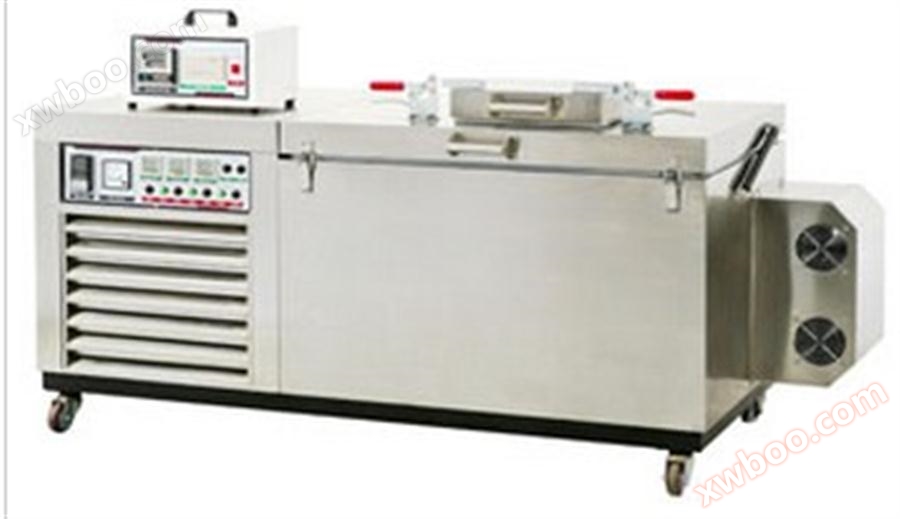
Aircraft cargo compartment liner burn through tester
FAA oil burner(modified gun)cargo liner
Determines Fire Penetration Resistance of Cargo Liner Materials
Aircraft cargo compartment liner burn through testerInstrument Introduction:
The NexGen aviation fuel burner, recognized by the Federal Aviation Administration (FAA) of the United States, can be used for fuel combustion testing of various aviation materials. Due to the discontinuation of the Park DPL 3400, Lennox Model OB-32, and Carlin Model 200 CRD previously recognized by the FAA, the FAA has developed the next generation aviation fuel burner NexGen. The NexGen burner adopts the operating principle of the previous generation burner, and can accurately measure the test parameters of input gas and fuel. At the same time, the instrument can be easily upgraded by FAA in the future.
By configuring different testing devices, numerous aviation fuel combustion testing standards can be met, such as seat combustion testing, heat and sound insulation material burn through testing, cargo hold lining burn through testing, fire resistance testing of soft and hard pipe components, electric engine devices, and electrical connectors. The standards that can be met are FAR 25.853, FAR25.855, FAR25.855, FARs 25.863, FARs 25.867, etc., and can also meet domestic testing methods such as MH/T 6086, HB 7263, MH/T 6041, GB/T 25352, HB 7044, etc.
Aircraft cargo compartment liner burn through testerCompliant with standards:FAR Part 25 Appendix F Part III、AITM 2.0010、BSS 7323、MH/T 6086-2012
Aircraft cargo compartment liner burn through testerTechnical features:
1. The conical cylinder of the burner is made of corrosion-resistant and high-temperature resistant alloy.
2. NexGenThe aviation fuel burner includes components such as a diffuser, fuel nozzle, igniter, fuel rail, fixing plate, ventilation pipe and housing, muffler, sound resistor, etc.
3. Equipped with fuel pressure gauge, fuel solenoid valve, fuel temperature detection device, air pressure regulating valve, and air temperature detection device.
4. Equipped with a gas and air temperature control device ice bath with a volume of not less than 2 x 0.14m3, which can control the fuel temperature.
5. By changing the fuel nozzle and air pressure input, different testing standards can be met.
6. Cover the burner with insulation blanket to cover the fuel pipeline and body.
7. The oil pressure regulator should be able to adjust the fuel flow rate to 0.126 L/min.
8. Adjustable air baffle to achieve an air flow rate of approximately 1.89 m3/min.
9. NexGenThe flame temperature provided by aviation fuel burners shall not be less than 2000 ± 50 ℉.
10. NexGenThe flame heat flow provided by aviation fuel burners shall not be less than 10.6w/cm2.
11. Module units using NexGen burner support system
12. Heavy duty steel frame, capable of installing test samples horizontally and vertically.
13. During calibration, seven ceramic sealed, metal sheathed, grounded K-type (nickel chromium nickel aluminum) thermocouples with a diameter of 1.6 mm should be used. The wires should have an outer diameter of 0.254 mm, a cross-sectional area of 0.0507 mm2, and a resistance of 361 Ω/km (30 AWG according to the American wire gauge). The thermocouple should be fixed on an angle steel bracket to form a thermocouple comb for placement on the sample holder during calibration.
14. Thermal radiation flux sensor, equipped with cooling device, and installed on a fixed bracket.
Similar Product Recommend