-
E-mail
info@enboso.com
-
Phone
18676688185
-
Address
Building D, Donghua Zhiyuan Garden, No. 5003 Bao'an Avenue, Shenzhen
Product Categories
- Infrared gas telemetry
- Fixed biochemical harmful factor monitoring system
- Chemical Toxic Gas Online Monitoring System
- Nuclear, biological and chemical detector
- Gas cloud imaging
- Online monitoring system for harmful biological factors
- Fumigation gas detector
- Fixed Microclimate Monitor
- Sulfuric fluoride detector
- Ethylene oxide concentration monitor
- Ethylene oxide residue detector
Shenzhen Yingbaoshuo Technology Co., Ltd


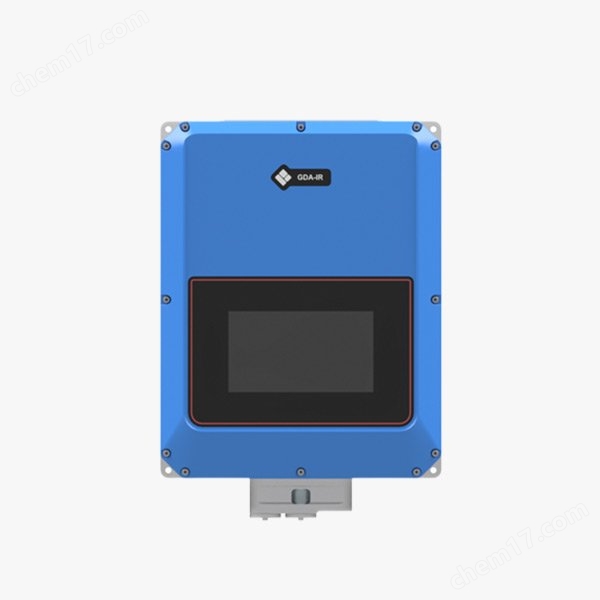
Ethylene oxide concentration monitor
NegotiableUpdate on 01/14
- Model
- Nature of the Manufacturer
- Producers
- Product Category
- Place of Origin
Overview
The ethylene oxide concentration monitor is a device used to detect the concentration of ethylene oxide gas in the environment.
Product Details
Ethylene oxide concentration monitorIt is a device used to detect the concentration of ethylene oxide gas in the environment. The following is a detailed introduction about it:
Electrochemical principle: An electric current is generated through a chemical reaction on the surface of an electrode, and the magnitude of the current is proportional to the concentration of the gas. The detector based on this principle has high sensitivity, but the lifespan of the sensor is limited.
Infrared absorption principle: using the absorption characteristics of gases towards specific wavelengths of infrared light to detect concentration. It has good stability, but high cost.
Semiconductor principle: detecting concentration by causing a change in resistance through gas adsorption. Low cost, but relatively poor sensitivity and selectivity.
Ethylene oxide concentration monitorKey Features:
Detection range: Common detection ranges include 0-100ppm, 0-500ppm, etc. Some high-precision models can detect lower concentrations, such as 0-20ppm.
Response time: Generally less than 60 seconds, some new models have faster response times, such as less than 20 seconds.
Alarm function: It has functions such as sound and light alarm, vibration alarm, etc., which can remind operators in a timely manner when the concentration exceeds the standard.
Sampling methods: There are various sampling methods such as diffusion, pump suction, pipeline, etc., and the appropriate sampling method can be selected according to different scenarios.
Protection level: It usually has a high protection level, such as IP65, and can adapt to harsh working environments.
Explosion proof design: Some equipment adopts explosion-proof design, such as CT6 explosion-proof rating, which is suitable for hazardous environments.
Ethylene oxide concentration monitorApplication scenarios
Medical device sterilization: used to monitor the concentration of ethylene oxide during the sterilization process, ensuring sterilization effectiveness and operational safety.
Pharmaceutical production: During the pharmaceutical production process, detect the leakage of ethylene oxide to ensure the production environment and product quality.
Chemical operations: In the field of chemical engineering, monitoring leaks during the production, storage, and transportation of ethylene oxide to prevent accidents.
Environmental monitoring: used for monitoring the concentration of ethylene oxide in the ambient air to ensure personnel health and environmental safety.
Ethylene oxide concentration monitorselection suggestion
According to the detection range selection: If low concentration ethylene oxide needs to be detected, equipment with a detection range of 0-20ppm can be selected; If higher concentrations need to be detected, equipment with a concentration of 0-500ppm can be selected.
Considering detection accuracy: For high-precision applications, gas chromatography or infrared absorption principle detectors can be selected.
Choose according to the usage environment: If used in harsh environments, equipment with high protection level and explosion-proof design should be selected.
Considering portability: If frequent use is required in different locations, a portable detector can be chosen; If fixed installation is required in a specific location, a fixed type detector can be chosen.
Similar Product Recommend