-
E-mail
chinarel@163.com
-
Phone
18015536306
-
Address
No. 7 Changsheng Industrial Park, Jiancheng Road, Rennan Village, Zhitang Town, Changshu City, Jiangsu Province
Product Categories
Heatwave Electric Heating Technology (Suzhou) Co., Ltd
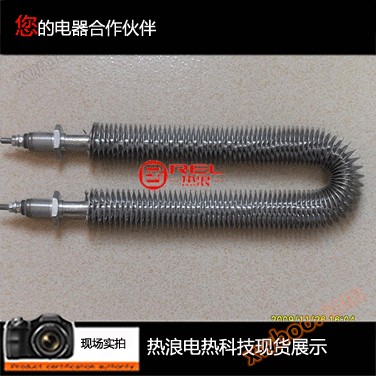
Drying machine electric heating tube
NegotiableUpdate on 08/07
- Model
- Nature of the Manufacturer
- Producers
- Product Category
- Place of Origin
Overview
220V dryer electric heating tube stainless steel finned heating tube baking dehumidification heating tube
Product Details
220V dryer electric heating tube stainless steel finned heating tube baking dehumidification heating tube
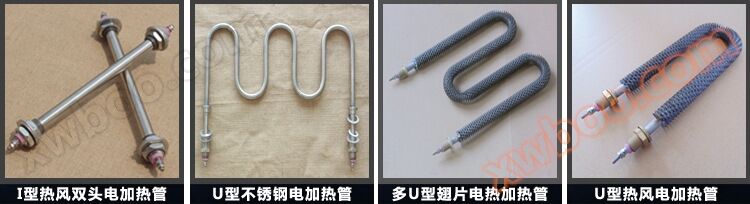


The pictures, prices, and attributes are for reference only. Please refer to the actual product for details. Please feel free to inquire by phone or on Wangwang before placing an order!


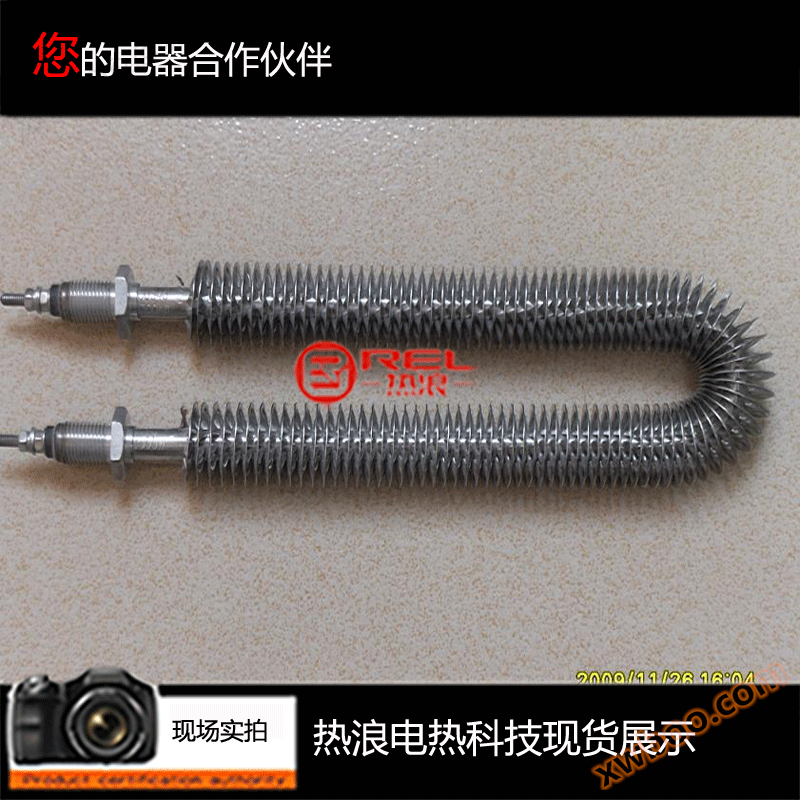
Metal heater (for air)
Product Overview:
The heating tube for hot air adopts air convection for heat exchange. Due to the low heat transfer efficiency in air, the unit area heat load is usually designed to be lower than that of the heating tube for liquid. In order to improve the design heat load and increase the heat dissipation efficiency, a spiral heat dissipation sheet is wrapped around the outer surface of the heating tube during design, which effectively increases the heat dissipation area and prolongs the service life of the heating tube.
Product Usage:
Heating pipes for hot air are often used in places where static or flowing air is heated, such as air conditioning auxiliary heating, heating systems, oven drying equipment, hot air duct systems, textile machinery, generator sets, power equipment, etc., which require hot air heating or load aging. Fixed connection methods such as frames or threads can be used.
Design and production parameters:
Outer pipe diameter: Φ 3~Φ 25
Sheath material: SUS304, SUS321, Incoloy840, Incoloy800
Surface treatment: polishing, borax, spraying
Operating voltage: 220V, 220V-3P, 380V, 380V-3P, 415V-3P
Common power: 1.0kW~60 kW
Operating temperature: 0-450 ℃
Selection Guide
Before designing and ordering, users must have a clear understanding of the characteristics of the heated medium, and choose a suitable heater based on its characteristics. Do not use it arbitrarily, as it may cause unnecessary trouble. Instead, you can refer to the design and production parameters and inform us of the following information. We will provide the best design services and products according to your needs.
Notify information
1. Characteristics and operating temperature of heating medium;
2. Power and voltage used (including phase lines);
3. Size of heater interface;
4. Installation and fixing method of heating tube;
5. Is there air cooling and what is the air volume;
6. Do you have any special requirements for the material of the heating tube;
Similar Product Recommend