-
E-mail
1283532719@qq.com
-
Phone
15201834269
-
Address
Building 3, No. 188 Guanghua Road, Zhuanqiao Town, Minhang District, Shanghai
Product Categories
Shanghai Kuosi Electronics Co., Ltd
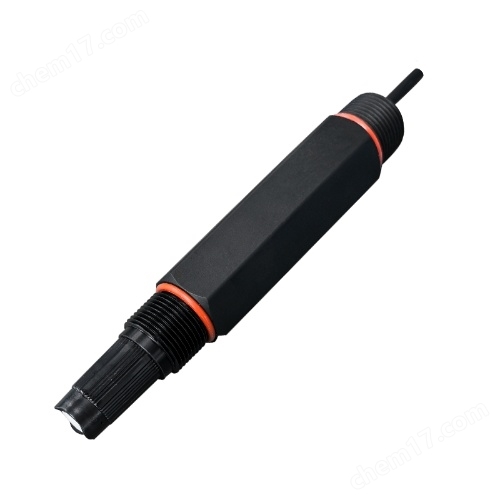
Digital membrane residual chlorine sensor
NegotiableUpdate on 02/11
- Model
- Nature of the Manufacturer
- Producers
- Product Category
- Place of Origin
Overview
Digital membrane residual chlorine sensor $r $n ■ Scope of application $r $n $r $n is suitable for online monitoring of residual chlorine concentration in drinking water, industrial process water disinfection and sterilization processes, and can also be used in situations such as swimming pools where residual chlorine concentration needs to be measured.
Product Details
Technical Guidance
Measurement medium: HOCL/residual chlorine
Range: 0.05~20ppmHOCL (HOCL/residual chlorine)
Polarization time: 30 minutes for the second time, 10 minutes for the second time (HOCL/residual chlorine)
90 minutes for the second time, 45 minutes for the second time (trace HOCL/residual chlorine)
Response time: 90% 2min (room temperature), 95% 5min (room temperature)
● Temperature range: 2~45 ℃ during measurement
● Low flow rate: 200~250ml/min
The flow rate during circulation cannot be less than 30L/H
● PH range: 4-8 pH
● Pressure resistance range: 0~1 bar
● Temperature compensation: PT1000
Electrode cable: 3m high impedance low-noise shielded cable
Electrode size: 20mm directly, 70mm in length
Electrode material: 316L stainless steel shell, POM membrane cap, PTFE membrane.
■ Electrode characteristics
Sensitive response, high accuracy, and good stability
Easy to operate and requires minimal maintenance
Suitable for various media, the membrane is not easily damaged and resistant to pollution
Measurement principle
The DCL-280 residual chlorine electrode is a diaphragm type polarographic sensor consisting of a cathode, an anode, an electrolyte, and a gas permeable thin film covering the cathode. The residual chlorine in the measured liquid diffuses through the diaphragm to the cathode, and an appropriate polarization voltage between the cathode and anode can reduce the residual chlorine on the cathode. These chemical reactions generate a current proportional to the residual chlorine in the measured solution.
■ Scope of application
Suitable for online monitoring of residual chlorine concentration in disinfection and sterilization processes of drinking water and industrial process water, and can also be used in situations such as swimming pools where residual chlorine concentration needs to be measured.


