-
E-mail
m17351886899_1@163.com
-
Phone
17351886899
-
Address
No. 286 Tongtai Avenue, Jinhu County Economic Development Zone, Huai'an City, Jiangsu Province
Product Categories
Jiangsu Qixing Instrument Co., Ltd
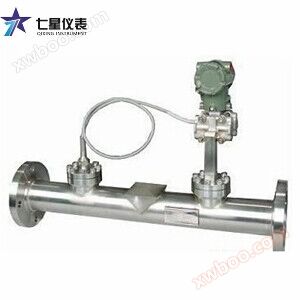
Differential pressure wedge flowmeter
NegotiableUpdate on 11/01
- Model
- Nature of the Manufacturer
- Producers
- Product Category
- Place of Origin
Overview
Detailed information on differential pressure wedge flowmeter: QX-LX differential pressure wedge flowmeter is a differential pressure flowmeter that utilizes Bernoulli's law of energy conversion in a closed pipeline, which states that in stable fluid conditions, the flow velocity in the pipeline is proportional to the square root of the differential pressure
Product Details
Differential pressure wedge flowmeterDetailed information:
QX-LX typeDifferential pressure typeWedge flow meterIt is a differential pressure flow meter that utilizes Bernoulli's law of energy conversion in a closed pipeline, which states that in stable fluid conditions, the flow velocity in the pipeline is proportional to the square root of the differential pressure. Wedge flowmeter is a new type of flowmeter that began to gradually move towards practicality in the 1980s. Its detection component is a V-shaped wedge block (also known as a wedge-shaped throttling element), with its smooth top angle facing downwards, which is conducive to the smooth passage of liquids or viscous liquids containing suspended particles, without causing stagnation on the upstream side of the throttling element. When the fluid passes through the wedge flowmeter, a differential pressure proportional to the square of the flow rate is generated on the upstream and downstream sides due to the throttling effect of the wedge block. This differential pressure is led out from the pressure taps on both sides of the wedge block and sent to the differential pressure transmitter for conversion into an electrical signal output. After being calculated by a dedicated intelligent flow integrator, the flow rate value can be displayed.
YC-LX typeDifferential pressure typeWedge flow meterIt has the function of correcting parameters such as flow coefficient, nonlinear error, temperature change, density change, etc; The measurement accuracy can reach 0.5%; It can have on-site display and standard current signal (4-20mA DC) output, which can be conveniently used for automatic control systems or networked with computers for automatic adjustment and control of flow or other parameters.
The YC-LX wedge flowmeter can perform high-precision flow measurement in fluid conditions with high viscosity and low Reynolds number (Reynolds number>500 can be used); It has unparalleled advantages and irreplaceable role in flow measurement scenarios with low flow rate, small flow rate, and large pipe diameter. Mainly used for flow measurement of high viscosity (heavy oil, residue oil, diesel, engine oil, etc.), industrial gas (coke oven gas, blast furnace gas, generator gas, city gas), hydrogen, nitrogen, air, steam, sewage liquid and other media.
The wedge-shaped flowmeter has a simple structure, no movable parts, is not easily worn by fluids, has stable and reliable working performance, and a long service life; Its measuring elements and pressure measuring device have a special structure, which does not cause stagnation or blockage when the fluid passes through, and has a small pressure loss. It is an ideal choice for high-precision flow measurement at low Reynolds numbers.
2、 Main features:
1. Especially suitable for measuring media with high viscosity, low Reynolds number, suspended particles or bubbles;
2. The measurement accuracy is not affected or limited by the characteristics such as the dielectric constant of the fluid medium;
3. The wedge-shaped component has a special structural design, which has a guiding effect and prevents blockage;
4. It has compensation functions for fluid viscosity changes, temperature changes, density changes, etc;
5. Resistance to vibration, impact, dirt, and corrosion;
6. Equipped with bidirectional flow measurement function;
7. High measurement accuracy;
8. The structure is simple, sturdy, highly reliable, easy to install, and has low operation and maintenance costs;
9. No moving parts, no wear and tear, no need to recalibrate for long-term use.
3、 Technical parameters:
1. Measurement accuracy: ± 1.0% to ± 1.5%
2. Minimum flow velocity: 0.01m/s.
3. Service life: can last for more than ten years.
4. Range ratio ≥ 10:1
5. The application range of Reynolds number coefficient: lower limit of 300, upper limit of 1 × 10⁶ or more.
6. Measurement of upper limit of liquid viscosity: 500MPa? S。
7. Working pressure range: -0.1~6.4MPa.
8. Working temperature range: -50~400 ℃.
4、 Installation precautions:
1. Generally, wedge-shaped flow sensors have front and rear measuring tubes, which can be installed and used horizontally or vertically. When the sensor is installed on a vertical pipeline, the fluid should flow from top to bottom. When measuring liquids, attention should be paid to ensuring that the differential pressure transmitter can eliminate bubbles to avoid zero drift of the instrument;
2. The upstream and downstream sides of the sensor should be equipped with straight pipe sections, and the inner wall of the pipeline should be smooth, clean, and free of attachments. Please read the instructions carefully for the length requirements of the straight pipe section.
3. When installed horizontally, the wedge-shaped differential pressure element should be at a 90 ° angle to the centerline of the pipeline. For vertical installation, due to the slight static pressure effect between the pressure points, it is necessary to pay attention to the zero adjustment of the differential pressure transmitter.
5、 Structural form:
Wedge flow meters are divided into integral and separate types according to their assembly methods, flange connections, welding connections, threaded connections, and clamp connections according to their connection methods, and structures such as ordinary pressure tapping and flange sealed pressure tapping according to their pressure tapping methods.