-
Phone
18612378160
-
Address
Room 765, 6th Floor, Building 15, Xinzhao Jiayuan, Chaoyang District, Beijing
Product Categories
Beijing Huaxin Borun Technology Co., Ltd

D12-IR infrared combustible gas detector
NegotiableUpdate on 02/20
- Model
- Nature of the Manufacturer
- Producers
- Product Category
- Place of Origin
Overview
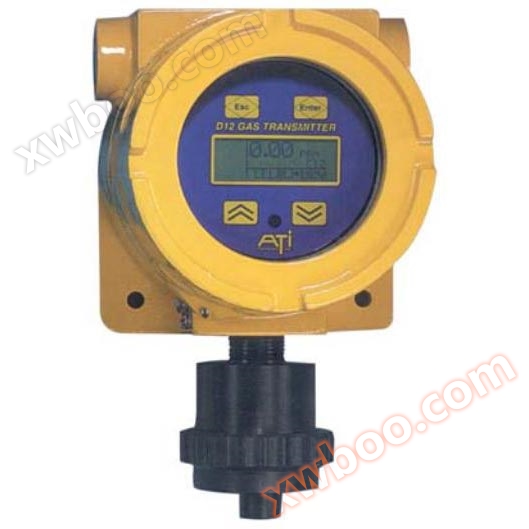
ATI's D12 system gas detector has been expanded to include the D12-IR infrared gas detector
Product Details
ATI's D12 system gas detector has been expanded to include the D12-IR infrared gas detector. The D12-IR infrared sensor absorbs infrared energy from the measured gas or vapor. Generate a signal proportional to its gas concentration. The sensor is encapsulated in a stainless steel casing, which is corrosion-resistant and impact resistant, suitable for various installation environments.
Catalytic combustion sensors, in practical applications, the presence of silicon vapor, hydrogen sulfide, and halogenated hydrocarbons can lead to a decrease in sensor sensitivity. And using infrared sensors for measurement will not cause a decrease in sensor sensitivity due to the presence of such gases, while infrared sensors work stably and have a long lifespan.
The D12-IR infrared sensor can be used to measure carbon dioxide in circulating air or pumped gas samples. There are two types of sensors to choose from: a low range sensor with a measurement range of 0-1% or 0-5%, and a high range sensor with a measurement range of 0-5% or 0-50%.
D12-IR can also be used in hospitals or laboratories to monitor nitrogen oxides in the environment, with a range of 02000ppm or 0-1% and a fraction of less than 50ppm. Sensors can work in diffusion environments or measure in pump suction samples.
Characteristics of D12-IR transmitter
Explosion proof sensor design: The IR sensing element is encapsulated in a stainless steel device.
Automatic fault prevention sensor operation: The IR sensor is always in operation, and the transmitter continuously detects the sensor function of the controller, indicating any display or analog output issues, which can also be indicated by the optional transmitter.
High concentration methane measurement: The D12IR detector split type sensor can also measure high concentrations of hydrocarbons, such as butane and propane. Calibration with methane is optional from 0-10% to 0-100%.
3 alarm relays: The D12 detector includes relays for local alarm function, all of which can be programmed to set alarm points, dead zones, delays, non delays, and other variables.
Serial communication interface: The transmitter can be equipped with HART or MODBUS communication protocols. The HART protocol supports Universal and Common Practice commands, and the Beli202FSK modulation and demodulation standard is used to transmit data at 1200 baud. The MODBUS protocol supports accessing concentration and information status at a rate of 9600 baud, and through RS485 or RS232 (software optional) serial ports, it supports accessing alarm status and many other functions and exchanging data with 3-1/2 disk databases of the recorder.
LCD display: Gas concentration is displayed in large, easy to read numbers, providing complete menu options for alarm indication and setting operating parameters. When operated in a three wire system, it provides a backlit display.
Internal data login: The measured gas concentration value can be stored at user-defined time intervals, but when it needs to be displayed on the LCD, it can be retrieved and downloaded or printed from the ASCTT terminal interface.
Historical data: Every time the sensor is zeroed or calibrated, the data is stored in the sensor's memory. At any time, the operator can retrieve the historical data and observe the status of the sensor.
External operation: Calibration, alarm setting, alarm reset, data browsing, device selection, and all other operations can be performed using a magnetic stick without opening the casing during adjustment.
Password protection: The program settings within the transmitter are protected by a user selectable password. The operator can repeatedly observe all functions. But only authorized personnel can change the analog output settings: the analog output of the transmitter can be set to a user-defined value, so that loop testing can be completed without adding gas to the sensor.
Modular electronic unit: The D12 electronic components can be easily plugged into the power board on the base of the housing, and the transmitter can be quickly removed in the event of a malfunction. Explosion proof housing: The transmitter is designed to operate in hazardous areas, and the explosion-proof rating of the cast aluminum housing of the transmitter is Class Division l, Group B, C&D, providing UL.FM and CSA certification.
Similar Product Recommend