- Phone
-
Address
No. 116, Qinxing New Village, Qinnan, Yancheng City, Jiangsu Province
Product Categories
Jiangsu Huahang Underwater Engineering Co., Ltd


Contact number for underwater maintenance of sewage tanks - Sewage pipeline airbag sealing price - Diver leak sealing engineer develops plan
NegotiableUpdate on 05/06
- Model
- Nature of the Manufacturer
- Producers
- Product Category
- Place of Origin
Overview
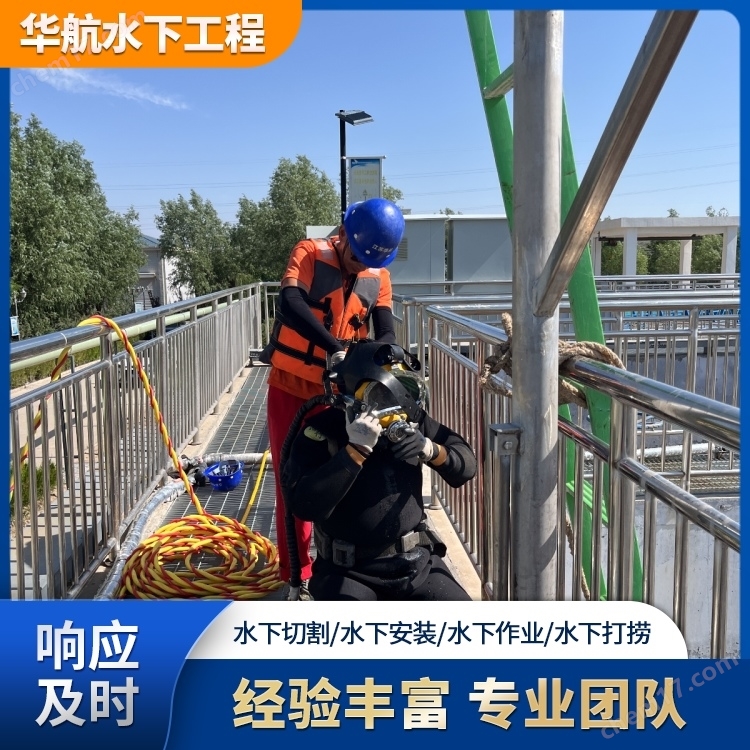
Contact number for underwater maintenance of sewage tanks - price for airbag sealing of sewage pipelines - diver leak sealing engineers must have a high level of safety awareness, strictly follow the safety operating procedures for diving operations, and make sufficient safety preparations before operation, such as checking diving equipment, conducting safety briefings, etc. During the operation, maintain close contact with surface support personnel to ensure their own safety.
Product Details
Contact number for underwater maintenance of sewage tanks - Sewage pipeline airbag sealing price - Diver leak sealing engineer develops plan
Contact number for underwater maintenance of sewage tanks - Sewage pipeline airbag sealing price - Diver leak sealing engineer develops plan
To become a diver for underwater operations in a sewage treatment plant, one needs to receive various professional training, including diving skills, safety knowledge, equipment operation, and related knowledge of the sewage treatment plant. The following is a specific introduction:
Diving skills training

Basic diving skills
Learn to use various diving equipment such as goggles, breathing tubes, fins, diving suits, gas cylinders, regulators, etc., master the correct wearing and debugging methods, and how to check and maintain equipment in the water.
Conduct respiratory control training, learn to breathe smoothly and efficiently underwater, master breathing techniques at different depths to save air and avoid breathing related hazards.
Practice basic movements in water, such as kicking, turning, rising, falling, etc., to improve maneuverability and flexibility in water.
Advanced diving skills
Learn deep diving techniques, including how to safely reach deeper underwater depths, understand the effects of deep diving on the body, and take corresponding preventive measures, such as the prevention and treatment of decompression sickness.
Master underwater navigation skills, learn to use underwater compasses, landmarks, and other methods to determine direction and position underwater, ensuring accurate arrival at the work site and safe return.
Conduct underwater emergency response training, including emergency ascent, use of backup gas sources, underwater self rescue, and mutual rescue methods in case of equipment failure, sudden water flow changes, physical discomfort, and other situations.

Safety knowledge training
Occupational Health and Safety
Understand the impact of diving operations on the body, including the effects of water pressure on various organs, the risk of hypothermia caused by low temperatures underwater, and the prevention and symptom recognition of diving related diseases such as decompression sickness and nitrogen anesthesia.
Learn the correct use and maintenance of personal protective equipment, such as safety helmets, protective gloves, protective shoes, etc., to prevent accidental injuries during work.
Safety regulations and standards
Familiar with national and local safety regulations, standards, and norms related to diving operations, such as the "National Occupational Standards for Divers" and "Safety Regulations for Underwater Operations", to ensure that the operation behavior complies with legal requirements.
Understand the safety regulations and rules within the sewage treatment plant, especially those related to underwater operations, such as the permit procedures for entering specific areas and the meaning of safety warning signs.
Underwater equipment operation training
Underwater tool usage
Master the usage methods of various underwater tools, such as underwater wrenches, pliers, screwdrivers, etc., in order to carry out equipment maintenance and installation work.
Learn the operation of underwater welding and cutting equipment, including equipment debugging, electrode and cutting nozzle selection, welding and cutting techniques, and understand relevant safety precautions.

Diving support equipment operation
Learn to operate diving support vessels or platforms, including driving the vessel, using anchoring systems, operating communication equipment, etc., to ensure a stable operating platform and timely support for divers.
Master the operation and maintenance of auxiliary equipment such as air compressors, diving phones, and underwater lighting devices to ensure their normal operation during the operation process.
Training on knowledge related to sewage treatment plants
Process flow of sewage treatment plant
Understand the overall process flow of the sewage treatment plant, including various links such as inflow, pretreatment, biological treatment, deep treatment, and outflow, and clarify the position and role of underwater operations in the entire process flow.
Familiar with the names, functions, structures, and working principles of various underwater facilities and equipment in the sewage plant, such as sedimentation tanks, aeration tanks, submersible mixers, aeration heads, sewage pipelines, etc., in order to accurately identify and handle related issues during operations.
Characteristics and hazards of sewage
Learn about the composition, properties, and characteristics of wastewater, and understand the impact of different types of wastewater on the health of divers and diving equipment, such as corrosiveness, toxicity, microbial contamination, etc.
Master the protective measures and emergency response methods for working in sewage environments, such as wearing appropriate protective equipment, avoiding contact between sewage and skin and mouth, and emergency response after poisoning or injury.
In addition, divers need to participate in regular refresher training and assessments to maintain and improve their skill levels, ensuring that they can safely and efficiently complete underwater operations in sewage treatment plants.
Similar Product Recommend