-
E-mail
2316332107@qq.com
-
Phone
15965217685
-
Address
Dezhou Technology Development Zone, Shandong Province
Product Categories
Shandong Pengkun Air Conditioning Equipment Co., Ltd
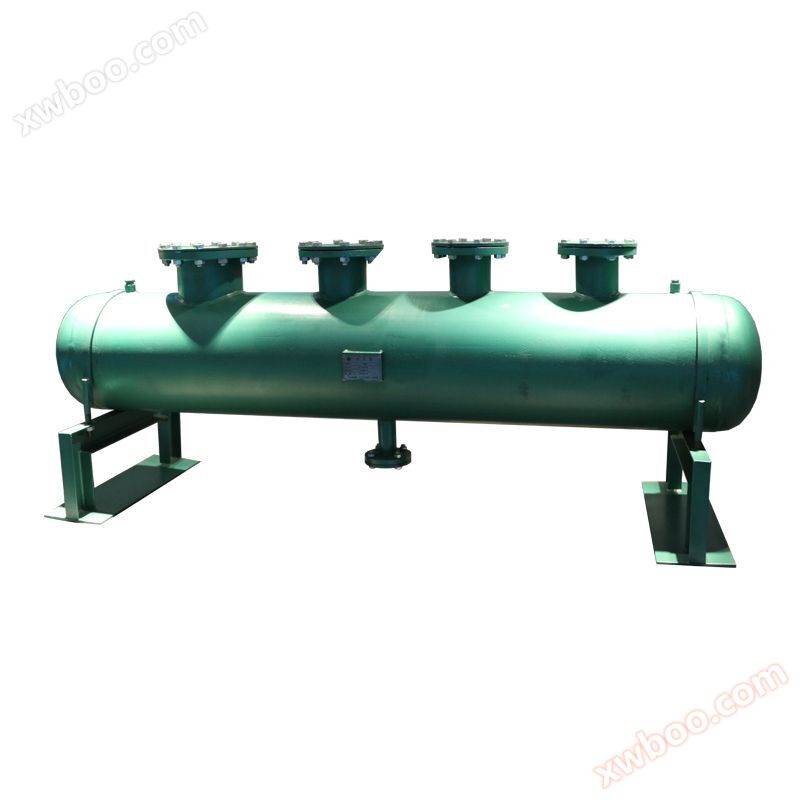
Computer room water treatment equipment
NegotiableUpdate on 04/11
- Model
- Nature of the Manufacturer
- Producers
- Product Category
- Place of Origin
Overview
The central air conditioning water is repeatedly circulated in the circulation system. Due to the increase and evaporation of water temperature, soluble substances in the water are continuously concentrated. The collection tank of the cooling tower is polluted by wind, sun, rain, and various external environments, which can cause more serious sediment adhesion, equipment corrosion, and the proliferation of microorganisms than direct flow cooling water and closed cooling water systems
Product Details
Introduction to Water Treatment in Central Air Conditioning Room The central air conditioning water is repeatedly circulated in the circulation system. Due to the increase and evaporation of water temperature, soluble substances in the water are continuously concentrated. The collection tank of the cooling tower is polluted by wind, sun, rain, and various external environments, which can cause more serious sediment adhesion, equipment corrosion, and a large number of microorganisms than direct flow cooling water and closed cooling water systems. This leads to mud and dirt blocking the pipes, increasing the tendency for scaling and corrosion in the cooling system, and posing a hidden danger to safety production. To achieve this, it is necessary to discharge concentrated water, replenish some fresh water and water treatment agents, and maintain water balance and water quality stability. To ensure the long-term safe and energy-saving operation of equipment, effective control of corrosion, scaling, and biofouling hazards in the water system should be carried out for central air conditioning water treatment. The average temperature of the hot water supply for air conditioning is generally around 60 ° C, which has already reached the temperature for scaling. Moreover, the water temperature near the surface of the heat exchanger directly connected to the high-temperature primary heat source is higher, and the risk of scaling is greater; Therefore, the hardness requirement for the water quality of air conditioning hot water should be equivalent to that of the heating system. When the hardness of the water supply is high, in order not to affect the heat transfer of the system, extend the maintenance time and service life of the equipment, it is advisable to chemically soften the makeup water or use scale inhibition treatment on the circulating water Add composite environmentally friendly polymeric compound water treatment agents to cooling water and chilled water, and use Rexress water treatment cleaning agents for online or single cycle cleaning to remove carbonate scale, microbial sludge, etc., purify water bodies, and increase heat transfer efficiency. Protective non corrosive cleaning for precision mechanical equipment. Corrosion and scale inhibitors can control corrosion and protect the unit; Prevent scaling. Fungicides can prevent the formation of microorganisms and algae; Containing a pre mold agent, it can form a rust proof protective film on the inner wall of the pipeline. Various central air conditioning water treatment agents, such as corrosion and scale inhibitors, dispersants, fungicides, and protectants, are often added to the cooling water system and chilled water system of central air conditioning to stabilize the scaling ions in water. The principle is through chelation, complexation, and adsorption dispersion, allowing calcium and magnesium ions to stably dissolve in water through chelation complexes, and have good dispersion effects on colloids such as iron oxide and silicon dioxide. 1. Reduced heat exchange efficiency The heat exchange tubes of a heat exchanger are generally made of copper tubes, with a thermal conductivity of 383.8W/m for copper. K, The thermal conductivity of carbonate scale is 0.46W/m.k, which is only about 0.12% of that of copper, greatly reducing the heat transfer efficiency of the heat exchanger. 2. Reduce the amount of circulating water Scale, sludge, and corrosive substances reduce the cross-sectional area and energy of the circulation channel, and even block the heat exchanger and filter, thereby further reducing the heat transfer efficiency. 3. Shortened the service life of the equipment Due to the sediment covering the heat exchange surface, the effective heat transfer of the equipment is prevented, causing the metal on the heat exchange surface to be in a high-temperature heat load state for a long time, leading to metal fatigue. Corrosion under scale can also lead to equipment perforation and leakage. This will shorten the lifespan of the equipment. In order to prevent the formation of scale, inhibit the growth and reproduction of microorganisms, control the corrosion of equipment and pipelines, improve heat exchange efficiency, save energy, and extend the service life of equipment, it is necessary to treat the water quality of central air conditioning circulating water. The currently widely used electronic descaling devices have shown extremely poor anti scaling and anti-corrosion effects based on the users they have encountered in recent years, while chemical treatment with added water quality stabilizers has a significant effect. 1. Cleaning of cooling water system (including cooling tower, condenser, pipeline, etc.) a. Physical cleaning and sterilization of cooling towers to eliminate bacteria and algae. b. The entire system undergoes sterilization and algae removal treatment, as well as fully organic chemical cleaning. c. Pre membrane corrosion inhibition treatment and daily water quality maintenance of the entire system 2. Cleaning of chilled water system (including expansion tank, evaporator, pipeline, etc.) a. Cleaning of expansion tank. b. Sterilization and algae killing treatment of the entire system, as well as fully organic chemical cleaning c. Pre membrane treatment and daily water quality maintenance of the entire system. 3. Cleaning of air conditioning unit The blasting, chemical cleaning, and pre film anti-corrosion treatment of the condenser. Risr-586 dedicated Main ingredients: organic descaling agent, rust remover, metal corrosion inhibitor, dispersant, surfactant, etc. Abbreviation: Risr-586 series Scope of application: Suitable for cleaning pipelines and heat exchange equipment. Physical and chemical properties: Appearance: Light colored liquid like substance Active ingredient:>45% PH:2.5-4.5 characteristic: The main components of this medicine are highly efficient and harmless substances, with a short natural decomposition period, The final decomposition product is simple. It can effectively remove rust and scale, improve the efficiency of heat exchangers, reduce fluid head loss in equipment, lower energy consumption, and extend the service life of equipment. This product is rich in metal corrosion inhibitors, which will not affect the equipment, and its cleaning effect reaches over 90%. It is a new generation of environmentally friendly water treatment agents widely promoted. usage method: 1. Clean without stopping and add 10-15% directly to the pipeline equipment that needs to be cleaned, and circulate for 4 hours. 2. Single cleaning external circulation pump for circulating cleaning. Risr-668B fungicide and algaecide Main ingredients: active chlorine, monoatomic hydroxyl groups, - O.OH polymers, etc. Abbreviation: RISR-668B Scope of application: Suitable for killing algae and microorganisms in various water systems, such as fish ponds, ponds, rivers, large central air conditioning, engineering heat exchange, process and other circulating cooling water systems. Physical and chemical properties: Appearance: Light colored or colorless liquid PH :6.0-9.0 Active ingredient:>25% characteristic: This drug belongs to a composite formulation with broad bactericidal ability, which can effectively penetrate cell walls, decompose cell DNA, and kill and inhibit their reproduction. This product is highly efficient and low toxic, with a short natural decomposition cycle, environmentally friendly interface, and stable processing efficiency. There is basically no impact on advanced aquatic animals. It is an ideal disinfectant and algaecide for environmentally friendly water treatment that is widely promoted in the new generation usage method: The initial dosage is a water mass ratio of 1:500; Artificially impacting and adding to the treated water body. Risr-LQ512 corrosion and scale inhibitor Main ingredients: organic dispersion, corrosion inhibitor, organic acid, sodium molybdate, sodium tungstate HEDP、APPS、 Succinic acid, etc. Abbreviation: Risr-LQ512 Scope of application: Suitable for the treatment of circulating cooling water systems such as central air conditioning, engineering heat exchange, and manufacturing processes. Physical and chemical properties: Physical properties Appearance Light colored liquid PH :3.0-5. 0 Active ingredient:>30% Corrosion inhibition rate: ≤ 0.125mm/yar steel Scale inhibition rate: ≤ 0.2mm/yar characteristic: This drug belongs to a composite formulation with good synergistic treatment effect, environmentally friendly interface, and stable treatment efficiency. It is a new generation of environmentally friendly water treatment agents widely promoted usage method: The initial dosage is a water quality ratio of 1:200; The daily dosage is 1.5-5.0ppm. The fully automatic control system is added to the circulation pipeline or manually added to the water body of the cooling tower. Classification of Processing Medications Corrosion inhibitors can be divided into inorganic inhibitors, organic inhibitors, and polymer inhibitors. Inorganic corrosion inhibitors mainly include chromate, nitrite, silicate, molybdate, tungstate, polyphosphate, zinc salt, etc. Organic corrosion inhibitors mainly include heterocyclic compounds containing nitrogen oxides such as phosphonic acid (salt), phosphonic acid, benzothiazole, benzotriazole, sulfonated lignin, etc. Polymer corrosion inhibitors mainly include polyethylene, POCA, Polymer chemicals of oligomers such as polyaspartic acid. Scale inhibitor refers to a type of chemical agent that can disperse insoluble inorganic salts in water, prevent or interfere with the precipitation and scaling of insoluble inorganic salts on metal surfaces, and maintain good heat transfer performance of metal equipment. The anti-corrosion and scale inhibitor for cold exchange equipment is formulated with epoxy resin and specific amino resin as the base materials, and added with appropriate amounts of various anti rust, anti-corrosion and other additives, as a single component. It has excellent shielding, impermeability, rust prevention performance, good scale inhibition, thermal conductivity, excellent resistance to weak acids, strong alkalis, organic solvents, etc. It has strong adhesion, and the film layer is bright, flexible, dense, and hard. Scale inhibitors are divided into organic phosphine series scale inhibitors, organic phosphonate scale inhibitors, polycarboxylate scale inhibitors and dispersants, composite scale inhibitors, RO scale inhibitors, bactericides, also known as bactericidal and algicidal agents or sludge stripping agents, anti sludge agents, etc. They refer to a class of chemicals used to inhibit the growth of microorganisms such as bacteria and algae in water to prevent the formation of microbial sludge. Usually divided into two categories: oxidizing fungicides and non oxidizing fungicides. Oxidative fungicides, such as commonly used chlorine gas, sodium hypochlorite, bleach powder, etc; The most effective and widely used non oxidizing fungicides are chemicals that can damage the cell wall and cytoplasm of bacteria, such as quaternary ammonium salts. Quaternary ammonium salts such as dodecyl dimethyl chloride Benzylammonium bromide or dodecyl dimethyl benzyl ammonium bromide often have multiple functions such as sterilization, stripping, and corrosion inhibition, and have promising development prospects. They have been applied in oilfield water, industrial cooling water, and other fields. Sales of water treatment agents Coagulants are chemicals used to remove or reduce turbidity or suspended solids in water, accelerate the settling rate of impurities and sludge in water. The earliest application of coagulants was inorganic coagulants such as alum and ferric chloride. Organic and polymer flocculants will be widely used in water supply and wastewater treatment in the future. It can be divided into anionic flocculants, such as carboxymethyl cellulose, sodium polyacrylate, etc; Cationic flocculants, such as polyvinylamine; There are also non-ionic coagulants such as polyacrylamide. Their flocculation is mainly achieved through charge neutralization and adsorption bridging. Cleaning agents are chemicals that have a cleaning effect. In the pretreatment steps of water treatment, it is often necessary to use chemicals to clean the sediment on the surface of metal equipment, such as corrosion products, scale, and microbial sludge. According to different cleaning requirements, cleaning agents can be divided into acid pickling agents such as hydrochloric acid, sulfuric acid, hydrofluoric acid, citric acid, etc; Passivation agents such as sodium benzoate. The sodium salt of sulfonated succinic acid di (ethylhexyl) is a surfactant used as a specialized cleaning agent to remove impurities such as oil stains and floating rust from metal surfaces. Pre coating agents are a type of chemical used in water treatment companies to pre form a protective film on metal surfaces during the pre-treatment process. The purpose of pre coating is twofold: firstly, to increase the concentration of chemicals added during the initial stage of corrosion inhibition; The second is to use a specialized pre coating agent, so that a small amount of corrosion inhibitor can be added during normal operation to maintain and repair the protective film, saving chemicals and costs.


