-
Phone
13774484521
-
Address
No. 782 Yongyue Road, Pujiang Town, Minhang District, Shanghai
Product Categories
Shanghai Xijin Experimental Instrument Co., Ltd

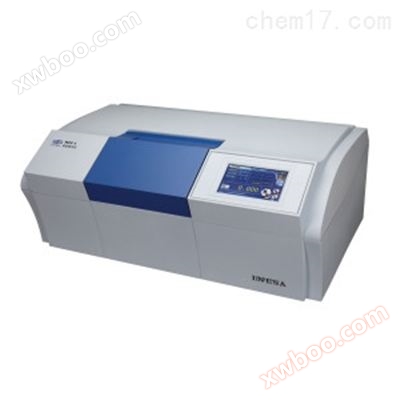
Brooke time-domain nuclear magnetic resonance droplet size analyzer
NegotiableUpdate on 03/03
- Model
- Nature of the Manufacturer
- Producers
- Product Category
- Place of Origin
Overview
The Brooke time-domain nuclear magnetic resonance droplet size analyzer can provide a complete package solution for rapid quality/process control and research and development in the production process of emulsion products.
Product Details
Using minisspec time-domain nuclear magnetic resonance analysis, quickly complete quality control, process control, and research and development of emulsion products
Droplet size distribution of water in oil or water in oil emulsions
No preparation required, no dilution required
Batch determination of opaque samples
Quantification of emulsification efficiency
Emulsion stability kinetics
Control the rheological properties of the product
Selective absorption product design
Essence controlled release, API
Optimize color and appearance
Deceleration chemical deterioration
Control microbial decay
Brooke's multifunctional desktop time-domain nuclear magnetic resonance analyzer can provide a complete package solution for rapid quality/process control and research and development in the production process of emulsion products. The user-friendly Brooke minisspec instrument can detect all signals generated by hydrogen atoms in the entire sample in just a few minutes, regardless of its color or turbidity. Then, by analyzing the nuclear magnetic resonance signal, the diffusion coefficient of molecules (oil or water) inside the droplet is calculated, and the software finally outputs the droplet size distribution, including volume and quantity fraction. This process directly measures the droplet size distribution at the molecular level, without being affected by flocculation, which is different from optical methods.
The advantages of time-domain nuclear magnetic resonance technology
There are multiple techniques available for droplet size testing of emulsions, but they all have various limitations and are therefore not suitable for analyzing multiple different emulsion systems:
Optical microscopy and imaging analysis - small sample size, time-consuming, distorted droplet shape and size.
Confocal scanning microscopy and imaging analysis - the same as optical microscopy and imaging analysis.
Small angle laser light scattering method - the dilution step will completely change the structure of many emulsions, and cannot distinguish between droplets and suspended particles, resulting in droplet clusters being treated as large droplets.
Electric sensing technology - in most cases, dilution is required and a large number of droplets need to be measured separately.
Ultrasonic technology - the signal attenuation of high solid content samples is severe.
Compared to the above techniques, the droplet size distribution measurement technology based on time-domain nuclear magnetic resonance has the following properties, making it a powerful tool for emulsion analysis:
Measurement of droplet size distribution for relatively large sample sizes
The color or transparency of the sample does not affect the measurement
The presence of other particles will not be mistaken for droplets
No dilution steps or other pretreatment are required before the measurement
Measurement ability
Can measure the droplet size distribution of water in oil and oil in water samples
Measurement of droplet size distribution on the entire 1 cubic centimeter sample
The maximum available gradient strength of 4 Tesla/meter allows for analysis of large droplet sizes as small as 250 nanometers
Even if the same molecules exist inside and outside the droplet, droplet size distribution analysis can still be performed
The final results of droplet size distribution analysis include volume and quantity fractions, mean, and standard deviation
Measurement can be performed within the temperature range of -5 ℃ to+65 ℃ for the sample
The same instrument can be used for other analyses, such as but not limited to solid fat content, crystallization, water migration, etc
Suitable occasions
Droplet size distribution of water in oil or water in oil emulsion systems
Emulsion stability kinetics
Dynamic study on the changes in emulsion characteristics under specified heating conditions
Changes in Fat Crystallization and Droplet Size Distribution of Oil in Water Emulsions
Control the rheological properties, color/appearance of products by specifically designing droplet size distribution
Predicting and inhibiting microbial and chemical decay
Molecules exchange from inside the droplet to outside
Controlled release active ingredients (essence, drugs, etc.)
Design controllable digestibility and calorie value for food products
software
Flexible programming can be done using the minisspec ExpSpel experimental editor to set:
Nuclear magnetic resonance pulse sequence
Nuclear Magnetic Resonance Data Processing
Custom automation, etc
The MQ series system is suitable for various applications and provides widely used and mature time-domain nuclear magnetic resonance pulse sequences, as well as proprietary droplet size distribution software developed in collaboration with Unilever.
Diffusion data collected by Brook minisspec instrument
Analysis results of droplet size distribution output by Brook minisspec software
Detailed statistical information generated by Brook Minisec software (droplet size distribution based on volume and quantity)
Note: This instrument has not obtained the Medical Device Registration Certificate of the People's Republic of China and cannot be used for clinical diagnosis or treatment related purposes
Similar Product Recommend