-
E-mail
sales@yixist.com
-
Phone
18067966086
-
Address
2nd Floor, Building C, China Zhigu Fuchun Park, Yinhu Street, Fuyang District, Hangzhou City, Zhejiang Province
Product Categories
Yixi Intelligent Technology (Hangzhou) Co., Ltd


Brewster's Point Experiment
NegotiableUpdate on 02/04
- Model
- Nature of the Manufacturer
- Producers
- Product Category
- Place of Origin
Overview
Brewster's angle is a concept with important theoretical and practical value in optics, which describes a special polarization phenomenon of light when refracted and reflected at the interface of two different media. When the incident light illuminates the interface of the medium at this specific angle, a physical effect occurs: the reflected light will become linearly polarized light with a vibration direction perpendicular to the incident surface, while the transmitted light will become partially polarized light with parallel components as the main component. The Brewster angle phenomenon has a wide and important application in modern optical technology.
Product Details
Introduction
Brewster's angle is a concept with important theoretical and practical value in optics, which describes a special polarization phenomenon of light when refracted and reflected at the interface of two different media. When the incident light illuminates the interface of the medium at this specific angle, a physical effect occurs: the reflected light will become linearly polarized light with a vibration direction perpendicular to the incident surface, while the transmitted light will become partially polarized light with parallel components as the main component. The Brewster angle phenomenon has a wide and important application in modern optical technology. In the field of laser technology, by placing optical elements at the Brewster angle in the end window of the laser resonant cavity, highly polarized laser output can be generated; In photography and display technology, polarization filters designed using the Brewster angle principle can effectively eliminate reflection glare on surfaces such as water and glass; In the optical thin film coating process, the design of anti reflective coatings can be optimized based on the characteristics of Brewster angle. In addition, this principle has also been applied in many high-tech fields such as fiber optic communication and spectral analysis, becoming one of the fundamental knowledge of modern optical engineering. This experiment uses a light sensor to measure light intensity and a rotation sensor to measure angle. By drawing the relationship curve between light intensity and angle, we exploreBrewster's Point Experimentphenomenon
feature
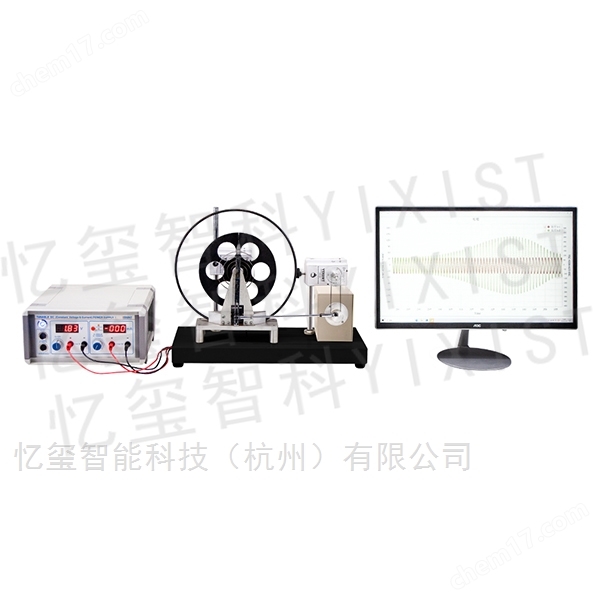
Adopting modular design and "building block" construction, familiarizing oneself with the Brewster angle light path structure through hands-on practice.
Built in wireless rotation sensor and wireless light sensor, capable of accurately measuring angle and light intensity changes.
Equipped with SmartLAB universal data analysis software, it can collect and analyze experimental data in real-time.
Experimental Content
1. Basic content
Study the curve relationship between reflected light intensity and angle, verify the existence of Brewster angle, and observe the polarization phenomenon of reflected light.
Calculate the refractive index of transparent media using the Brewster angle.
Understand the reflection characteristics of P-polarized light and S-polarized light.
2. Enhance content
Replace the sample, repeat the measurement, and compare the Brewster angles of different media.
Replace the laser light source and compare the Brewster angles of lasers with different wavelengths.
Typical experimental data

The relationship curve between the intensity of P-polarized component light and the incident angle

The relationship curve between the intensity of S-polarized component light and the incident angle

Fitting curve of P-polarization component