-
E-mail
gcsepu@163.com
-
Phone
18663278921
-
Address
No. 20, Xibeitan, Tengzhou City, Shandong Province
Product Categories
- Solvent residue detection gas chromatograph
- Binary high-pressure analysis gradient liquid chromatography
- Online natural gas analyzer
- Gas automatic sampler
- Application of Gas Chromatography in Gas Analysis
- Gas chromatography packed column
- GC-2090 networked gas chromatograph
- Gas chromatograph for Baijiu analysis
- GC gas chromatography analyzer
Tengzhou Zhongke Spectral Analysis Instrument Co., Ltd
Blood alcohol gas chromatograph
NegotiableUpdate on 12/29
- Model
- Nature of the Manufacturer
- Producers
- Product Category
- Place of Origin
Overview
The blood alcohol gas chromatograph is based on the detection method for blood alcohol content in GAT842-2019 of the Ministry of Public Security. It uses a dual injection tube to connect two gas chromatography injection systems for simultaneous parallel analysis, qualitative analysis based on retention time or relative retention time, and quantitative analysis based on the peak area ratio of ethanol to internal standard using the internal standard method
Product Details
Principle of Blood Alcohol Gas Chromatography
The analysis of volatile organic compounds plays an important role in environmental research and evaluation, and many toxic organic compounds are volatile. Among the 114 organic priority compounds regulated by the US EPA, there are 45 volatile components, accounting for 40%. Gas chromatography is almost a method for separating and analyzing this type of component. According to different sample processing methods, it can be divided into blowing capture thermal desorption method. The main disadvantages of this method are long analysis time and the need for special equipment. The advantage is low detection limit. The liquid-liquid extraction method J requires high-purity solvents, which can easily cause solvent peak interference, has a small enrichment factor, and has the advantage of good repeatability. The direct water injection method J has the advantages of water interference, damage to the chromatographic column, high detection limit, and simplicity and convenience. Solid phase extraction has a low recovery rate for low concentrations, is time-consuming, and has the advantage of a large enrichment factor. In recent years, the combination of solid-phase microextraction and headspace analysis has also been applied to determine volatile organic compounds in water, but further improvement is needed in terms of method reproducibility. Compared to other methods, the static headspace method has the advantages of simple sample processing, convenient operation, and minimal interference in the analysis of volatile organic compounds in water. Therefore, it has been widely studied and some have been included in standard methods. The outstanding advantages of this method are simple sample processing, no use of organic solvents, no need for special equipment, and easy automation. Tengzhou Zhongkepu ProductionBlood alcohol gas chromatographAccording to the GAT842-2019 blood alcohol content detection method of the Ministry of Public Security, a dual injection tube is used to connect two gas chromatography injection systems for simultaneous parallel analysis. Qualitative analysis is performed based on retention time or relative retention time, and quantitative analysis is performed using the peak area ratio of ethanol to the internal standard by the internal standard method
Implement national standards
GAT842-2019 Blood Alcohol Content Detection Method of the Ministry of Public Security
1. GC-2020 gas chromatograph with 1 dual hydrogen flame detector
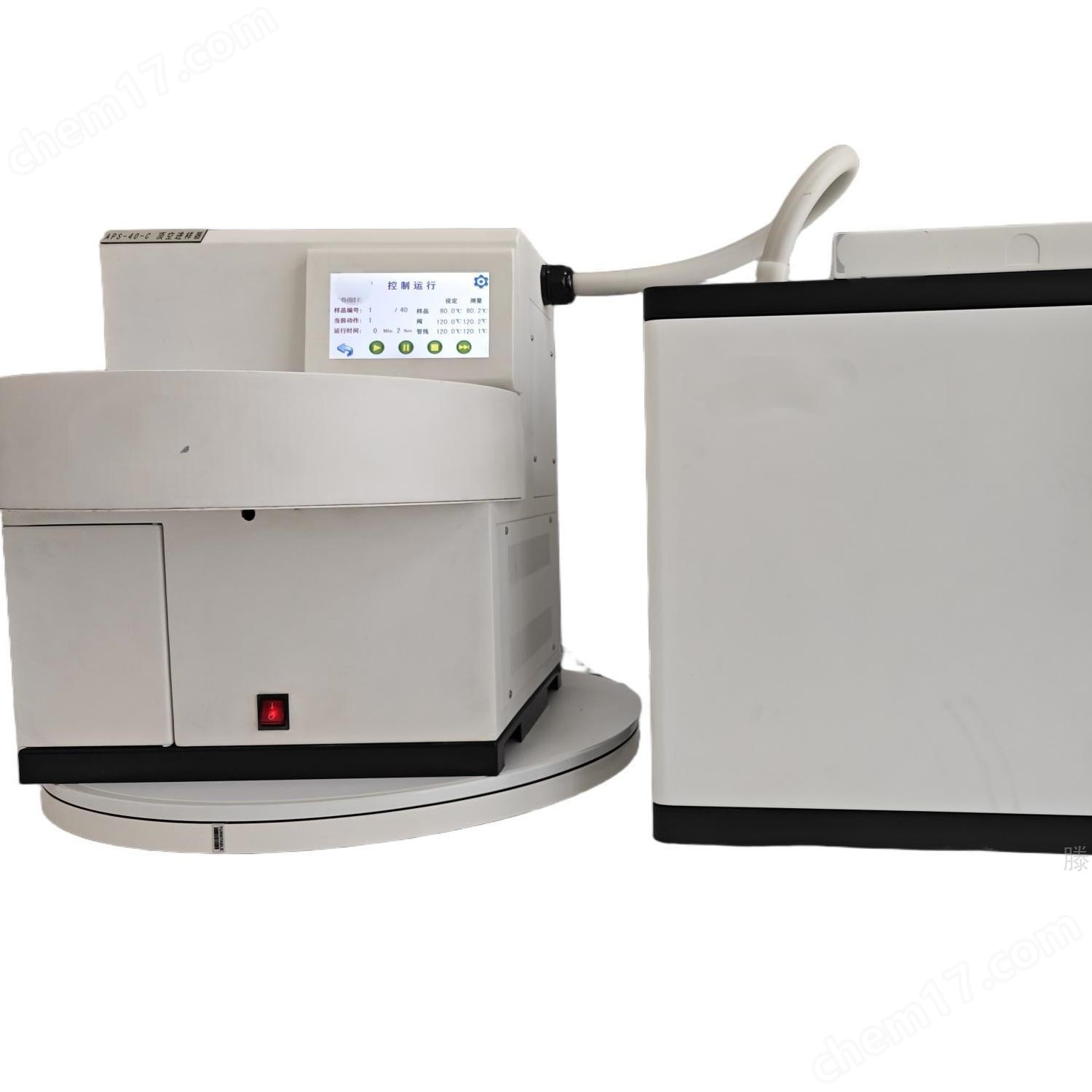
2. ZKPHS-20A fully automatic headspace sampler (sealing forceps, headspace bottle) 1 set
3. Two capillary columns measuring 30m * 0.32mm * 1.0um
4. Nitrogen, hydrogen, air source (fully automatic) gas purity 99.999% 1 set
5. One set of data processing system (computer, printer, chromatography workstation)
[Headspace sampler parameters]
Main technical parameters:
1. Temperature control range in the sample area: room temperature -220 ℃, set in increments of 1 ℃;
2. Temperature control range of sample transfer pipeline: room temperature -220 ℃, set in increments of 1 ℃;
3. Temperature control range of valve injection system: room temperature -220 ℃, set in increments of 1 ℃;
4. Temperature control accuracy:<± 0.1 ℃;
5. Temperature control gradient:<± 0.1 ℃;
6. Injection pressure range: 0-0.4Mpa (continuously adjustable);
7. Headspace bottle workstation: 20;
8. Repeatability: RSD ≤ 1.5% (200ppm ethanol in water);
9. Headspace bottle specifications: optional 20ml and 10ml;
10. Backblowing cleaning flow rate: 0-400ml/min (continuously adjustable);
11. Effective dimensions of the instrument: 430 × 350 × 510mm (length * width * height);
12. Weight of the instrument: approximately 25 kg;
13. Pressurization pressure: 0~0.25Mpa (continuously adjustable)
14. Quantification tube volume: 1ml (other specifications can be customized, such as 0.5ml, 2ml, 5ml, etc.)
15 headspace bottle specifications: 40ml (other specifications can be customized, such as 50ml, 100ml, etc.)
16. Sample workstation: 40 positions
17. Can heat samples simultaneously: 3 positions
18. RSD:<1.0% (100ppm ethanol aqueous solution)
19. Backblowing cleaning flow rate: 0-100ml/min (continuously adjustable)
20. Synchronously start the chromatographic data processing workstation, GC, or external event to synchronously start this device
Key indicators for validation of blood alcohol gas chromatography method (ensuring accuracy and legal effectiveness)


Similar Product Recommend


