-
E-mail
2213832271@qq.com
-
Phone
18761897960
-
Address
Zhenjiang City, Jiangsu Province
Product Categories
Jurong Tiandao Instrument Co., Ltd
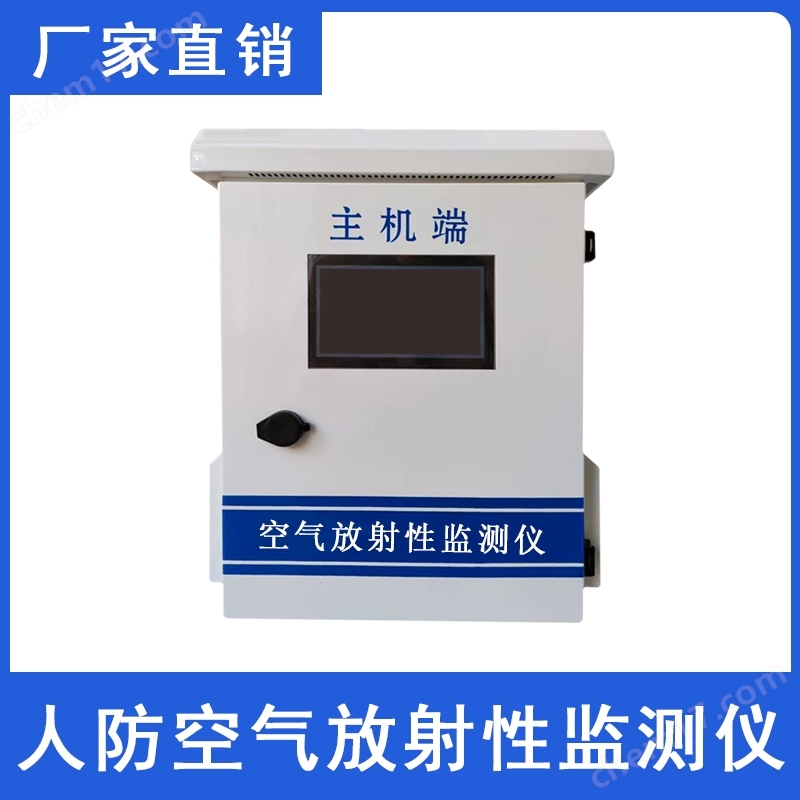


Binzhou Experimental Building Civil Air Defense Radiation Monitoring Instrument
NegotiableUpdate on 02/05
- Model
- Nature of the Manufacturer
- Producers
- Product Category
- Place of Origin
Overview
Air radioactive monitoring device is a specialized instrument used for real-time monitoring of the concentration of radioactive nuclides in the air. It is widely used in environmental monitoring around nuclear facilities, emergency response to nuclear accidents, safety supervision of radioactive material transportation, protection of medical radioactive sites, and environmental protection. Binzhou Experimental Building Civil Air Defense Radiation Monitoring Instrument
Product Details
1、 Equipment Overview
Air radioactive monitoring device is a specialized instrument used for real-time monitoring of the concentration of radioactive nuclides in the air. It is widely used in environmental monitoring around nuclear facilities, emergency response to nuclear accidents, safety supervision of radioactive material transportation, protection of medical radioactive sites, and environmental protection. Its core function is to collect air samples, use detectors to identify and count radioactive particles in the samples, and then analyze and calculate the activity concentration of specific radioactive nuclides in the air, providing key data support for radiation protection decision-making, environmental quality assessment, and public health protection. Equipment usually has the characteristics of high sensitivity, fast response, stability and reliability, and automated data processing, which can adapt to long-term continuous monitoring or short-term emergency monitoring needs under different environmental conditions.Binzhou Experimental Building Civil Air Defense Radiation Monitoring Instrument
2、 Main components
1. sampling systemCollecting air samples from the environment is the primary step in monitoring. It usually consists of a sampling pump, a sampling head, a sampling flow controller, and a sampling filter membrane (or filter cartridge). The sampling pump provides power to draw air into the instrument; The sampling head is used to remove large particles of dust and other interfering substances; The sampling flow controller precisely controls the sampling flow rate to ensure the accuracy of the sampling volume, which is crucial for subsequent concentration calculations; Sampling filter membranes (such as glass fiber filter membranes and microporous filter membranes) are key components for capturing suspended radioactive aerosol particles in the air. The material and pore size selection need to be determined based on the characteristics of the target nuclide and monitoring requirements.
2. detection systemCore components used for identifying and measuring collected radioactive materials. Common types of detectors include(NaI(Tl))Scintillation detector, high-purity germanium(HPGe)Detector, plastic scintillator detector, and semiconductor detector (such as silicon)PINDetectors, etc.NaI(Tl)Detectors are commonly used for daily inspections and rapid screening due to their high detection efficiency and low cost;HPGeThe detector is based on itstallThe energy resolution can accurately identify specific nuclides in complex energy spectra, suitable for precise nuclide identification and quantitative analysis. The detector will detect the incident radiation(alphaTheB、γConvert radiation into measurable electrical signals.Binzhou Experimental Building Civil Air Defense Radiation Monitoring Instrument
3. Signal Processing and Analysis System: Composed of preamplifier, main amplifier, multi-channel pulse amplitude analyzer(MCA)Composed of data processing units (usually embedded microprocessors or connected computers). The preamplifier preliminarily amplifies and shapes the weak electrical signal output by the detector; The main amplifier further amplifies the signal and optimizes the waveform;MCAThen, different amplitude pulse signals are corresponding to different channel addresses to form the characteristic energy spectrum of radioactive isotopes. The data processing unit analyzes the energy spectrum data through specific algorithms such as energy scale, efficiency scale, background subtraction, peak identification and fitting, in order to determine the types and activities of radioactive nuclides.
4. Display and Recording SystemUsed for real-time display of monitoring data, instrument status, and historical record queries. Usually equipped withLCDorLEDThe display screen can intuitively show the current measured radioactive activity concentration, dose rate, energy spectrum, sampling flow rate, cumulative sampling time, and other information. Simultaneously equipped with data storage function, monitoring data (concentration values, energy spectrum data, time, status, etc.) can be saved on local storage media (such as...)SDCard, hard drive), and support throughUSBInterface, Ethernet or wireless network(Wi-FiThe4G/5G)Perform data export or remote transmission.
5. alarm systemWhen the detected radioactive activity concentration exceeds the preset threshold, the instrument will issue an alarm signal through sound (buzzer), light (flashing indicator light), or text prompts, reminding operators to take corresponding protective or emergency measures in a timely manner. The alarm threshold can usually be customized according to different application scenarios and radiation protection standards.
6. power systemProvide stable power support for all components of the instrument. Generally supports AC power supply (such asAC 220V)There are two ways to ensure the normal operation of the instrument in different situations such as fixed stations and mobile emergency monitoring, including direct current power supply (such as built-in rechargeable lithium batteries).
3、 Working principle
The workflow of an air radioactive monitoring device is usually as follows: Firstly, the sampling system continuously extracts ambient air at a set flow rate driven by a sampling pump, and the radioactive aerosol particles in the air are efficiently collected on the sampling filter membrane. As the sampling time accumulates, the radioactive substances on the filter membrane continue to accumulate. Next, the detection system (detector) continuously detects the radiation emitted by the radioactive material on the filter membrane. When the radiation interacts with the sensitive substance of the detector, a series of physical effects (such as ionization, excitation) are generated and ultimately converted into electrical pulse signals. These weak electrical signals are amplified, shaped, and digitized by a signal processing system, and then converted into spectral data by a multi-channel pulse amplitude analyzer. The data processing unit analyzes the energy spectrum data, compares it with the standard energy spectrum of known nuclides, identifies the types of radioactive nuclides present, and calculates the activity concentration of corresponding nuclides in the air based on parameters such as detection efficiency and sampling volume. Finally, the monitoring results are displayed in real-time on the screen and automatically recorded. When the concentration exceeds the standard, the alarm system is activated. For situations that require long-term continuous monitoring, the instrument can automatically sample, measure, and record data at set time intervals.
4、 Key technical parameters
1. Detecting nuclide typesClarify the types of radioactive nuclides that the instrument can effectively detect, such asγRadionuclides (such asCs-137TheCo-60TheI-131TheK-40TheU-238seriesTh-232Series, etc.)BRadionuclides (such asSr-90TheY-90Waiting, usually requires specific coordinationBDetector and sample preparation) oralphaRadionuclides (such asPu-239TheAm-241TheRa-226Waiting, higher requirements for sampling and detection.
2. Detection limit/Detectable activity concentrationThe concentration of radioactive nuclides in the air that can be reliably detected by an instrument at a certain level of confidence. This parameter directly reflects the sensitivity of the instrument and is influenced by various factors such as detector efficiency, sampling flow rate, sampling time, background level, and electronic noise.
3. Energy response rangeThe energy range of radiation that the detector can effectively respond to, such asγRadiation detectors typically cover from several tenskeVTo whatMeVThe energy range.
4. energy resolutionCharacterize the ability of a detector to distinguish between different energy rays, typically at a specific energy levelγRadiation (such asCo-60of1332keVorCs-137of662keV)Half width at half maximum of the photoelectric peak(FWHM)Expressed as a percentage of peak energy.HPGeThe energy resolution of the detector is much better thanNaI(Tl)Detector.
5. sampling flowThe volume of air extracted per unit time is one of the key parameters for calculating the concentration of radioactivity in the air, usually ranging from a few to tens of liters per minute(L/min)Adjustable or fixed within the range.
6. measure timeThe time required for a single measurement can be set according to monitoring requirements (fast response or high precision), ranging from a few seconds to several hours.
7. Background levelWhen there is no specific radioactive source present, the lower the background of the counting rate or activity concentration generated by the instrument itself and the surrounding environment, the stronger the instrument's ability to detect weak signals.
8. Data storage capacityThe amount of monitoring data that can be stored, including spectral data and concentration results.
9. Power supply mode and endurance capabilitySuch as AC power supply, built-in battery power supply, and their continuous working time.
5、 Application scenarios
1. Environmental monitoring of nuclear facilitiesIn the surrounding areas of nuclear facilities such as nuclear power plants, nuclear reactors, nuclear fuel processing plants, and radioactive waste disposal sites, air radiation monitoring devices are continuously operated for a long time to monitor the release of radiation during normal operation and detect possible leakage accidents early.
2. Emergency monitoring of nuclear and radiation accidentsIn the event of sudden nuclear and radiation incidents such as nuclear leaks, loss of radioactive sources, or illegal spread of radioactive substances, air radioactive monitoring devices are key equipment for emergency response teams. They are used to quickly assess the degree of air radioactive pollution, determine the scope and spread trend of pollution, and provide real-time data for personnel evacuation, protective measures, and emergency decision-making.
3. Safety supervision of transportation of radioactive materialsMonitor the transportation process of radioactive materials along the way or at designated locations to ensure transportation safety and prevent accidental release of radioactive materials from causing harm to the environment and the public.
4. Medical and research institutionsIn hospitals, research institutes, and other places where radioactive isotopes are used, they are used to monitor the level of radioactivity in the working environment air, ensuring the occupational health and safety of medical staff and researchers.
5. Environmental Protection and Public HealthEnvironmental protection departments can set up monitoring points in cities, residential areas, important ecological protection zones and other areas as part of the environmental air quality monitoring network, to monitor the background levels and trends of natural and artificial radioactive nuclides in the air for a long time, and evaluate the potential impact of environmental radiation on public health.
6. Entry-Exit Inspection and QuarantineScreening of goods and luggage that may carry radioactive substances at customs, ports, and other places to prevent illegal entry or exit of radioactive substances.
Similar Product Recommend