-
E-mail
info@tow-int.net
-
Phone
15221725700
-
Address
Building 2, No. 351 Sizhuan Road, Sijing Town, Songjiang District, Shanghai
Product Categories
Shanghai Tawang Intelligent Technology Co., Ltd
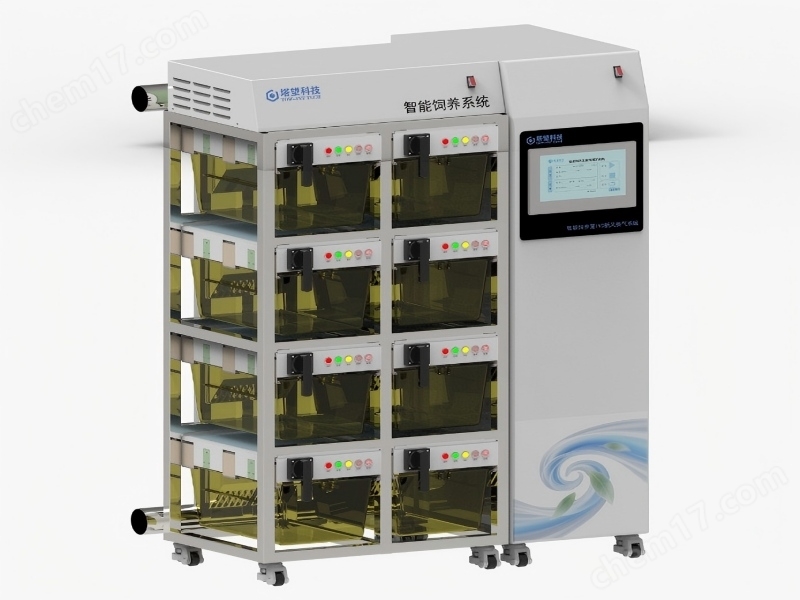
Animal experiment intelligent feeding cage system motion metabolism
NegotiableUpdate on 01/09
- Model
- Nature of the Manufacturer
- Producers
- Product Category
- Place of Origin
Overview
The IC-XM/R intelligent feeding cage adopts deep learning algorithms to accurately recognize the individual behavior of 1-5 animals (such as mice) in the same cage, track the trajectory of key parts in real time, and support 256 channel monitoring. Non invasive design, no need for implanted devices, ensuring data authenticity and naturalness. It can automatically classify behaviors such as sleep, exercise, and feeding, and is compatible with infrared imaging to achieve 24-hour monitoring. Data support CSV/Excel export to assist scientific research analysis.
Product Details
Product description
The Smart Home Cage System is an automated animal behavior monitoring platform that integrates high-resolution cameras, computer vision algorithms, and behavioral analysis software. It is mainly used for continuous and uninterrupted real-time monitoring and analysis of the behavioral activities of multiple experimental animals (such as mice) in a single cage. The system collects animal behavior videos through a high-definition camera at the top, and combines image recognition and deep learning algorithms to automatically recognize and track key parts such as the left and right ears, head, body center point, and tail of each animal, thereby achieving accurate individual differentiation and behavior classification.
This system can be widely applied in multiple fields such as neuroscience, pharmacology, behavior, sleep research, and metabolic disease model evaluation, providing objective, quantitative, and reproducible behavioral data, greatly improving experimental efficiency and data scientificity.
Product Features
1. Multi target individual recognition and tracking
The system can automatically identify and distinguish multiple animals (such as 1-5 mice) in the same cage, and achieve individual level behavioral trajectory tracking through coordinate markers of key parts (head, ears, tail).
The system can be paired with 1-256 channels for real-time online monitoring and supports long-term continuous monitoring. Using sensors to capture animal behavior and reveal its characteristics.
2. Non invasive behavior monitoring
No need to implant chips or wear sensors, non-invasive, avoiding stress reactions in animals, ensuring the naturalness and authenticity of behavioral data.
Can be directly deployed in standard breeding environments and compatible with conventional laboratory animal room conditions.
3. High precision behavior recognition algorithm
Utilizing deep learning models to recognize animal postures and motion patterns.
It can automatically recognize and classify various behaviors, including sleep, exercise, feeding, drinking, social interaction, etc.
4. Multi functional data collection and analysis
The system not only records video data, but also provides structured behavioral data output, supporting subsequent statistical analysis and visual display.
The data can be exported in formats such as CSV, Excel, etc., making it easy to integrate into scientific research databases or analysis processes.
5. Support infrared imaging
The system is equipped with a high-resolution infrared camera, which can clearly capture animal behavior during dark periods.
Can be paired with an infrared camera to achieve 24-hour uninterrupted monitoring.
Technical Specifications
1. Sports behavior parameters
parameter name |
description |
Total moving distance |
The total distance traveled by animals during the monitoring period, cm |
Maximum moving speed |
The maximum speed calculated during the activity of each animal, in cm/s; |
Minimum moving speed |
The minimum speed calculated during the activity of each animal, in cm/s; |
Average moving speed |
The average movement speed of each animal during its activity period, in cm/s; |
average acceleration |
The average speed at which each animal changes speed, in centimeters/s²; |
Event Time |
The total time that an animal is in motion, in seconds |
still time |
The time during which an animal is in a stationary state (used for sleep assessment), in seconds |
2. Sleep behavior parameters
parameter name |
description |
sleep duration |
When the average speed is less than 3 pixels per second, the animal is considered inactive, and the duration of inactivity is ≥ 40 seconds, which is the sleep time in seconds; |
Total sleep time |
The sum of all sleep time during the monitoring period, in seconds |
sleep latency |
Time from initial stillness to entering sleep state (optional) |
Degree of fragmented sleep |
Number of awakenings per unit time, reflecting sleep continuity (optional) |
3. Feeding behavior parameters
parameter name |
description |
feeding time |
The starting and ending time of interaction between animals and food troughs, with a food weight difference of ≥ 0.02g, in seconds; |
Total feeding time |
The sum of all feeding times during the monitoring period, in seconds |
Total food intake |
Calculate the changes in food intake during all monitoring periods, in grams; |
Feeding frequency |
Number of occurrences of feeding behavior |
4. Drinking behavior parameters
parameter name |
description |
Drinking time |
The starting and ending time of interaction between animals and sinks with a water weight difference of ≥ 0.02g, in seconds; |
Total drinking time |
The total amount of drinking time during the monitoring period, in seconds |
Total drinking water volume |
Calculate the changes in water consumption during all monitoring periods, in grams |
Drinking water frequency |
Number of occurrences of drinking behavior |
5. Social and exploratory behavior (optional)
parameter name |
description |
interaction count |
The frequency of contact, attack, mating, and other behaviors between multiple animals |
Application field
1. Neuroscience research
·Study the impact of neurological disorders such as Alzheimer's disease and Parkinson's disease on animal behavior.
·Evaluate the effects of neuropharmaceuticals on sleep, movement, and cognitive function.
2. Research on Sleep Disorders
·Construct animal models of sleep deprivation or insomnia.
·Evaluate the effectiveness of new sleep aid drugs.
·Study the impact of circadian rhythm disorders (such as time difference and shift work models) on health.
3. Pharmacology and Toxicology Research
·Evaluate the side effects of drugs on animal behavior, such as sedation, excitement, anxiety, etc.
·Detect the effects of compounds on feeding, drinking, and activity levels.
4. Evaluation of metabolic disease models
·To study the changes of animal behavior patterns caused by obesity, diabetes and metabolic syndrome.
·Evaluate the impact of dietary and exercise interventions on metabolic behavior.
5. Behavioral and psychological research
·Explore animal social behavior, exploratory behavior, and anxiety like behavior.
·Build behavioral models for depression, anxiety, and obsessive-compulsive disorder.
6. Longevity research
·Behavioral pattern analysis: By continuously monitoring the behavioral patterns of experimental animals (such as mice), including activity levels, sleep quality, etc., researchers can explore the relationship between these factors and lifespan. For example, prolonged low activity levels or irregular sleep cycles may indicate health problems, thereby affecting lifespan.
·Dietary control and observation: Intelligent feeding cages can accurately control and record the food and water intake of each animal, which is crucial for studying the impact of diet on lifespan. For example, how intermittent fasting or restrictions on specific nutrients affect the aging process of organisms.
·Drug testing and intervention measures: The intelligent feeding cage system can be used to test the effectiveness of various anti-aging drugs or interventions. Long term monitoring of animals in different groups can effectively evaluate whether specific treatment plans can delay the aging process or extend lifespan.
7.genetic research
·The use of intelligent feeding cage systems can help identify phenotypic features associated with specific genes, such as the impact of certain gene mutations on behavioral patterns, physiological functions, and lifespan.
related literature
[1]Qinqin He, Liwei Ji, Yanyan Wang, Yarong Zhang, Haiyan Wang, Junyan Wang, Qing Zhu, Maodi Xie, Wei Ou, Jun Liu, Kuo Tang, Kening Lu, Qingmei Liu, Jian Zhou, Rui Zhao, Xintian Cai, Nanfang Li, Yang Cao, Tao Li, Acetate enables metabolic fitness and cognitive performance during sleep disruption, Cell Metabolism (IF 29.0)), 2024,ISSN 1550-4131.
[2]Zijun Chen,… , Yixiao Luo, Yingjie Zhu, GLP-1R–positive neurons in the lateral septum mediate the anorectic and weight-lowering effects of liraglutide in mice, J Clin Invest (IF 19.456). 2024; 134(17):e178239.
[3]Su D, Jiang T, Song Y, et al. Identification of a distal enhancer of Ucp1 essential for thermogenesis and mitochondrial function in brown fat[J]. Communications Biology, 2025, 8(1): 31.
[4]Gao Y, Zhang J, Cao M, et al. MDPAO1 Peptide from Human Milk Enhances Brown Adipose Tissue Thermogenesis and Mitigates Obesity[J]. Molecular and Cellular Endocrinology, 2024: 112443.
[5]Zhang J, Li S, Cheng X, et al. Graphene-Based Far-Infrared Therapy Promotes Adipose Tissue Thermogenesis and UCP1 Activation to Combat Obesity in Mice[J]. International Journal of Molecular Sciences, 2025, 26(5): 2225
*Our company can provide 3Q verification, customize functions according to customers' special applications and needs, and also provide related experimental services. Please contact us for details.
*This introduction and parameters are basic product information and may lag behind product updates. Please contact our company for specific parameters.
Similar Product Recommend


