- Phone
-
Address
Liubao Industrial Park, Yangzhou City, Jiangsu Province
Product Categories
Jiangsu Ruyan Busbar Manufacturing Co., Ltd


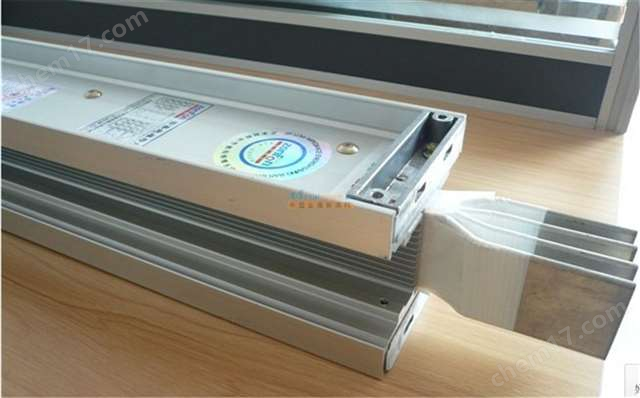
Air type bus duct can be measured and installed on-site
NegotiableUpdate on 05/06
- Model
- Nature of the Manufacturer
- Producers
- Product Category
- Place of Origin
Overview
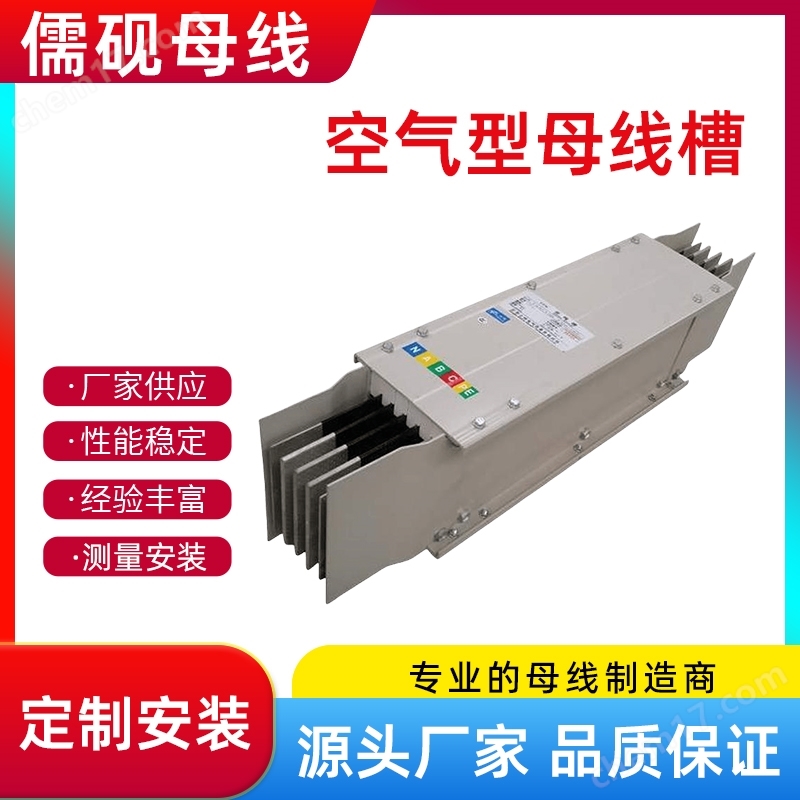
Air type busbar trunking can be installed for on-site measurement, which is a conductive system with air as the main insulation medium. It consists of a metal shell, conductive bars, insulation supports, and connecting components. The core principle is to use the insulation properties of dry air to isolate and fix multiple conductive bars in a closed shell, forming a power transmission channel that can carry high currents. Compared with traditional cables, this structure can achieve higher current capacity and more flexible distribution layout.
Product Details
Air type bus duct can be measured and installed on-siteIt is a conductive system with air as the main insulating medium, consisting of a metal shell, conductive bars, insulating supports, and connecting components. The core principle is to use the insulation properties of dry air to isolate and fix multiple conductive bars in a closed shell, forming a power transmission channel that can carry high currents. Compared with traditional cables, this structure can achieve higher current capacity and more flexible distribution layout.
Working principle and thermal management:
When current passes through a conductive strip, the resistance effect generates heat. The air type bus duct uses the principle of air convection for heat dissipation: the ventilation ducts designed on the surface of the shell promote air flow, and the cavities formed by the internal insulation brackets form natural air ducts. The metal shell serves as an additional heat dissipation surface, accelerating heat dissipation through thermal radiation. This composite heat dissipation method enables the equipment to operate continuously at rated current, and its thermal stability is significantly better than that of fully enclosed bus ducts. Experimental data shows that a well-designed air insulation system can control temperature rise within a safe threshold.
Air type bus duct can be measured and installed on-siteSystematic selection guide:
The correct selection is not only related to equipment safety, but also affects the economy and reliability of system operation. Please follow the following steps for systematic selection:
1. Determine load demand and calculate operating current:
Detailed statistics of the total power of all electrical equipment, taking into account the simultaneous use factor (demand factor).
Calculate the innovative long-term operating current based on the system voltage and total calculated power. This is the fundamental basis for selection.
2. Consider the environment and installation conditions:
The environmental temperature, humidity, and presence of corrosive gases or dust at the installation site.
Clearly define the installation method (horizontal/vertical, single/multiple parallel) and spatial layout to be adopted.
Determine the required level of protection based on environmental conditions. Ordinary indoor dry environments can choose around IP40, while environments with dust and waterproof requirements should choose IP54 or higher.
3. Select technical specifications:
Based on the calculated working current and comparing it with the product sample, select the bus duct model with a higher rated current and reserve an appropriate margin (usually 10% -20%) to accommodate possible future load growth.
According to the installation method and ambient temperature, refer to the calibration factor table provided by the manufacturer to calibrate the current carrying capacity, ensuring that the actual allowable current carrying capacity after calibration is greater than the working current.
Verify the expected short-circuit current of the system to ensure that the short-term withstand current (rated peak withstand current) of the selected bus duct meets the requirements.
On the premise of meeting performance requirements, the temperature rise parameters of different schemes can be compared to select products with better energy efficiency.

4. Focus on structure and connections:
Check the joint design of the bus duct. High quality joints should ensure a large contact surface, uniform pressure, reliable connection, and low temperature rise, which are the key points to ensure the long-term safe operation of the system.
According to the wiring requirements, select matching components such as straight sections, elbows, tees, crosses, variable capacity joints, expansion joints, etc., to ensure the flexibility of installation and the integrity of the system.
Consider the material (such as galvanized steel plate, aluminum alloy) and strength of the shell to meet mechanical protection and aesthetic requirements.
5. Verification and installation planning:
After completing the preliminary selection, it is necessary to comprehensively verify whether all parameters match the application scenario.
Plan the installation path, support spacing, connection point location, and grounding method. Ensure good ventilation in the installation environment and avoid laying above heat sources or in enclosed spaces.
Similar Product Recommend