- Phone
-
Address
Zhongshan West Road, Xuhui District
Product Categories
Shanghai Jingrui Scientific Instrument Co., Ltd

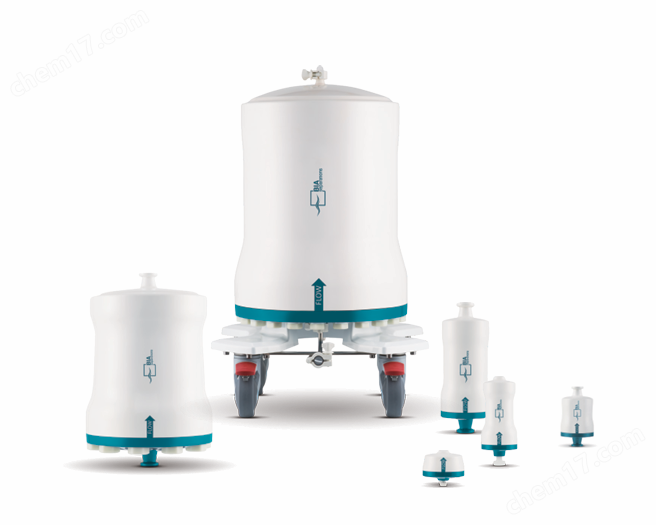
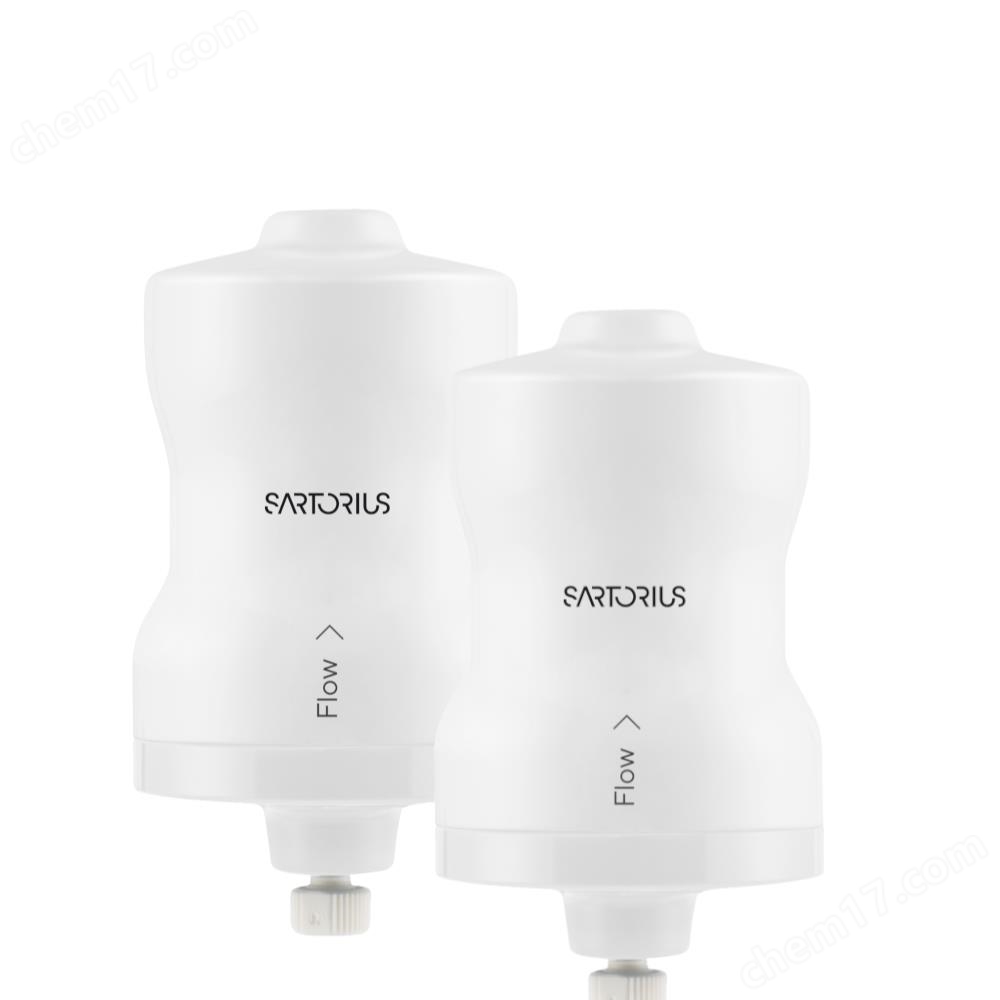
110 8503-1 3AAV hollow shell separation column Sadolis BIA
NegotiableUpdate on 05/07
- Model
- Nature of the Manufacturer
- Producers
- Product Category
- Place of Origin
Overview
110 8503-1 3AAV hollow shell separation column Sadolis BIA
Product Details
Today, let's take a look at why choosing a monolithic column is superior to traditional porous particle packed columns when optimizing nucleic acid?Let's put one firstThe animation of the principle of whole column purification of nucleic acid is vivid and easy to understand. Many key points in this article are depicted in the animation. If you are not interested after watching the animation, there is no need to read the following text because the article is too long and time-consuming

 =Porous particle packed column and integral column
Basic concepts of diffusion and convection
Diffusion and Mass Transfer in Porous Media
In chromatography, the distance between the stationary phase and the mobile phase is very small, ranging from nanometers to micrometers, but for porous media that rely on diffusion to achieve mass transfer of biomolecules, this distance is very large. In a chromatographic column filled with porous particles,Diffusion is the way solute molecules enter and exit the interior of particle pores(Because the flow velocity inside the aperture is 0),The larger the solute molecules, the slower the diffusion, resulting in a lower dynamic binding capacity of the stationary phase porous medium.
In addition,In porous particle chromatography, the interaction between convective and diffusive mass transfer can also cause a decrease in the binding capacity of the stationary phase mediumBefore convection washes away biomolecules, there is a very short time for them to diffuse into the interior of porous particles. The faster the flow rate, the shorter the window time, and the solute cannot diffuse into the interior of the particle aperture before it is washed away by convection, resulting in a lower binding capacity of the particles. The decrease in the binding capacity of chromatographic solid-phase media caused by the decrease in the diffusion coefficient of biomolecules can be compensated for by reducing the flow rate. In summary,In porous particulate media, the fixed phase binding capacity is inversely proportional to the flow rate and solute size.
 Heterogeneous mass transfer occurs in porous particles, and if the flow rate is too fast, the slow diffusion process cannot achieve concentration equilibrium of solute molecules inside the particle pores and between the particle voids.
 The influence of flow rate on the dynamic binding capacity of fixed phase media. Left image: As the flow rate increases, the diffusion mass transfer efficiency decreases, and the binding capacity of porous media decreases with the increase of flow rate. Right figure: There is convective mass transfer in the overall column, and the solid phase medium binding capacity is not affected by the flow rate. Note: The curve here is called the Breakthrough Curve, where the y-axis represents the percentage of protein lost due to overload compared to the total protein, and the x-axis represents the amount of protein loaded per milliliter of substrate (mg protein load/medicine volume (mg/ml))
Differences in pore size and binding surface area of solid-phase media
Large molecular substances, such as nucleic acids, have higher binding capacity in the monolithic column, which is also similar toThe integral column provides a larger binding surface area for biomoleculesFor a monolithic column, the entire surface area of the internal pipeline can be bound by solute molecules.
In porous media chromatography columns, solute molecules can easily access the entire surface area outside the particles, but the external surface area only accounts for 2% of the internal surface area of the particle pore size. Only larger particle sizes can accommodate larger solute molecules, but,Solute molecules need to bind to the inner surface of particle pores without any restrictions, requiring the average pore size of the particles to exceed ten times that of solute moleculesMany. It is very rare for the pore size of porous media to exceed 100nm, as excessive pore size can reduce particle stability.
 Solute size and particle pore size seriously affect the binding ability of the medium
 Plasmid DNA adsorbed on the surface of the medium
Therefore,From the perspective of the combined mass of particle pore size and unit area of the medium,Integral columns are more suitable for large molecular solutesBecause it can provide higher media binding capacity. ButFor small molecules(protein)Generally speaking, porous media have more efficient binding ability.
Dispersion is the enemy of chromatographic resolution.In the overall column, there is only weak laminar dispersionSo that it can handle solute molecules of various sizes at different flow rates,All have good chromatographic resolutionOn the contrary,There are more sources and more severe degrees of dispersion generated in porous media, mainlyIncluding inefficient diffusion and vortex dispersion.As the flow rate increases and solute molecules increase, diffusion slows down and the overall dispersion becomes more severe,The lower the resolution. summary The integral column is used as the fourth generation chromatographic stationary phase, which has special advantages in rapid separation and purification of biomolecules compared to traditional porous media. The outstanding purification performance of the integral column is determined by its inherent characteristics, such as convection based mass transfer and efficient binding ability (especially for biomolecules); High resolution independent of solute size and fluid velocity; Unrestricted pore size and wide binding surface area; Weak shear force. Obtaining high-quality and high-purity plasmid DNA and RNA molecules is a crucial process source for DNA or RNA vaccines. Due to its enormous mass and diameter, a high-performance monolithic column is a very good choice for developing plasmid DNA or RNA molecule purification processes. Differences in binding capacity of solute molecules of different sizes in monolithic columns and porous media
 Laminar flow in integral columns and turbulence in porous media
 Due to the presence of friction, the surface velocity of the medium is 0. The farther away from the surface of the medium, the faster the laminar flow velocity, causing laminar dispersion.
 Different media and flow rates cause different types of dispersion, thereby affecting chromatographic resolution.
 The resolution of the overall column is not affected by solute molecules and flow velocity
 Vortex shear force generated by porous particle gaps
Similar Product Recommend