- Phone
-
Address
Liubao Industrial Park, Yangzhou City, Jiangsu Province
Product Categories
Jiangsu Ruyan Busbar Manufacturing Co., Ltd




10KV air type bus duct has strong overload capacity
NegotiableUpdate on 05/06
- Model
- Nature of the Manufacturer
- Producers
- Product Category
- Place of Origin
Overview
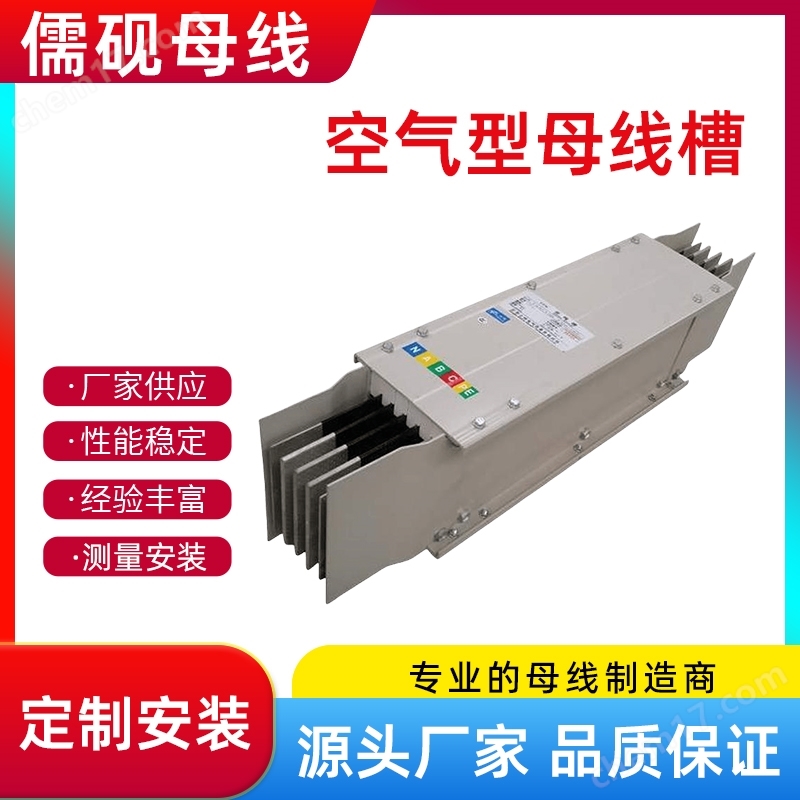
10KV air type busbar trunking with strong overload capacity is a type of distribution equipment used in power systems, mainly for the transmission and distribution of high current electrical energy in buildings or industrial facilities. Its structure consists of multiple conductive copper or aluminum bars wrapped in a metal shell, and each conductor is isolated by air as an insulating medium. This design enables the bus duct to operate stably in high voltage and high current environments, and is widely used in high-rise buildings, data centers, factory workshops, and other places that require centralized power supply.
Product Details
10KV air type bus duct has strong overload capacityIt is a type of distribution equipment used in power systems, mainly for the transmission and distribution of high current electrical energy in buildings or industrial facilities. Its structure consists of multiple conductive copper or aluminum bars wrapped in a metal shell, and each conductor is isolated by air as an insulating medium. This design enables the bus duct to operate stably in high voltage and high current environments, and is widely used in high-rise buildings, data centers, factory workshops, and other places that require centralized power supply.
10KV air type bus duct has strong overload capacityConsideration of core parameters and performance indicators:
At the beginning of selection, it is necessary to accurately grasp its core electrical parameters and environmental adaptability requirements. The rated current is the primary consideration factor, and the rated operating current of air type bus ducts usually covers the range of 250A to 6000A. When selecting, it is necessary to base it on the calculated actual working current and reserve appropriate margin to ensure that the bus duct will not operate at full load or overload for a long time, and to avoid insulation aging acceleration or connection point overheating causing faults due to overheating. At the same time, the rated voltage needs to be matched with the power supply and distribution system, which is suitable for three-phase four wire and three-phase five wire systems with AC 50-60Hz and rated voltage up to 660V.
The protection level (IP code) is directly related to the safe operation capability of the bus duct in a specific environment. When selecting, it is necessary to strictly follow the installation environment: in a clean indoor dedicated place (such as a substation), to improve heat dissipation, IP30 level can be used; Indoor ordinary workplaces (such as electrical shafts and distribution rooms) should be selected with a rating of no less than IP40 to ensure safety; When indoors in damp places or when splash proof is required, a rating not lower than IP54 should be selected; If it is located outdoors or in special environments with requirements for water spray and corrosion prevention, fully enclosed resin cast bus ducts with IP65 or even IP68 rating should be considered. It is worth noting that the higher the protection level, the better. Excessive sealing may affect its heat dissipation performance.
The short-circuit withstand strength is a key technical parameter to ensure the safety of the distribution system, which refers to the ability of the bus duct to withstand short-circuit current in the event of a short circuit in the system. When selecting, it is necessary to calculate the short-circuit current of the distribution system and choose bus ducts with corresponding short-circuit tolerance to ensure structural integrity and electrical continuity in case of faults, and avoid catastrophic failures.
Precautions for the selection and installation of air type bus ducts:
(1) Key points for purchasing
Select the appropriate current capacity based on the actual electrical load to ensure safe operation.
Consider environmental factors such as humidity, temperature, dust, etc., and choose the corresponding insulation spacing and protection level. Check the material and process of the bus duct to ensure good conductivity of the conductor and sturdy and durable casing.
Pay attention to the insulation performance and heat dissipation design of the product to avoid overheating under high load conditions.
Confirm the compatibility of connectors and accessories to ensure the reliability of the overall system.
(2) Installation and maintenance recommendations
During installation, it should be ensured that the distance between conductors meets the design standards to avoid poor contact or short circuits.
Maintain air circulation, ensure good heat dissipation, and extend the service life of equipment.
Regularly inspect the connection status and appearance of the bus duct to promptly detect potential faults.
Keep the environment clean and avoid dust and pollutants affecting insulation performance.
Follow professional operating procedures to ensure safe installation.
Future Development Trends and Industry Applications:
With the advancement of industrial automation and intelligence, the design of air type bus ducts is constantly being optimized. For example, the use of highly conductive materials, improved heat dissipation systems, and integrated monitoring devices are all improving their safety and reliability. The concept of green energy conservation has also prompted the industry to pay attention to energy efficiency and environmental protection, promoting the development of air type bus ducts in a more energy-efficient and environmentally friendly direction.
In the future, air type bus ducts will continue to play an important role in industrial automation, data centers, transportation infrastructure, and other fields. Its flexible structure and excellent performance meet the safety, reliability, and efficiency requirements of modern distribution systems.
Similar Product Recommend