-
E-mail
sales@yixist.com
-
Phone
18067966086
-
Address
2nd Floor, Building C, China Zhigu Fuchun Park, Yinhu Street, Fuyang District, Hangzhou City, Zhejiang Province
Product Categories
Yixi Intelligent Technology (Hangzhou) Co., Ltd


Hall Effect Experiment
NegotiableUpdate on 02/04
- Model
- Nature of the Manufacturer
- Producers
- Product Category
- Place of Origin
Overview
If a carrier fluid placed in a magnetic field has a current direction perpendicular to the magnetic field, an additional transverse electric field will be generated in the direction perpendicular to both the current and the magnetic field. This phenomenon was discovered by Johns Hopkins University graduate student Hall in 1879 and later became known as the Hall effect. Nowadays, the Hall effect is not only the main means of measuring the electrical parameters of semiconductor materials, but also Hall devices made using this effect have been widely used in non electric electrical measurement, automatic control, and information processing. In today's industrial production that requires automatic detection and control, Hall devices, as one of the sensitive components, will have a wider range of application prospects.
Product Details
Experimental Introduction
If a carrier fluid placed in a magnetic field has a current direction perpendicular to the magnetic field, an additional transverse electric field will be generated in the direction perpendicular to both the current and the magnetic field. This phenomenon was discovered by Johns Hopkins University graduate student Hall in 1879 and later became known as the Hall effect. Nowadays, the Hall effect is not only the main means of measuring the electrical parameters of semiconductor materials, but also Hall devices made using this effect have been widely used in non electric electrical measurement, automatic control, and information processing. In today's industrial production that requires automatic detection and control, Hall devices, as one of the sensitive components, will have a wider range of application prospects.
Objective of the experiment
Understand the experimental principle of Hall effect and knowledge about the material requirements of Hall devices
Learn to use the "symmetrical measurement method" to eliminate the influence of side effects and measure the UH-IS and UH-IM curves of the sample.
Determine the conductivity type, carrier concentration, and mobility of the sample.
Product Features
Interactive principle animation
Accurately restore real experimental data
Scene instrument 3D modeling, strong immersion
Convenient experimental operation and friendly interaction
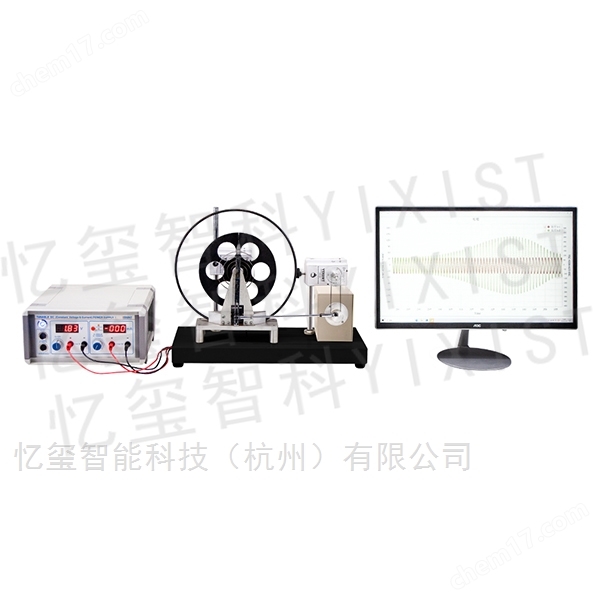
The digital twin of physical devices accurately reproduces the physical structure and experimental process
Physical twin