The GB/T 15171-2025 "Test Method for Sealing Performance of Packaging Components" drafted by Sanquan Zhongshi has been officially released
On August 1, 2025, the GB/T 15171-2025 "Packaging Sealing Performance Test Method" jointly drafted by Shandong Product Quality Inspection and Research Institute, Jinan Sanquan Zhongshi Experimental Instrument Co., Ltd. and other units was officially released and will be implemented on February 1, 2026. At that time, GB/T 15171-2025 "Packaging Sealing Performance Test Method" will fully replace GB/T 15171-1994 "Soft Packaging Sealing Performance Test Method". This is another standard on national packaging testing that Sumspring Sanquan Zhongshi participated in drafting, following the collaboration between Sanquan Zhongshi and Shandong Provincial Product Quality Inspection and Research Institute to draft the "GB/T 15717-2021 Vacuum Metal Coating Thickness Testing Method - Resistance Method".
Compared with GB/T 15171-1994 "Test Method for Sealing Performance of Flexible Packaging", GB/T 15171-2025 "Test Method for Sealing Performance of Packaging" has expanded its scope of application from the previous soft packaging to cover a full range of products including soft, semi-rigid, and rigid packaging, with a wider range of applications.
The major change in this standard revision is the "test method". The 2025 version of the standard only retains method one from the 1994 version and is renamed as the "underwater bubble method", while adding the "vacuum attenuation method".
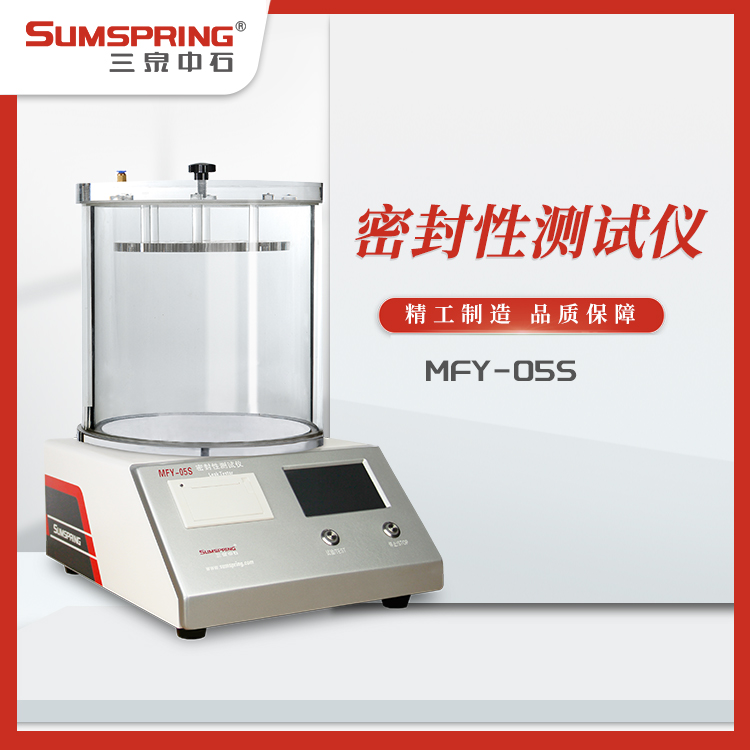
1. Underwater bubble method
Place the sample in a vacuum chamber containing test water, evacuate the chamber to create a pressure difference between the inside and outside of the sample, observe the escape of gas inside the sample and the infiltration of test water into the sample to determine its sealing performance. This method is suitable for testing the sealing performance of packaging materials that have no significant effect on the outer layer material of the packaging with experimental water.
If there are no continuous bubbles generated during the vacuuming process and vacuum holding period of the sample, and no water seeps into the packaging during opening inspection (if applicable), then the sample has no leakage; otherwise, it is a leakage.
2. Vacuum attenuation method
Place the sample in the testing chamber, evacuate the testing chamber to create a pressure difference between the inside and outside of the sample, and monitor the change in the vacuum degree of the testing chamber through a pressure sensor to determine the sealing performance of the sample. This method is suitable for testing the sealing performance of various non vacuum packaging components such as flexible packaging and rigid packaging.
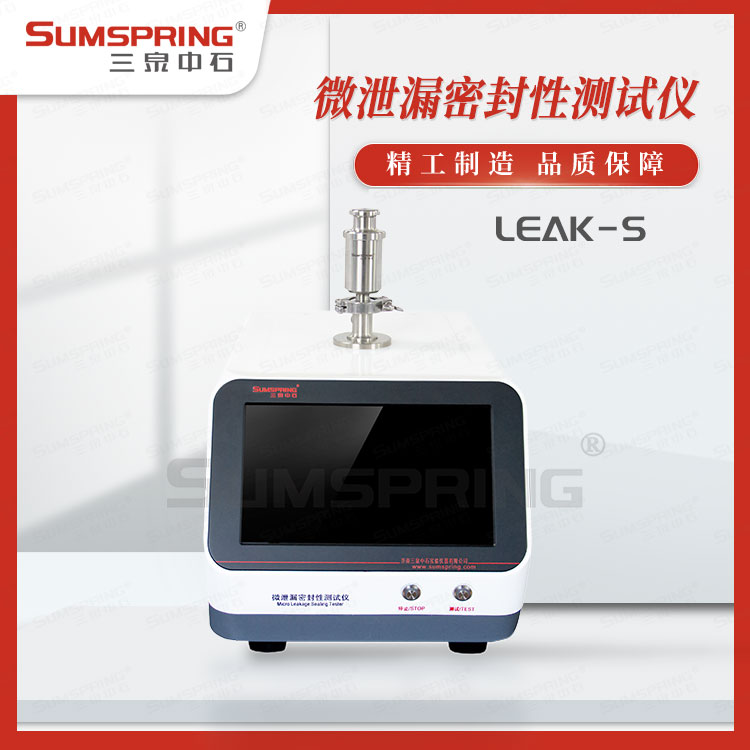
The "vacuum decay method" is a newly added method in this standard, but it has already been widely used in the pharmaceutical industry. In the draft of the "Guidelines for the Sealing of Aseptic Drug Packaging Systems" published by the National Pharmacopoeia Commission in December 2024, Attachment 1 includes the vacuum attenuation method and Attachment 4 includes the pressure attenuation method. Sanquan Zhongshi participated in the entire process of standard development.
The release of GB/T 15171-2025 "Test Method for Sealing Performance of Packaging Components" is an important technological upgrade in the field of packaging sealing testing in China, in order to adapt to the current diversified industrial needs. By introducing the vacuum attenuation method, it effectively solves the technical pain points of insufficient quantification, strong subjectivity, and disconnection from the times in the 1994 version of the standard.
Sumspring Sanquan Zhongshi, as a professional supplier of packaging sealing testing instruments, is deeply involved in the field of sealing testing. Its products include negative pressure sealing testing instruments, intelligent sealing instruments (positive and negative pressure), micro leakage sealing testing instruments (vacuum attenuation method), high-voltage discharge sealing instruments and other specifications of sealing testing equipment, which meet the sealing testing needs of different packaging such as food and medicine. By continuously innovating technology and actively participating in the formulation of national standards, we contribute our efforts to packaging sealing testing both domestically and internationally!