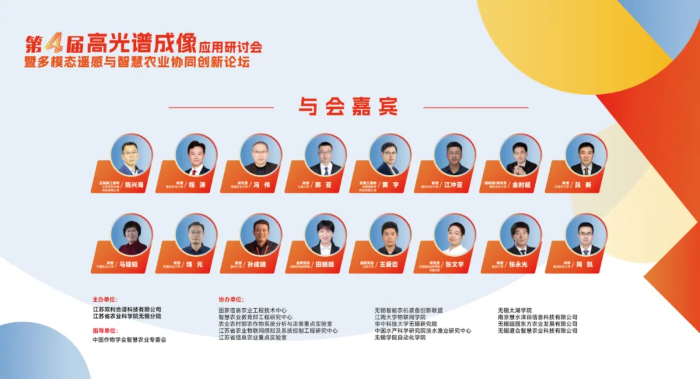
The 4th Hyperspectral Imaging Application Seminar and Multi modal Remote Sensing and Smart Agriculture Collaborative Innovation Forum, jointly hosted by Jiangsu Shuangli Hepu Technology Co., Ltd. and Wuxi Branch of Jiangsu Academy of Agricultural Sciences, was successfully held from July 17th to 19th, 2025.The theme of this forum is "Empowering Agriculture with Spectrum, Driving the Future with Data",Aiming to build a bridge for the deep integration of industry, academia, research and application, promote the two-way pursuit of technological breakthroughs and scenario implementation, and inject technological momentum into the sustainable development of global agriculture.At the same time, more than 200 attendees and over 25W online views were present to deeply explore the hot issues and future development trends in the field of hyperspectral imaging.
During the conference, Zhu Fanglin, Dean of the Wuxi Branch of Jiangsu Academy of Agricultural Sciences, Chen Xinghai, Deputy General Manager of Beijing Zhuoli Hanguang Instrument Co., Ltd., Cheng Tao, Professor Zhang Yongguang, Professor Sun Chengming, Professor Lv Xin, Professor Ma Yuntao, Professor Rao Yuan, Professor Guo Ya, Professor Jiang Chongya, Associate Professor Jin Shichao, Associate Researcher Wang Aichen, Professor Feng Wei, Associate Researcher Tian Minglu, Associate Researcher at Shanghai Academy of Agricultural Sciences, Lecturer Zhou Kai, Lecturer at Nanjing Forestry University, Young Researcher Gu Yangyang, Professor Zhongshan, Nanjing Agricultural University, and Wuxi, Jiangsu Academy of Agricultural Sciences were all invited. Branch researcher Zhang Wenyu and other guests attended the presentation and gave wonderful speeches, covering topics such as hyperspectral crop phenotype analysis The core directions of unmanned aerial vehicle remote sensing monitoring technology and non-destructive testing of agricultural product quality have injected cutting-edge ideological strength and practical experience into this forum.
Professor Cheng Tao from Nanjing Agricultural University brings a report on "Visualization of Invisible Symptoms: Early Monitoring of Rice Blast Disease Coupled with Imaging Spectroscopy and Hotspot Analysis".The report proposes a MESPOT method for purifying and visualizing asymptomatic rice blast disease signals based on a near end imaging spectroscopy platform to address issues such as weak spectral signals and fast spread of disease spots. This method regards the deepening of the infection degree of rice blast fungus as the process of gradually increasing the abundance of spectral signals of leaf susceptible tissues. Based on time-series proximal imaging spectral data and multi element spectral unmixing method, weak disease spectral signals in the asymptomatic period were successfully captured. Furthermore, with the help of spatial hotspot analysis method, the visualization of potential disease spots and high-precision classification of asymptomatic susceptible leaves were achieved.
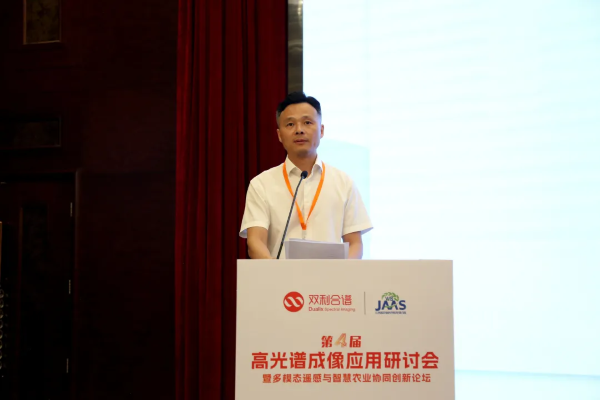
▲Professor Cheng Tao from Nanjing Agricultural University
Professor Zhang Yongguang from Nanjing University brings a report on "Remote Sensing Methods and Applications of Vegetation Sunlight Induced Chlorophyll Fluorescence".The report mainly explains that vegetation daylight induced chlorophyll fluorescence, as one of the emerging remote sensing technologies, can accurately perceive the dynamic information of vegetation photosynthesis and achieve efficient dynamic monitoring of terrestrial ecosystems. This report will focus on the research progress of solar induced chlorophyll fluorescence remote sensing methods, monitoring systems, inversion algorithms, and photosynthesis detection, and elaborate on the application of vegetation monitoring combined with multi-source remote sensing data from "sky air ground".
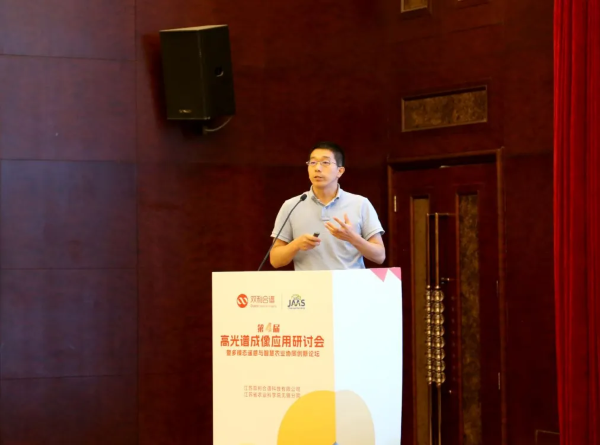
▲Professor Zhang Yongguang from Nanjing University
Professor Sun Chengming from Yangzhou University brings you a report on "Crop Disaster Monitoring and Evaluation Based on Spectral Technology".The report mainly introduces the use of spectral technology to monitor and evaluate the hazards caused by low-temperature freezing damage, high-temperature heat damage, and lodging in wheat. A frost damage classification model based on deep learning and spectroscopy is proposed, which can accurately detect the occurrence of frost damage in wheat. The average accuracy of frost damage detection is over 93%; By combining canopy temperature characteristics and spectral features, a support vector machine model (SVM) optimized by particle swarm optimization (PSO) is used to monitor crop high-temperature heat damage based on yield loss. The accuracy of the model's heat damage monitoring is over 90%; The accuracy of rice lodging monitoring based on the combination of thermal infrared and spectral technology exceeds 97%.
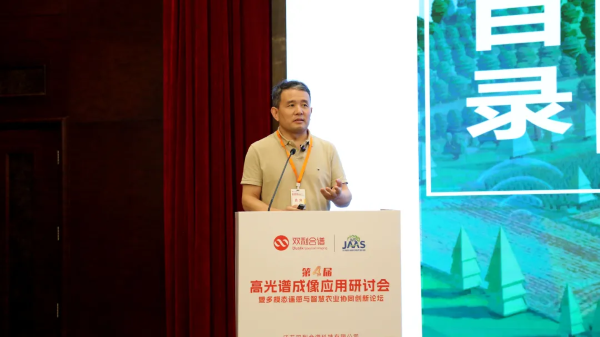
▲Professor Sun Chengming from Yangzhou University
Professor Lv Xin from Shihezi University brings a report on "Aerospace Information Technology Helps with High Quality Cotton Production".This report mainly introduces that as the main cotton producing area in China, Xinjiang's high-quality production is crucial for national cotton security. However, current cotton production is facing problems such as high cotton planting costs, inaccurate agricultural monitoring, and resource waste. To achieve precise cotton planting and intelligent management in Xinjiang, we will introduce aerospace information technology into the entire agricultural production process. Breakthroughs have been made in cotton moisture, nitrogen, phosphorus, potassium nutrients, pests and diseases, and harvesting. High precision monitoring, diagnosis, and decision-making models have been developed, and intelligent fertilization, precision pesticide application, and yield prediction systems have been developed and integrated into cloud platforms. There are 5 core demonstration bases for technology accumulation, with an application and promotion area of over 1.12 million acres, saving costs and increasing efficiency by 214 million yuan. Future research will focus on multi-source data fusion, scale transformation, intelligent equipment development, and digital production mode innovation, providing technical support for improving the quality and efficiency of cotton in Xinjiang, and promoting the modernization of agriculture.
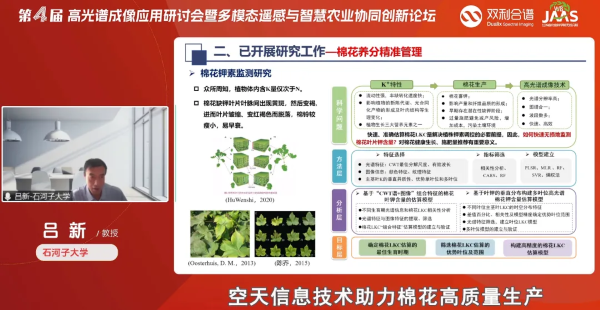
▲Professor Lv Xin from Shihezi University
Professor Ma Yuntao from China Agricultural University brings a report on "High throughput Crop Phenotype Analysis and Application of Smart Agriculture".The report explainsIn the era of AI, smart agriculture is reshaping traditional agricultural models with its intelligent and data-driven characteristics. Through artificial intelligence and big data analysis, smart agriculture has achieved real-time monitoring of crop growth status, soil health assessment, and rapid response to environmental changes. This report will delve into the key technologies and applications of smart agriculture and crop digital twins in the AI era. Firstly, the focus is on discussing the precise three-dimensional structure acquisition, analysis, and simulation technology of crops, demonstrating how to accurately depict the three-dimensional structure of crops, in order to more effectively monitor crop status and conduct virtual simulation, and provide more scientific decision-making basis for agricultural management. Next, the application of drones and multi-source sensors in crop phenotype monitoring will be introduced, including soil fertility, seedling status, crop growth, and pest and disease monitoring, emphasizing their advantages in data collection and analysis. Finally, in terms of remote sensing data fusion, it is proposed to couple unmanned aerial vehicles with satellite remote sensing data, construct a spatiotemporal continuous crop growth monitoring framework, and further integrate it into the smart agriculture decision-making platform to assist in the intelligent and precise development of production management.
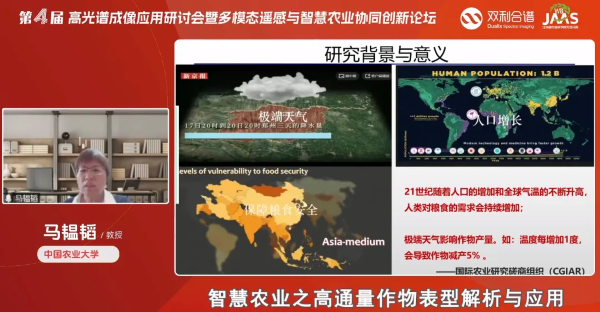
▲Professor Ma Yuntao from China Agricultural University
Professor Rao Yuan from Anhui Agricultural University brings a report on "Intelligent Perception Technology and Equipment for Crop Photosynthetic Physiological Heterogeneity".This report focuses on the high-throughput intelligent perception needs of crop photosynthetic physiology, with a particular emphasis on the design of chlorophyll fluorescence excitation components for crop canopy in darkrooms and natural open environments, as well as in situ high-throughput imaging systems for crop photosynthetic phenotypes; A precise inversion method for crop canopy chlorophyll fluorescence parameters, rapid 3D reconstruction of crop populations, and intelligent analysis technology for growth information have been proposed. This article introduces the development and application of intelligent sensing equipment for crop photosynthetic physiological heterogeneity, providing support for the analysis of crop photosynthetic physiological heterogeneity.
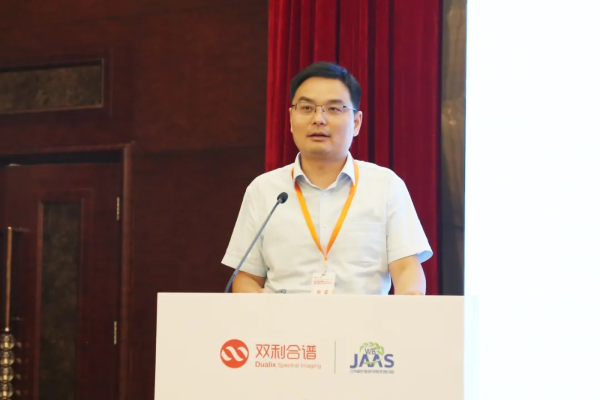
▲Professor Rao Yuan from Anhui Agricultural University
Deng Xinqiang, Sales Director of Jiangsu Shuangli Hepu Technology Co., Ltd., brings you a report on "Introduction to Research Grade Hyperspectral Imaging Systems and New Products".This report introduces that with the rapid development of remote sensing technology, hyperspectral imaging technology has shown great potential for application in various fields due to its high efficiency, flexibility, and high resolution. Provide a detailed introduction to the solution and application of the entire system of Shuangli He spectral hyperspectral imaging. At the same time, this report brings the latest product introduction of Shuangli Hepu, exploring new application directions for hyperspectral imaging technology.
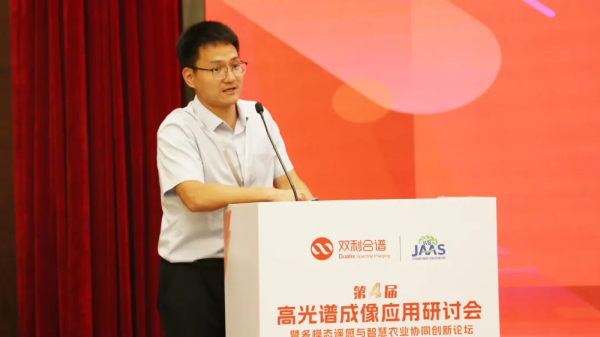
▲Deng Xinqiang, Sales Director of Jiangsu Shuangli Hepu Technology Co., Ltd
Professor Guo Ya from Jiangnan University brings you a report on "Modeling and Testing Techniques for Chlorophyll Fluorescence in Leaves".The report highlights the importance of increasing crop yields due to population growth, extreme climate change, and the exacerbation of pests and diseases. A challenge in modern agricultural and botanical research lies in sensing the photosynthetic physiological needs of plants and regulating their growth. Chlorophyll fluorescence, as a biological signal, can effectively detect plant photosynthetic activity and environmental stress conditions. This report will introduce the modeling and data modeling of leaf chlorophyll fluorescence mechanism, delayed chlorophyll fluorescence and rapid chlorophyll fluorescence testing techniques, and their applications in agricultural informatization and plant physiology.
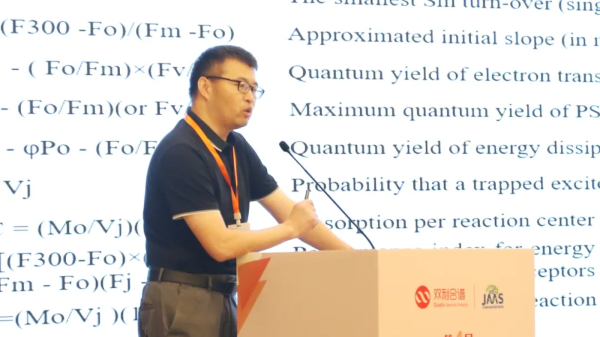
▲Professor Guo Ya from Jiangnan University
Professor Jiang Chongya from Nanjing Agricultural University brings a report on "Measuring Green Leaf Area Index, Agglomeration Index, and Leaf Tilt Angle Distribution Using a 30 ° Tilt Camera".This report mainly introduces the crucial role of canopy structure in regulating key processes of crops, such as light absorption, photosynthesis, respiration, and evapotranspiration. Optical instruments can efficiently measure the canopy structure of crops in the field. However, due to the limitations of existing optical instruments, accurately measuring the green leaf area index, aggregation index, and leaf angle distribution in an economically efficient and labor-saving manner still faces significant challenges. This article proposes a series of new methods to quantify the green leaf area index, aggregation index, and leaf angle distribution by tilting a regular camera at 30 degrees. We validated these new methods using point and shoot cameras, smartphone cameras, and field automatic cameras in both real environments and virtual environments simulated by 3D models. The results indicate that the new method has higher accuracy compared to the true value and shows great potential in the application of land vegetation research.

▲Professor Jiang Chongya from Nanjing Agricultural University
Associate Professor Jin Shichao from Nanjing Agricultural University brings a report on "Crop Spatiotemporal Phenotypomics: Optical Perception, Analysis, and Applications".This report focuses on the key scientific issue of how the interaction between genes and the environment affects crop phenotypes in response to national food security and biological breeding needs. It aims to address the practical challenge of precise identification and evaluation of crop spatiotemporal phenotypes, systematically reporting on the concepts, theories, and technological progress of crop spatiotemporal phenotype omics. The specific content includes three aspects of "efficient acquisition intelligent analysis cross application" of optical remote sensing technology, namely: the research and development of common technologies for crop spatiotemporal phenotype acquisition, the development of core algorithms for intelligent analysis of crop spatiotemporal phenotypes, and the utilization of precise identification, prediction, and evaluation of crop spatiotemporal phenotypes. Finally, the report will explore the challenges and opportunities of future crop spatiotemporal phenotype omics.
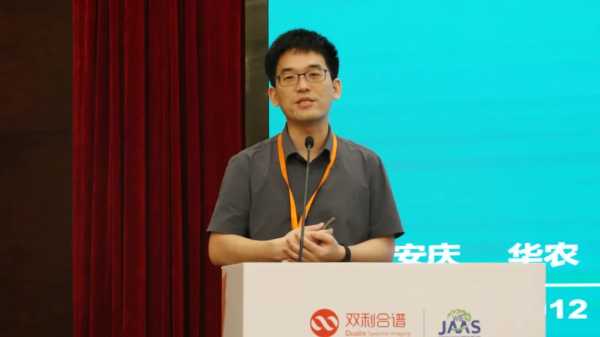
▲Associate Professor Jin Shichao from Nanjing Agricultural University
Associate Researcher Wang Aichen from Jiangsu University brings a report on the practical application of low-cost unmanned aerial vehicle remote sensing monitoring of field crop growth.The report mainly discusses the widespread research and application of low altitude unmanned aerial vehicle remote sensing in agricultural information monitoring due to its advantages of low cost, easy data acquisition, high spatial resolution, and abundant data sources. A rapid detection method for crop biomass, plant height, chlorophyll content, and leaf nitrogen content based on unmanned aerial vehicle (UAV) RGB images was studied. The detection accuracy was improved by extracting spectral indices and texture features from RGB images. The influence of soil background, vegetation coverage, shooting angle, and image spatial resolution on detection accuracy was analyzed; A rice wheat lodging segmentation model based on RGB remote sensing images was established, and lodging detection software was developed to quickly extract the lodging area of rice and wheat; A method for detecting wheat chlorophyll content based on multispectral vegetation index was studied, and the vegetation index was optimized to evaluate the model's generalization ability to different wheat varieties and growth stages. A variable fertilization prescription map was generated to guide wheat variable topdressing; We have developed a precise variable fertilization system based on electro-hydraulic control, and combined it with a prescription chart to achieve variable topdressing for wheat.
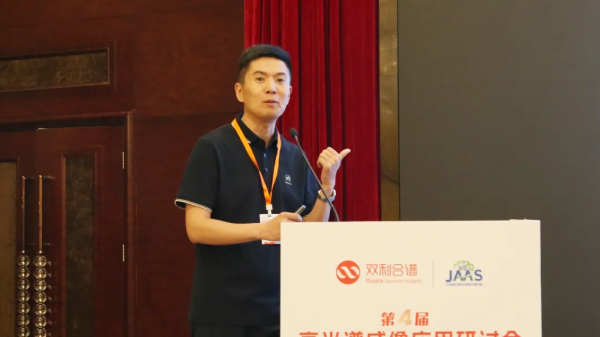
▲Wang Aichen, Associate Researcher at Jiangsu University
Huang Yu, the first technical expert of Wuxi Spectral Vision Technology Co., Ltd., brings a report on the development and application of spectral remote sensing technology in the low altitude economy era.The report mainly introduces the application fields, advantages, challenges, and prospects of spectral remote sensing technology in low altitude economy.
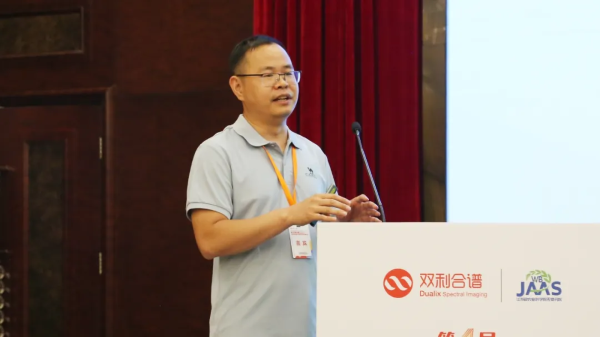
▲Wuxi Pu Shi Shi Technology Co., Ltd. Chief Technical Expert Huang Yu
Researcher Feng Wei from Henan Agricultural University brings a report on "Monitoring of Wheat Powdery Mildew Based on Multi source Remote Sensing Data Fusion".This report introduces that powdery mildew is the main wheat disease in the Huang Huai wheat region, and early monitoring and diagnosis before its obvious appearance symptoms occur is the key to precise prevention and control and reducing harm. This study focuses on the traditional manual monitoring of wheat powdery mildew, which is time-consuming, labor-intensive, and has poor timeliness. A wheat powdery mildew monitoring method based on multi-source remote sensing data fusion is proposed. By integrating multi-source data such as multi angle canopy spectra, daylight induced chlorophyll fluorescence (SIF), and thermal infrared imaging, and combining machine learning and deep learning models such as CARS-ELM, SVM-RBF, and CWT-DSCNN-MSA, the spectral response patterns and early physiological changes of wheat powdery mildew were systematically explored. Multi source data fusion can effectively break through the limitations of a single data source. The SIF and hyperspectral reflectance fusion model improves the accuracy of disease latency monitoring by more than 25%, and the deep learning model fused with ternary data (SIF+TP+VI) achieves an average monitoring accuracy of over 90% (Kappa 0.92). The research results provide a multi-source data fusion technical framework for early warning and precise prevention and control of wheat powdery mildew, which is of great significance for improving the level of remote sensing monitoring of agricultural diseases and enhancing practicality.
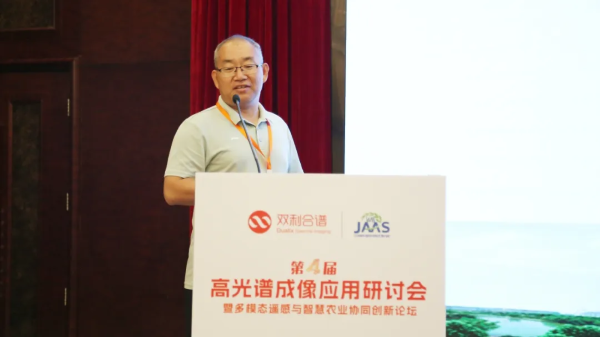
▲Feng Wei, Researcher at Henan Agricultural University
Tian Minglu, Associate Researcher at Shanghai Academy of Agricultural Sciences, brings you a report on the application of spectral technology in smart agriculture.The report introduces the research progress on temperature stress phenotype identification of crops based on multi-scale platforms. The team has built a multi type high-throughput crop phenotype collection system, including unmanned aerial vehicles, suspended rails, self-propelled and laboratory phenotype platforms, around different environments in the field and laboratory. Combined with AI algorithms, phenotype analysis techniques suitable for population, individual plant and organ scales have been developed. In the low-temperature and high-temperature stress experiments of lettuce and tomato, multi-source remote sensing and hyperspectral imaging techniques were used to construct a frost damage index prediction model, propose a new model for early high-temperature classification, and verify the mechanism of exogenous substance regulation of resistance. The research not only improves the efficiency and accuracy of temperature stress phenotype recognition, but also provides technical support for crop stress resistance breeding and precision management.
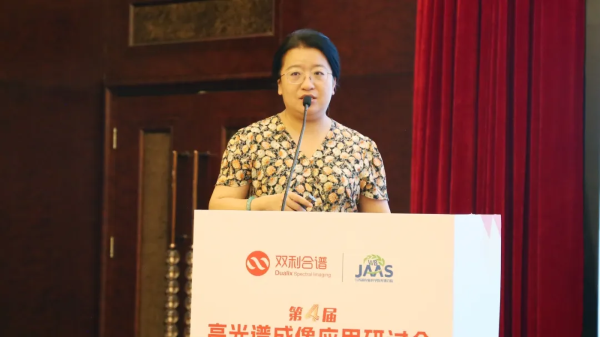
▲Tian Minglu, Associate Researcher at Shanghai Academy of Agricultural Sciences
Lecturer Zhou Kai from Nanjing Forestry University brings a report on the inversion of nitrogen and pigment content in Ginkgo biloba plantations using a coupled multi-source remote sensing and radiative transfer model.This report mainly introduces the important significance of precise measurement of physiological parameters of individual trees and leaves in artificial forests for evaluating the growth and health status of artificial forests. On the basis of comprehensive experiments in a typical ginkgo plantation research area in Jiangsu, this study achieved precise measurement of physiological parameters at the leaf and individual tree scales by coupling hyperspectral remote sensing, LiDAR data, and PROSAIL model. At the leaf scale, a leaf flavonoid sensitive spectral index was constructed based on the bidirectional reflectance of a single leaf to suppress specular reflection. After optimizing the structural parameters of the leaf flesh, a modified spectral index was formed. Combined with the PROCWT_S3 algorithm and sequence forward selection to select the optimal nitrogen sensitive band, the accuracy of nitrogen content estimation was improved. On a single tree scale, a voxel framework was used to fuse point cloud and hyperspectral data to construct a dedicated PROSAIL model for Ginkgo biloba. By simulating reflectance lookup tables to invert the three-dimensional distribution of canopy pigments, a leaf flavonoid spectral index was developed to suppress canopy structural effects, and a spatial distribution map of leaf flavonoids was generated. This study provides a multi-scale monitoring method for the health assessment of artificial forests.
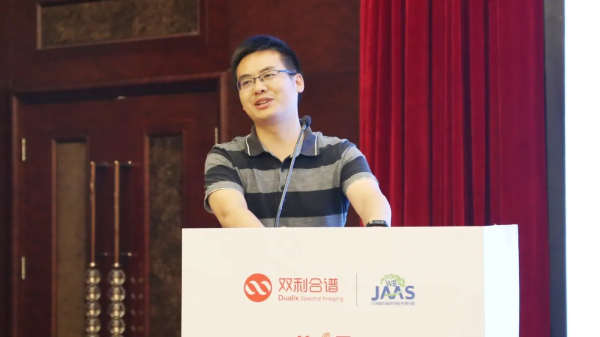
▲Lecturer Zhou Kai from Nanjing Forestry University
Gu Yangyang, a young researcher from Zhongshan, Nanjing Agricultural University, brings a report on "Intelligent Analysis Technology and Breeding Application of Key Phenotypic Traits in Crops".This study developed and applied intelligent analysis technology for key phenotypic traits of crops, serving the needs of modern breeding. A ground air collaborative multi-source data acquisition system has been constructed by using drones and ground platforms equipped with sensors such as LiDAR, hyperspectral spectrometer, multispectral camera, RGB camera, etc. By utilizing advanced intelligent algorithms to analyze point cloud, multi/hyperspectral, and RGB image data, high-throughput, accurate, and non-destructive dynamic monitoring and estimation of crop structural parameters, physiological and biochemical parameters, growth processes, and yield potential have been achieved. This technology breaks through the bottleneck of traditional phenotype acquisition and provides strong support for accelerating precise and efficient crop breeding.
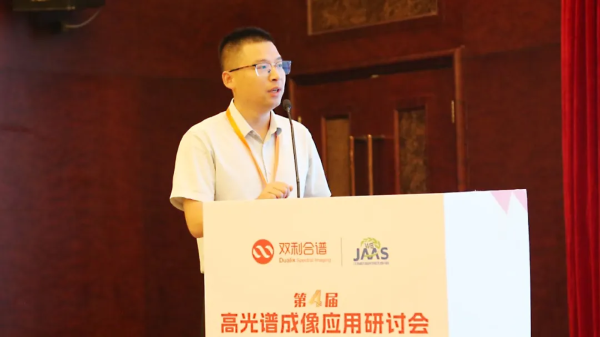
▲Gu Yangyang, Zhongshan Young Researcher at Nanjing Agricultural University
Zhang Wenyu, a researcher at the Wuxi Branch of Jiangsu Academy of Agricultural Sciences, brings a report on "Perception Empowering Smart Agriculture - Understanding and Practice" to everyone.The report mainly shares the understanding of perception empowering smart agriculture, introduces the relevant work of the Smart Agriculture Innovation Team of Wuxi Branch of Jiangsu Provincial Agricultural Bureau Scientific Research Institute for more than a year, shares a series of hardware and algorithm work in the perception, analysis and decision-making of agricultural information, and looks forward to the possible development hotspots of smart agriculture in the future.
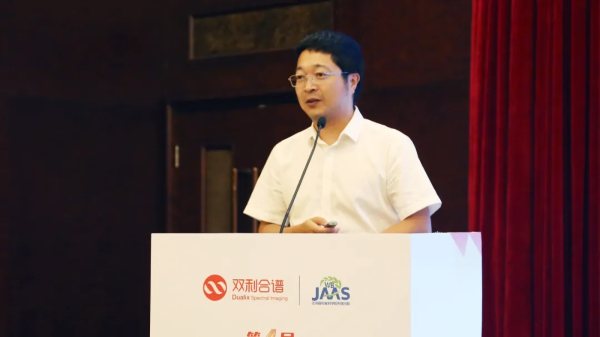
▲Zhang Wenyu, Researcher at Wuxi Branch of Jiangsu Academy of Agricultural Sciences
The successful hosting of this forum is greatly appreciated by the strategic support of the Wuxi Branch of Jiangsu Academy of Agricultural Sciences, as well as the strong promotion from multiple media outlets such as Today's Headlines. We pay tribute to the hard work of all members of the organizing committee and express our gratitude to every participant for their wise input. I hope everyone can have full exchanges and in-depth discussions, inspire innovative ideas in the sharing of achievements, expand development space in cooperation negotiations, and work together to draw a magnificent blueprint for empowering agricultural development with hyperspectral technology. The 4th Symposium on Hyperspectral Imaging Applications and Multi modal Remote Sensing and Smart Agriculture Collaborative Innovation Forum has been successfully held!