-
E-mail
dufu2068@126.com
-
Phone
13663800518
-
Address
No. 36, Xianfu Street, Zhanjie Town, Gongyi City, Henan Province
Zhengzhou Dufu Instrument Factory
Selection Guide: How to Choose a Three purpose Desktop UV Analyzer Based on Wavelength Range and Analysis Requirements
Date: 2025-12-15Read: 1
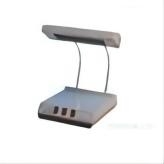
Three purpose desktop UV analyzerIntegrating transmission, reflection, and fluorescence detection modes, it is a commonly used desktop level analytical equipment in fields such as molecular biology, analytical chemistry, and quality inspection. Faced with numerous models on the market, how to scientifically select based on wavelength range and analysis requirements is the key to ensuring detection effectiveness and cost-effectiveness.
1、 Clear wavelength range requirements
The core of a UV analyzer is the wavelength coverage range of the light source and detector. Common configurations include:
Deuterium lamp: Provides a deep ultraviolet range of 190-400 nm, suitable for detecting absorption peaks such as nucleic acids (260 nm) and proteins (280 nm).
Tungsten lamp/halogen lamp: covering the visible light range of 350-800 nm, suitable for visible absorption and reflection measurement.
LED or mercury lamp light source: can optimize fluorescence excitation for specific wavelengths (such as 365 nm, 405 nm).
When selecting the type, the band required by the experiment should be compared: if the gel electrophoresis DNA/RNA quantitative analysis is mainly done, deep ultraviolet (200~300 nm) is necessary; If TLC fluorescence spot or visible film thickness analysis is involved, both visible light and near ultraviolet light need to be considered. Some models support automatic switching of multiple light sources, making it more flexible to use.
2、 Matching analysis mode with detector
Transmission mode: used for absorbance measurement of solutions or films, requiring a stable optical path and a high linearity detector (such as CCD or photodiode array).
Reflection mode: Suitable for solid surface analysis (such as thin plates, films, printed materials), requiring uniform illumination from the light source and optimized detector reception angle to avoid mirror reflection interference.
Fluorescence mode: requires high-intensity excitation light source and high-sensitivity detector (such as photomultiplier tube PMT), and equipped with filter or monochromator to select excitation/emission wavelength.
If the experiment involves the use of multiple modes, priority should be given to the three in one machine to avoid errors and inconvenience caused by switching between multiple devices.
3、 Resolution and sensitivity indicators
Resolution determines the ability of an instrument to distinguish between similar wavelengths, which is particularly important for multi-component analysis or narrow absorption peak detection; Sensitivity affects the detection limit of low concentration samples. For trace analysis (such as fluorescent markers), high-sensitivity PMT or back illuminated CCD should be selected, and attention should be paid to the level of dark noise.
4、 Software and data processing functions
The modern three use ultraviolet analyzer software can achieve spectral scanning, peak recognition, quantitative analysis, data export, and report generation. If batch processing or compliance with GLP/GMP requirements is required, models with audit trails and user permission management should be selected.
5、 Convenience and scalability of operation
Desktop design should balance space occupation and heat dissipation performance; The size of the sample chamber should accommodate commonly used colorimetric dishes, TLC plates, or solid sample tables. Some models support external imaging systems or upgraded light sources for future expansion of applications.
6、 Budget and maintenance costs
The lifespan of deep ultraviolet light sources (deuterium lamps) is limited, and the cost of replacement needs to be included in the budget; The maintenance of optical components (filters, monochromators) in fluorescence mode also requires professional skills. When selecting, comprehensive consideration should be given to procurement, consumables, and maintenance costs.
7、 Summary
selectThree purpose desktop UV analyzerIt should be comprehensively evaluated based on wavelength range, analysis mode, sensitivity, software functionality, ease of operation, and maintenance cost. Only by clarifying experimental requirements, matching suitable light sources and detectors, and balancing scalability and data security, can the equipment truly serve efficient and reliable scientific research work.