-
E-mail
dufu2068@126.com
-
Phone
13663800518
-
Address
No. 36, Xianfu Street, Zhanjie Town, Gongyi City, Henan Province
Zhengzhou Dufu Instrument Factory
Insufficient vacuum degree in multifunctional single-layer glass reaction kettle? Common problems and solutions
Date: 2025-11-24Read: 1
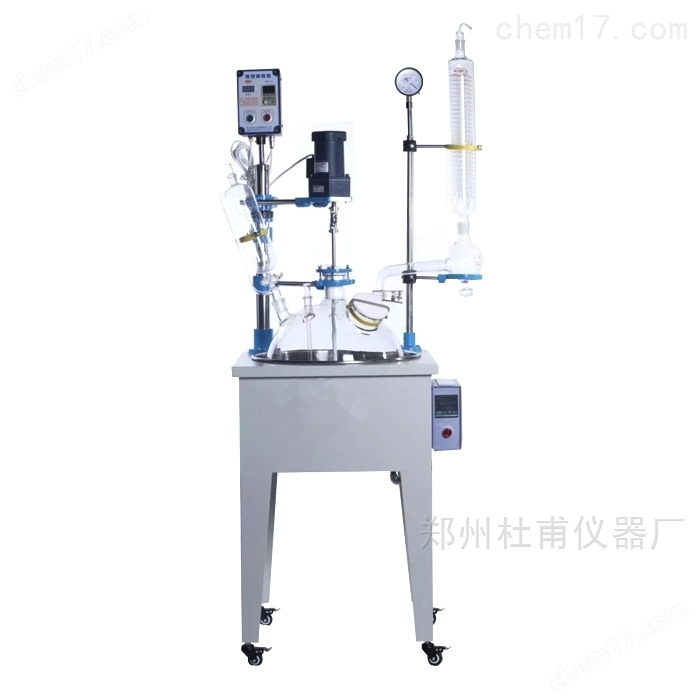
Multi functional single-layer glass reactorCommonly used for vacuum distillation, solvent recovery, or low-temperature reactions, but users often provide feedback of "inability to achieve high vacuum" or "rapid decrease in vacuum degree". This type of problem is often caused by seal failure, system leakage, or improper operation. The following are system troubleshooting and solutions.
1、 Sealing system inspection
Loose or contaminated grinding interface: If the standard conical grinding interface (such as 24/29) is not coated with vacuum grease or residual crystals, it will cause micro leakage. After disassembly, clean with acetone and apply a small amount of high vacuum silicone grease evenly before reassembling;
PTFE sealing ring aging: The sealing ring of the kettle cover, valve or thermometer sleeve will harden and crack when heated for a long time. It is recommended to replace it every 6 months;
Mechanical seal wear of mixing shaft: Single layer kettles often use packing seals or simple mechanical seals, which are prone to air leakage under negative pressure. You can try tightening the gland nut moderately (do not tighten it too tightly and cause it to get stuck), or replace it with a double end mechanical seal component.
2、 Vacuum system and pipeline issues
Insufficient performance of vacuum pump: Confirm whether the maximum vacuum of the diaphragm pump or rotary vane pump used matches the requirements (such as distilled ethanol requiring ≤ 10 mbar); Check if the pump oil is emulsified and if the filter element is clogged;
Pipeline leakage: Fill the system with a small amount of nitrogen gas using an ear wash ball, and then spray detergent water on each interface to observe if there is any bubbling; Focus on inspecting the connections of the vacuum gauge and buffer bottle;
Cold trap not activated: If low boiling point solvents are distilled, not using a cold trap can cause solvent vapor to enter the pump body, break the vacuum, and corrode the pump oil.
3、 Operation and maintenance suggestions
Before vacuuming, turn on the condensate to prevent steam from escaping;
Slowly open the vacuum valve to prevent sudden pressure changes from causing liquid boiling and rushing into the pipeline;
Clean the kettle body and interface after each use to avoid uneven sealing surfaces caused by salt or polymer deposition.
By systematically investigating the three major links of sealing, pipelines, and vacuum sources, the vast majority of vacuum deficiency problems can be effectively solved, ensuring the efficient and stable operation of single-layer glass reactors.