-
E-mail
3756537090@qq.com
-
Phone
15827310774
-
Address
Block A, Headquarters of Gaonong Biological Park, No. 888 Gaoxin Avenue, Donghu New Technology Development Zone, Wuhan City
Wuhan Nali Technology Co., Ltd
Basic working principle analysis of fully automatic multi parameter water quality analyzer
Date: 2025-10-24Read: 1
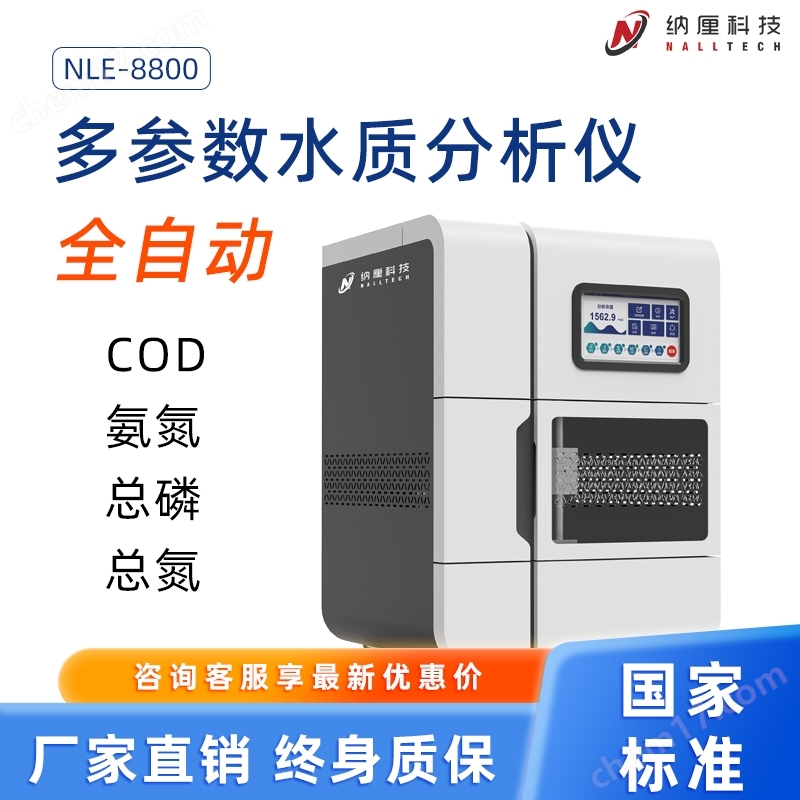
The fully automatic multi parameter water quality analyzer is a precision device capable of simultaneously detecting multiple water quality indicators, widely used in fields such as environmental monitoring and sewage treatment. The following are the measurement steps:
1. Power on preheating: Turn on the host power and allow the instrument to preheat for a period of time to ensure that all components work properly and stabilize. The preheating time may vary for different models of equipment, and generally follow the instructions in the instrument manual.
2. Sample preparation and processing
-Collect representative water samples: According to the testing purpose and requirements, collect sufficient amounts of water samples from the corresponding water bodies to ensure that the samples can truly reflect the overall condition of the tested water body.
-Filtering or centrifugation to remove impurities: If the water sample contains large particles, suspended solids, and other impurities, it may need to be processed by filtering or centrifugation to avoid clogging the instrument pipeline or affecting the accuracy of the measurement results.
3. Reagent addition and reaction
-Choose appropriate pre made reagents: Select the corresponding pre made reagents based on the parameters to be tested. For example, specific total nitrogen pre made reagents are required for measuring total nitrogen; There are corresponding COD pre made reagents for COD detection. These reagents are usually prepared in proportion and convenient to use.
-Accurately measure reagents and water samples: Using a pipette or other tool, add the reagents to a colorimetric tube or other reaction vessel containing the water sample according to the instructions, and then shake well to mix the reagents and water sample evenly and initiate a chemical reaction. In some cases, digestion operations are also required, such as placing a reaction tube containing samples and reagents into a digestion apparatus and heating it at a set temperature for a certain period of time to promote the reaction.
4. Instrument measurement
-Place the reacted sample: Place the reacted reaction tube or colorimetric dish in the detection position of the instrument, paying attention to arranging it neatly and correctly corresponding to each channel.
-Start the measurement program: Select the corresponding measurement item or mode on the instrument's operation interface, click the start button, and the instrument will automatically measure multiple parameters such as optical density, conductivity, pH value of the sample, and transmit the data to the processor for analysis and processing.
5. Data reading and recording
-Viewing measurement results: After the measurement is completed, the instrument will display the measured values of various parameters on the display screen, and users can intuitively read the data. Some instruments also have data storage function, which can save the results of multiple measurements for subsequent query and analysis.
-Print report (optional): If a paper version of the test report is required, a printer can be connected to print out the measurement data and archive it as the original record.
Basic working principle analysis of fully automatic multi parameter water quality analyzer:
1. Ion selective electrode measurement method: This is one of the main methods used. All types of electrodes on the instrument, such as pH, fluoride ions, sodium, potassium, calcium, magnesium, and reference electrodes, have ion selective membranes. When the corresponding ions in the water sample come into contact with the membrane, an ion exchange reaction occurs, which changes the membrane potential and generates an electrochemical voltage. By measuring this potential difference, the concentration of specific ions in the water sample can be determined. This method has high selectivity and sensitivity, and can accurately measure various ion concentrations.
2. Optical detection principle: Some parameters may be detected through optical methods. For example, by illuminating a water sample with light of a specific wavelength, the content of certain substances can be determined based on the degree of absorption or scattering of the light. For example, turbidity measurement is based on the scattering of light through the water sample to determine the number of suspended particles in the water.
3. Automation system integration: The design concept of full automation runs through the entire process. The collection and preprocessing of water samples (such as filtration, stirring, etc.), as well as the sequential determination of various parameters and the recording and transmission of data, are all automatically controlled by built-in programs. Some models also have automatic calibration function to ensure the accuracy of each measurement.