-
E-mail
he.zhenzhen@yoseenir.com
-
Phone
18771127656
-
Address
Building 19, MCC Continuous Casting Industrial Park, No. 51 Guanggu Avenue
Wuhan Gewu Youxin Technology Co., Ltd
Development trend of dual spectral thermal imaging cameras: technological iteration and scene expansion
Date: 2025-12-15Read: 1
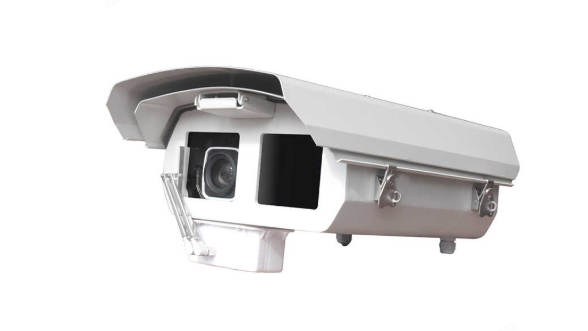
The dual spectrum thermal imaging camera significantly improves the environmental adaptability and information acquisition capability of the monitoring system by integrating thermal imaging and visible light imaging technology, especially in low light or no light conditions, demonstrating irreplaceable advantages.
Typical application scenarios of dual spectrum thermal imaging cameras:
1. Security monitoring
Border/perimeter protection: Deploy dual spectrum cameras along the unlit border and use AI algorithms to identify illegal border crossing behavior.
Key area protection: such as airports, nuclear power plants, etc., prevent fires or equipment failures through temperature anomaly detection.
Urban security: Monitor personnel activities and temperature changes in nighttime streets, parks, and other scenes to improve emergency response speed.
2. Industrial testing
Power inspection: detecting temperature anomalies in equipment such as transformers and transmission lines to prevent electrical fires.
Petrochemical industry: Monitoring tank and pipeline leaks, thermal imaging can detect temperature changes before volatile organic compounds (VOCs) leakage.
Manufacturing industry: detect overheating of production line equipment, optimize maintenance plans, and reduce downtime.
3. Fire Protection and Emergency Response
Forest fire prevention: Deploy dual spectrum cameras in forest areas, use thermal imaging to detect fire points in advance, and use visible light to locate the location of the fire.
Building fire: Penetrating smoke to locate trapped individuals and guide rescue operations.
Disaster rescue: Detecting signs of life and structural safety hazards at disaster sites such as earthquakes and floods.
4. Intelligent transportation
Night traffic monitoring: In road sections without streetlights, vehicles and pedestrians are detected through thermal imaging, combined with visible light recognition of license plates and behavior.
Tunnel monitoring: detecting abnormal temperature of vehicles inside the tunnel to prevent spontaneous combustion accidents.
Development trend of dual spectrum thermal imaging cameras: technological iteration and scene expansion:
1. Deep integration of AI
Intelligent analysis: using deep learning algorithms to achieve automatic target classification and behavior prediction (such as identifying theft, fighting, and other behaviors).
Self calibration technology: using AI to automatically calibrate the pixel alignment of thermal imaging and visible light images, improving the fusion effect.
2. Resolution and sensitivity improvement
Thermal imaging resolution: evolving from 640 × 512 to 1280 × 1024 (million pixel level), matching visible light image details.
Sensitivity optimization: NETD reduced to ≤ 30mK, capable of detecting even smaller temperature changes.
3. Multispectral extension
Shortwave Infrared (SWIR) Integration: Combined with SWIR (1-2.5 μ m) imaging, it enhances the ability to penetrate smoke and false negatives.
Gas detection function: Detect gas leaks such as methane and carbon dioxide through infrared spectroscopy analysis.
4. Lightweight and low-cost
Chip level integration: Integrating thermal imaging and visible light sensors onto a single chip, reducing device size and power consumption.
Consumer level application: Launch portable dual spectrum devices (such as external cameras on mobile phones) for outdoor exploration, home security, and other scenarios.