-
E-mail
jh5120jh5120@163.com
-
Phone
18622580960
-
Address
No. 9 Taikang Road, Xiditou Industrial Park, Beichen District, Tianjin
Tianjin Tiandian Valve Co., Ltd
Complete selection guide for micro electric regulating valves: six core elements for precise matching of working conditions
Date: 2025-11-24Read: 44
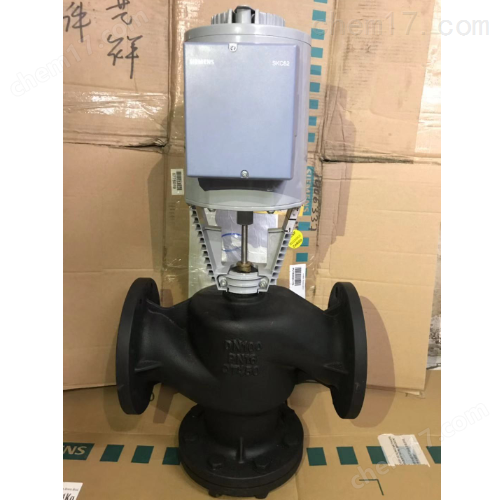
In scenarios such as laboratory precision instruments, small-scale chemical equipment, and medical equipment,Micro electric regulating valves have become key actuating components due to their compact size and precise control.However, in the face of complex working conditions such as corrosiveness of different media, fluctuation range of flow rate, and spatial limitations, improper selection will directly lead to control failure or even equipment damage. This article analyzes the selection logic of micro electric regulating valves from six core dimensions.
1、 Medium characteristics: dual test of corrosion resistance and blockage resistance
The corrosiveness of the medium is the primary consideration for selection. For chloride containing ions or strong acid-base media, 316L stainless steel valve body with PFA/PTFE lining should be selected. For example, in semiconductor cleaning equipment, Hastelloy C-276 valve body can resist aqua regia corrosion. If the medium contains particles, an anti blocking structure is required: the V-shaped ball valve achieves self-cleaning through the shear action between the V-shaped valve core and the valve seat. After adopting this structure for the feed valve of a certain pharmaceutical company's reaction kettle, the blocking frequency was reduced by 90%; Eccentric rotary valves reduce medium deposition through eccentric rotation design.
2、 Flow Control: Dynamic Balance between Accuracy and Range
The traffic range should cover actual needs and reserve expansion space. In laboratory microchemical reactions, if it is necessary to add 5-50 μ L of reagent per minute, a regulating valve with a microfluidic module should be selected, with a minimum flow rate of 0.1 μ L/min; In small-scale chemical production, if the flow range is 10-1000mL/min, an equal percentage characteristic valve with an adjustable ratio of 100:1 should be selected to ensure stable regulation at low flow rates. In terms of flow accuracy, high-performance liquid chromatography requires a repeatability of ± 0.01% and requires the use of electric actuators with high-precision encoders.
3、 Pressure and Temperature: The Ultimate Challenge of Materials and Seals
WC6 cast steel valve body should be selected for high temperature conditions, and the valve core should be welded with Stellite alloy. The sealing element should use flexible graphite. The steam regulating valve of a certain nuclear power plant has been running continuously for 5 years at 350 ℃ without leakage; In low-temperature scenarios, 0Cr18Ni9Ti low-temperature steel is required, and the actuator needs to be equipped with a heating module to prevent freezing damage.
4、 Drive mode: adaptation scenarios of electric, pneumatic, and manual
Electric drive is suitable for remote control and automation systems, such as precise control of catalyst addition through DCS systems in large-scale chemical production; Pneumatic drive has a fast response speed and is suitable for quickly adjusting the flow rate of additives in food processing production lines; Manual drive is used for simple experimental devices. In a certain university laboratory, the manual control valve achieves ± 2% opening control through a dial. Please note that electric valves need to be equipped with overcurrent and phase loss protection, while pneumatic valves need to have a stable air source.
5、 Installation space: trade-off between compact structure and flexible connection
Micro valves need to adapt to narrow spaces, such as ship equipment compartments that require a split structure, where the actuator and valve body can be disassembled separately; A certain medical equipment manufacturer uses DN15 flange connected valves, reducing installation time by 60%. For vibration environments (such as pump outlets), seismic design valves should be selected, and the seismic rating should meet the IEC 60068-2-6 standard.
6、 Cost and Maintenance: Economic Assessment of the Whole Life Cycle
In the early stage of procurement, it is necessary to balance performance and cost. 316L valve bodies are 30% more expensive than 304, but their lifespan is extended by 2 times; Explosion proof type is 50% more expensive than ordinary type, but it meets the safety requirements of chemical scenarios. Post maintenance needs to pay attention to the universality of vulnerable parts. The replacement cost of a certain brand valve core has been reduced by 40% due to the use of standardized design. Although intelligent valves require high initial investment, remote monitoring through IoT platforms can reduce manual inspection costs by 50%.
There is no fixed formula for selection, and a comprehensive evaluation should be conducted based on the working conditions, technical parameters, and economic feasibility. It is recommended to prioritize manufacturers who have passed ISO 9001 and CE certification, and require the provision of medium compatibility test reports to ensure the reliability of micro electric control valves under abnormal operating conditions.