-
E-mail
market@ensoultech.com
-
Phone
15611538392
-
Address
401-501, Building 13, Huiying Industrial Park, Intersection of Zhonghuan West Road and Xiwu Road, Tianjin Airport Economic Zone
Tianjin Runze Instrument Co., Ltd
Innovation of "Digital Smell": The Cross disciplinary Application of AIRSENSE Electronic Nose in the Field of Innovation
Date: 2025-11-06Read: 0
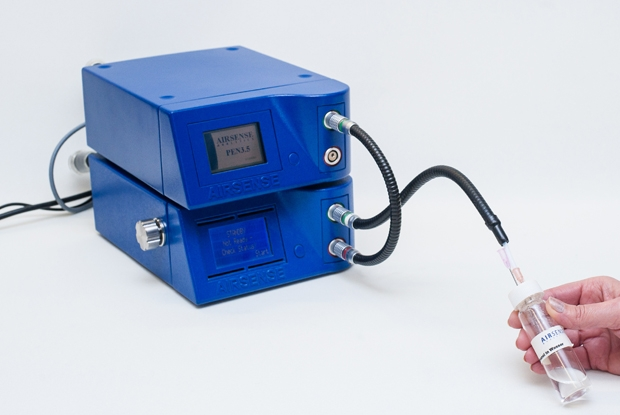
Among the five senses of human beings, smell has always been the most difficult to digitize and quantify. However, with the development of biomimetic technology, electronic noses have emerged, attempting to endow machines with the ability of "smell". Among them, Germany's AIRSENSE company, as the developer of electronic nose technology, is breaking through traditional boundaries with its products, sparking a "digital olfactory" revolution in fields such as medical health, food safety, environmental monitoring, and even human-computer interaction.
⦁⦁
The leap from biomimetic design to digital perception
01
Technical cornerstone>>>
The innovative application capability of AIRSENSE electronic nose is rooted in its core technology architecture of 'sensor array intelligent algorithm scene adaptation'. As a precision device that simulates the biological olfactory system, its highly selective metal oxide semiconductor (MOS) sensor array can be called the 'odor capture network' - different types of sensors have their own specialties. W1C accurately identifies aromatic compounds, W1W focuses on capturing sulfides, W2S is sensitive to alcohols and aldehydes, and W5S is significantly responsive to nitrogen oxides. The overall detection sensitivity reaches the PPB level, and the response time is as short as 0.1 seconds.
At the data processing level, the device uses algorithms such as principal component analysis (PCA) and linear discriminant analysis (LDA) to convert the electrical signal matrix captured by sensors into a visualized 'odor fingerprint', and then uses quantitative models such as partial least squares regression (PLS) to achieve accurate measurement of odor intensity and component content. This standardized process of 'signal acquisition feature extraction pattern recognition' not only eliminates the subjectivity of manual sensory evaluation, but also realizes the digital storage and traceability of odor information, laying a technological foundation for innovative applications in multiple fields.
Breakthrough applications in the five major innovative fields
The 'Microbial Sentinel' of the International Space Station
Part.1
As human exploration of space continues, the ecological security of confined spaces becomes a key challenge. In December 2012, AIRSENSE electronic nose entered the International Space Station by rocket. In special environments such as weightlessness and temperature difference, the equipment continuously monitored changes in volatile organic compounds inside the cabin, and provided real-time warnings of microbial growth risks. When the concentration of characteristic VOCs produced by fungal metabolism exceeded the threshold, the system immediately generated an alarm, providing protection for the health and equipment safety of astronauts.
Precision Medicine: Decoding the 'Disease Code' in Breath
Part.2
Disease screening: The exhaled breath and body fluids of the human body contain specific volatile organic compounds, which are the "messengers" of metabolic processes. AIRSENSE electronic nose has been successfully used for:
Early screening of lung cancer: By analyzing the patient's exhaled breath and identifying unique odor fingerprints associated with lung cancer, as an effective supplement to CT scanning, non-invasive and rapid initial screening can be achieved.
Infection monitoring: Quickly distinguish between bacterial and viral infections to avoid antibiotic abuse. For example, by analyzing the odor of wound dressings, real-time monitoring of postoperative infection can be achieved.
Neurological disease warning: Research has shown that the skin odor of Parkinson's disease and Alzheimer's disease patients has specific biomarkers, and electronic noses are expected to become a new tool for early diagnosis.
disease diagnosis
Smart Agriculture: The 'Quality Gatekeeper' from Soil to Table
Part.3
Origin tracing and authenticity identification: Wines, tea, coffee, olive oil, and other products from different origins have unique odor characteristics. AIRSENSE electronic nose can establish a database to quickly and accurately identify the authenticity and origin of products, and combat counterfeiting.
Real time monitoring of freshness: By detecting amines, sulfides, etc. produced during the spoilage process of meat and aquatic products, the electronic nose can objectively determine the freshness of food, far superior to traditional manual sensory evaluation, providing data support for intelligent cold chain and inventory management.
Early warning of crop diseases: Crops infected with diseases will release specific volatile gases before they are detected by the naked eye. Integrating electronic noses onto drones or field sensors can achieve large-scale crop health monitoring and precise pesticide application.
Intelligent Environmental Protection: Building an Invisible 'Olfactory Perception Network'
Part.4
Pollution source tracking and warning: Deploying electronic nose networks in chemical industrial parks or key urban areas can monitor toxic and harmful gas leaks in the air in real time, quickly locate pollution sources, and win valuable time for emergency response.
Garbage disposal and classification: By identifying the odor emitted by garbage, optimizing the deodorization system of garbage transfer stations, and even assisting intelligent robots in more refined garbage classification.
Public safety: In key locations such as airports and subways, electronic noses can serve as an effective supplement to explosives and detection, enabling non-contact and rapid screening of suspicious items.
Intelligent consumption: a 'scent interactor' that reconstructs life experience
Part.5
Smart Home: Future smart refrigerators can have built-in micro electronic noses that automatically monitor food spoilage and generate shopping lists; Smart toilets can provide users with preliminary health risk assessments by analyzing the odor of excrement.
Augmented reality and entertainment: Combined with odor release devices, electronic noses can form a closed-loop "olfactory AR/VR" system. For example, smelling the smoke of the battlefield in games and the fragrance of the forest in movies can achieve a truly immersive experience.
Personalized marketing: in retail stores, through analyzing the smell of customers' preferences, recommend the most matching perfume, skin care products or home fragrance, and provide personalized services.
Conclusion
AIRSENSE electronic nose is quietly breaking the "silent and tasteless" state of the digital world, transforming the indescribable "smell" into digital information that can be transmitted, analyzed, and applied. From safeguarding life and health to ensuring quality of life, from improving industrial efficiency to creating new experiences, this wave of innovation guided by the "digital sense" heralds a more intelligent, precise, and vibrant future for us.