-
E-mail
market@ensoultech.com
-
Phone
15611538392
-
Address
401-501, Building 13, Huiying Industrial Park, Intersection of Zhonghuan West Road and Xiwu Road, Tianjin Airport Economic Zone
Tianjin Runze Instrument Co., Ltd
How to capture industrial wastewater odor signals? Building an efficient industrial wastewater monitoring system based on water odor detectors
Date: 2025-11-14Read: 0
As one of the main sources of water pollution, industrial wastewater has the characteristics of complex composition, diverse odors, and significant pollution hazards, which require high demands for monitoring technology such as "rapid response, accurate judgment, and comprehensive coverage". The water body odor detector, with its unique technical principles, rich functional configurations, and accurate parameter performance, has become a key equipment to solve the problem of industrial wastewater monitoring, providing strong support for the full process monitoring of industrial wastewater from source control to end standard discharge.
01
What is a water odor detector?
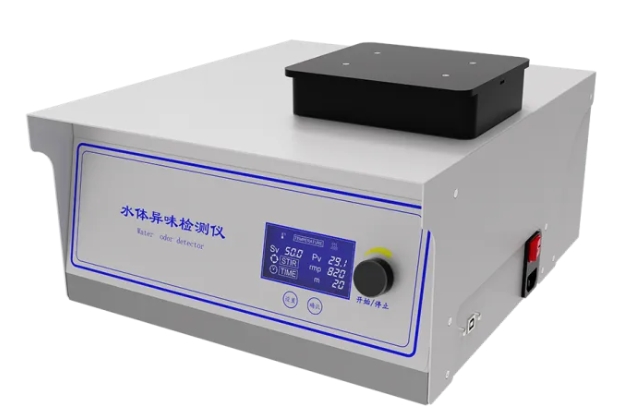
Accurately capturing these odor signals is the first step in monitoring
The water odor detector adopts metal oxide sensor array electronic nose technology, combined with a built-in sample pretreatment device, to construct a scientific detection process, ensuring efficient identification of industrial wastewater odors.
Quickly calculate the odor intensity level and odor concentration OU value of wastewater
The high precision of the instrument ensures the reliability of monitoring data: the response level of the sensor array to gases reaches ppb level, which can accurately capture even low levels of odor pollutants in industrial wastewater; The variance of repeated detection of the same gas is less than 5%, ensuring the stability and consistency of multiple monitoring data, and providing reliable basis for the analysis of industrial wastewater pollution trends.
02
How to solve the pain points of industrial wastewater monitoring?
Detection of odor intensity in water bodies:
The instrument divides the intensity of water odor into 6 levels, each corresponding to a clear pollution status, which can quickly determine the severity of industrial wastewater pollution.
By grading the intensity of odors, staff do not need to wait for complex laboratory analysis, and can grasp the degree of wastewater pollution within 5 minutes, buying time for quickly initiating control measures.
Detection of odor concentration in water bodies:
The instrument has a built-in odor concentration analysis model based on manual odor recognition, which can directly output the odor concentration OU value (odor unit). This quantitative indicator transforms industrial wastewater odor pollution from "subjective perception" to "objective data"; The introduction of OU value provides a unified quantitative standard for the assessment of industrial wastewater odor pollution and the acceptance of treatment effectiveness, making monitoring more convincing.
Qualitative analysis of water pollution types:
The types of industrial wastewater pollution are complex, and accurate identification of pollution types is the key to targeted treatment. The instrument relies on clustering analysis models established based on different water samples, combined with PCA principal component analysis, LDA linear correlation analysis and other algorithms, to qualitatively determine the types of industrial wastewater pollution through Mahalanobis distance, Euclidean distance, and DFA determination algorithms.
Expand special gas detection:
The characteristic pollutants contained in industrial wastewater from different industries vary greatly, and the instrument's "extended addition of special odor gas concentration analysis function" can flexibly adapt to personalized needs.
This "standard configuration+flexible expansion" mode allows the instrument to adapt to the monitoring needs of industrial wastewater in multiple industries such as chemical, food, paper, and pharmaceutical, achieving "one instrument for multiple uses".
03
What are the practical applications?
Production source monitoring: reducing pollution from the source
Set up monitoring points at key stages of industrial production, use instruments to quickly detect wastewater odors, and adjust production processes in a timely manner:
Export of chemical enterprise reaction kettle: Real time monitoring of the odor level and type of reaction product wastewater. If the signal from sensor 1 (amine response) is abnormal, it indicates that the amine substances have not fully reacted, and the reaction temperature or catalyst dosage needs to be adjusted to avoid the production of high concentration amine wastewater;
Food processing enterprise cleaning process: detect the odor concentration OU value of the cleaning wastewater. If the OU value continues to rise, it indicates excessive use of cleaning agents or insufficient cleaning time, and the cleaning plan needs to be optimized to reduce organic residue.
Monitoring of wastewater treatment process: ensuring stable treatment effect
Deploy instruments in each unit of wastewater treatment facilities (regulating tank, aeration tank, sedimentation tank) to monitor real-time changes in wastewater odor during the treatment process and adjust treatment parameters in a timely manner
Regulating tank: Monitor the odor level of wastewater. If it suddenly rises from level 1 to level 3, it indicates that the incoming water quality fluctuates greatly (such as the upstream workshop illegally discharging high pollution wastewater). It is necessary to immediately reduce the incoming water load to avoid impacting the microbial activity of the subsequent aeration tank;
At the effluent end of the sedimentation tank: detect the odor concentration OU value. If the OU value is higher than the treatment standard, it indicates that the sludge sedimentation is not clean, and the sedimentation tank discharge frequency or dosage needs to be adjusted to ensure that the subsequent disinfection process can effectively remove odor pollutants.
End of pipe discharge and surrounding monitoring: safeguarding the bottom line of water environment safety
End of pipe discharge outlet: The instrument is linked with the online monitoring system to monitor the odor level, concentration, and pollution type of wastewater in real time. If the odor level exceeds level 2 or the OU value exceeds the standard, the system will automatically trigger a warning, close the discharge valve, and notify the staff to troubleshoot the treatment facilities to ensure that the wastewater meets the discharge standards;
Surrounding water inspection: Regularly use portable water odor detectors to monitor the wastewater from rivers and ditches around the industrial park. If sulfur or amine pollution is detected (abnormal signal from sensor 2 or 1), combined with the discharge characteristics of the enterprise, quickly trace the source of pollution and prevent its spread.